Many SMEs and startups in Malaysia assume that “good designers are hard to find.” In reality, the problem is usually not the lack of talent, it’s the hiring process.
There are strong designers available in the market, but businesses often struggle to identify them, communicate clearly, or evaluate them properly. The result is frustration, repeated hiring cycles, and projects that don’t meet expectations.
In this article, we’ll break down the real reasons businesses struggle to hire good designers and what can be done to fix it.
1. Poorly Written Briefs
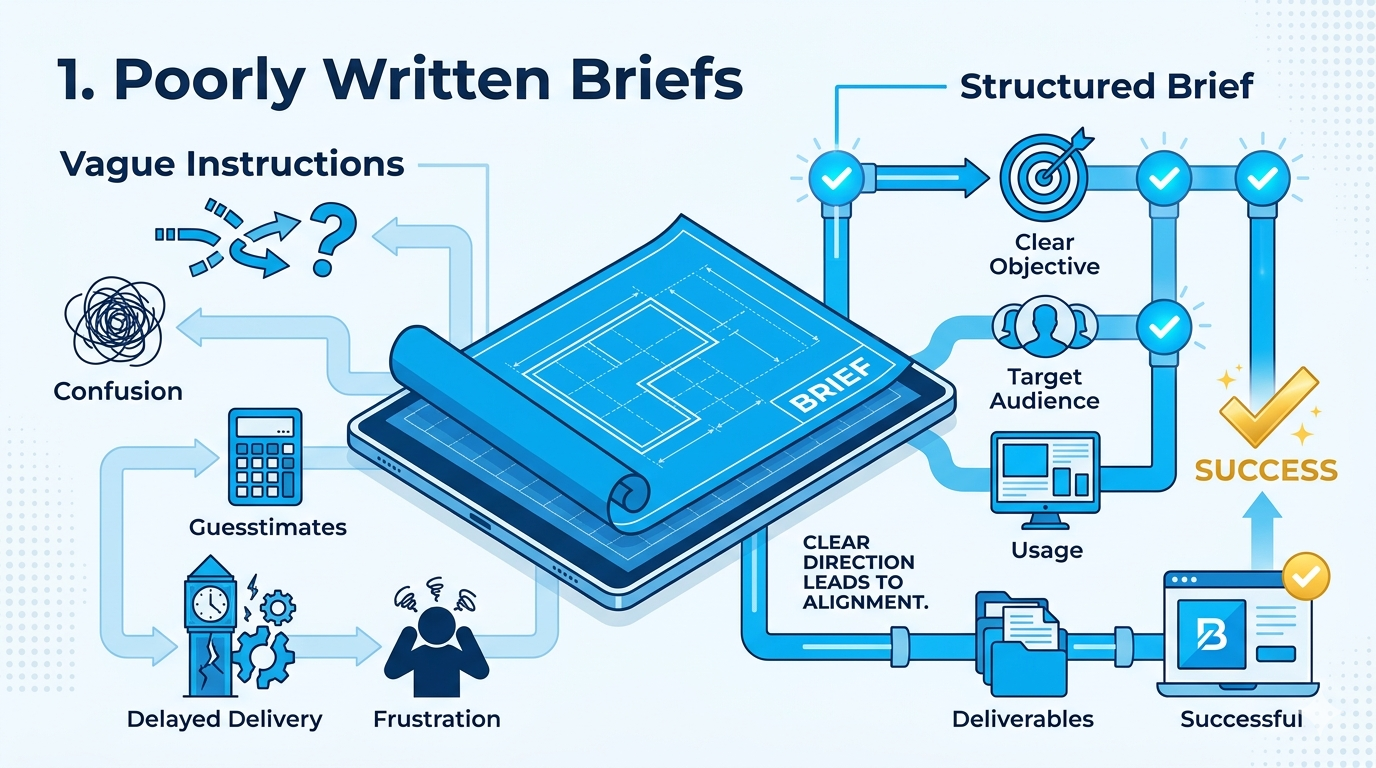
The most common problem starts before the designer is even hired: the brief.
Many businesses provide vague instructions like:
“Need a designer for marketing materials.”
This creates confusion from the beginning.
Without clear direction, designers are forced to guess:
- What style is needed
- What audience the design is for
- What format is required
- What success looks like
What happens next:
- Multiple revisions
- Misaligned expectations
- Delayed delivery
- Frustration on both sides
A strong design brief should include:
- Objective of the design
- Target audience
- Usage (social media, print, ads, etc.)
- Style references
- Brand guidelines
- Exact deliverables
Good designers don’t fail because of skill, they fail because of unclear direction.
2. Unrealistic Expectations About “Good Design”
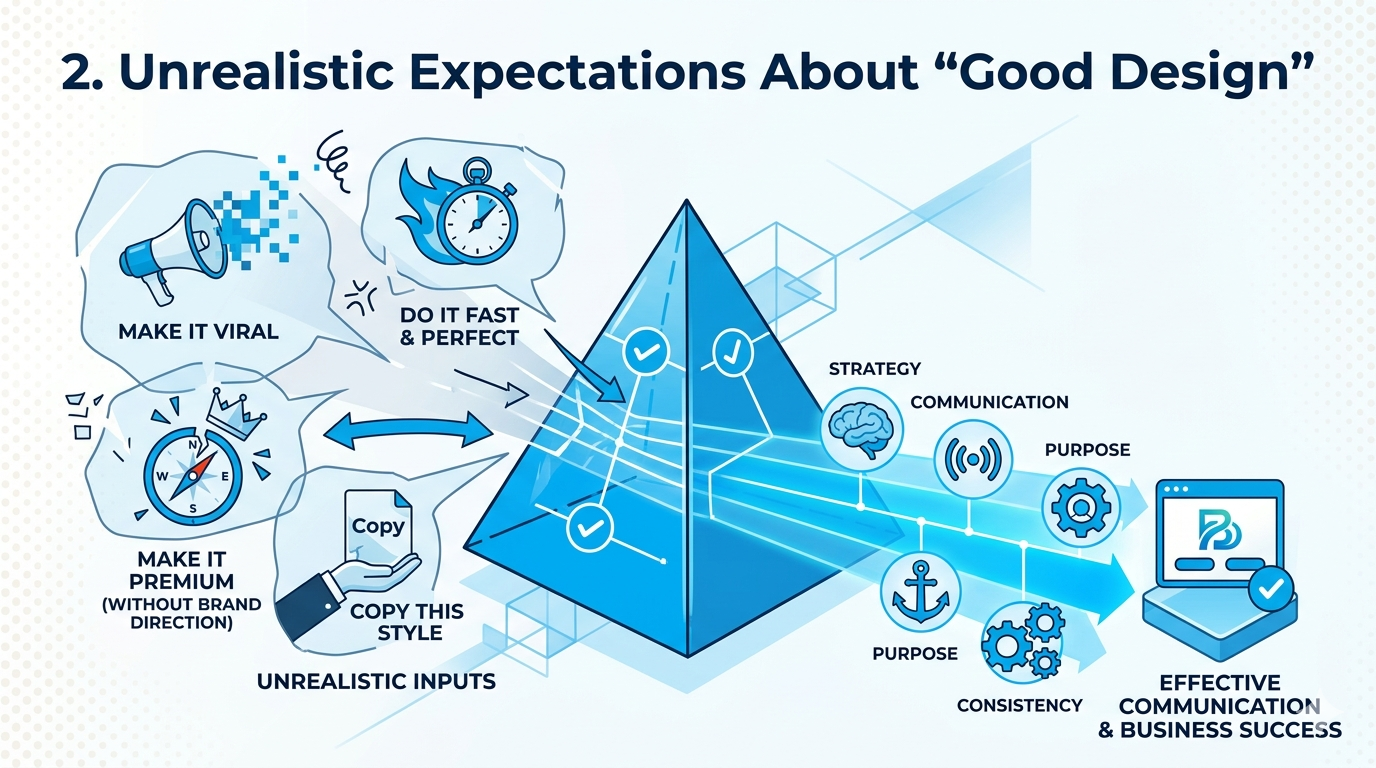
Many businesses struggle because they expect the wrong things from designers.
Common unrealistic expectations include:
- “Make it viral” (without marketing context)
- “Make it look premium” (without brand direction)
- “Just copy this style exactly” (without adaptation)
- “Do it fast, cheap, and perfect”
Good design is not just about aesthetics, it’s about communication, purpose, and consistency.
When expectations are unclear or unrealistic, even strong designers will struggle to deliver satisfactory results.
3. Weak Screening of Designers
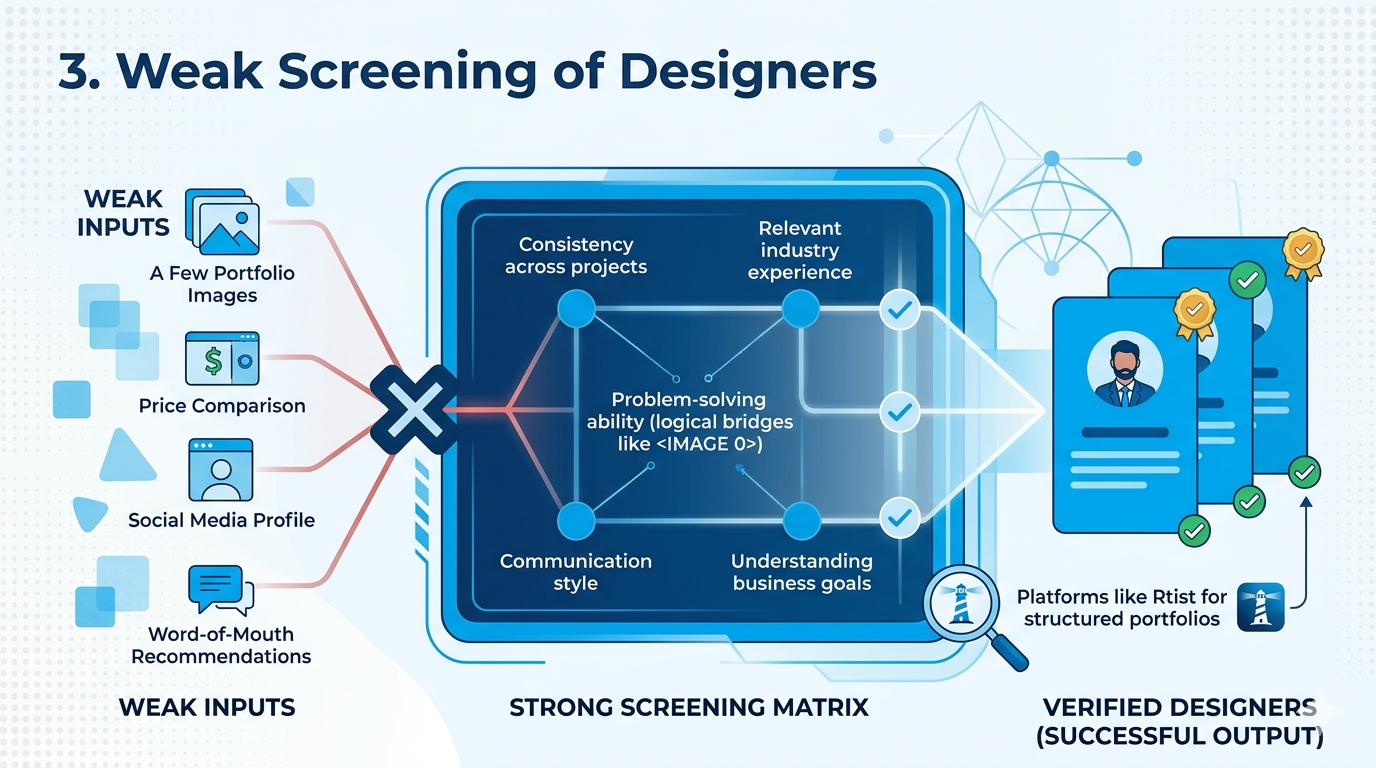
Another major issue is how designers are evaluated during hiring.
Many businesses rely on:
- A few portfolio images
- Price comparison
- Social media profiles
- Word-of-mouth recommendations
This is not enough.
Strong screening should include:
- Consistency across multiple projects
- Relevant industry experience
- Problem-solving ability (not just visuals)
- Communication style
- Understanding of business goals
Without proper screening, businesses often hire based on appearance rather than capability.
For creative hiring, platforms like Rtist help businesses evaluate designers through structured portfolios, making it easier to compare real work quality instead of guessing based on limited samples.
4. Lack of Hiring Structure
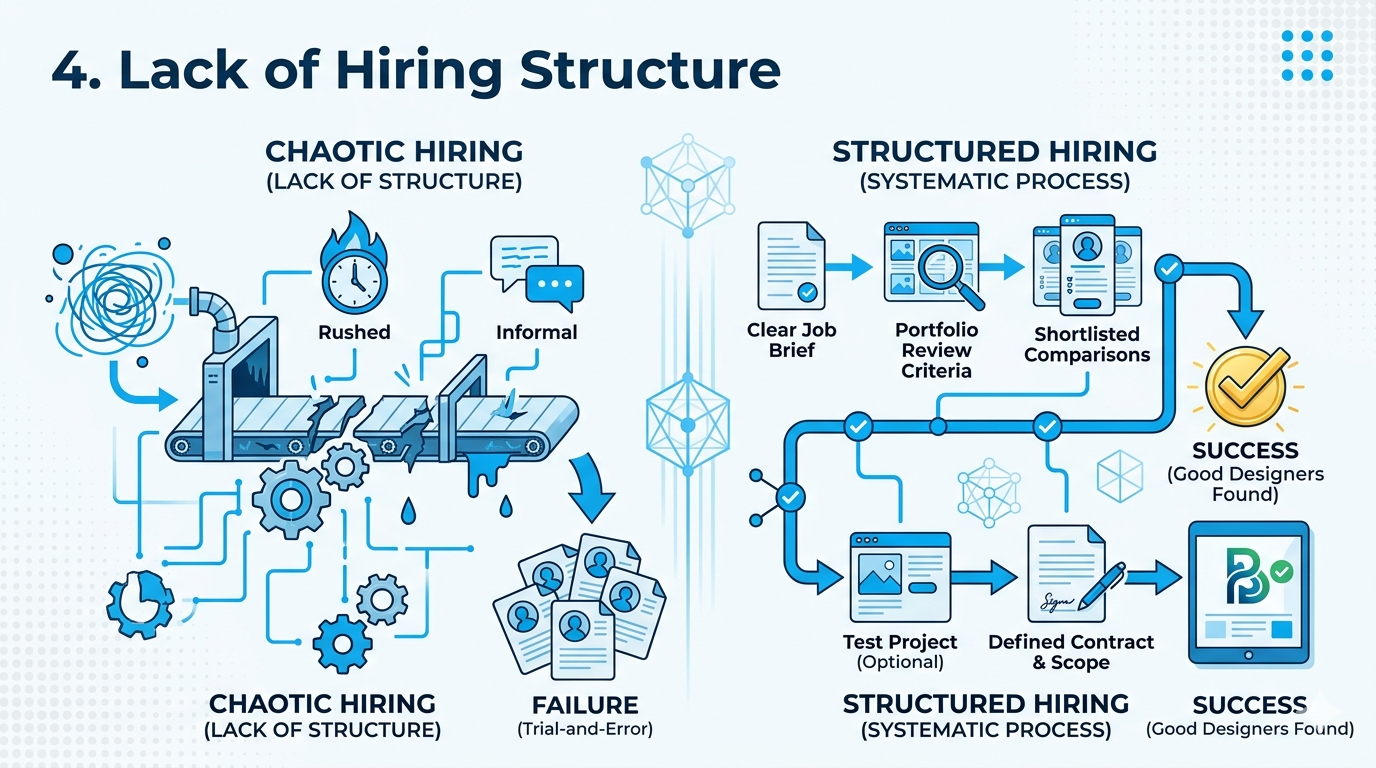
Many SMEs do not treat designer hiring as a structured process.
Instead, it is often:
- Rushed
- Informal
- Based on referrals or urgency
- Without clear evaluation steps
A proper hiring structure should include:
- Clear job brief
- Portfolio review criteria
- Shortlisted comparisons
- Test project (optional)
Defined contract and scope
Without structure, hiring becomes trial-and-error—and good designers get overlooked.
5. Confusing “Style” with “Skill”
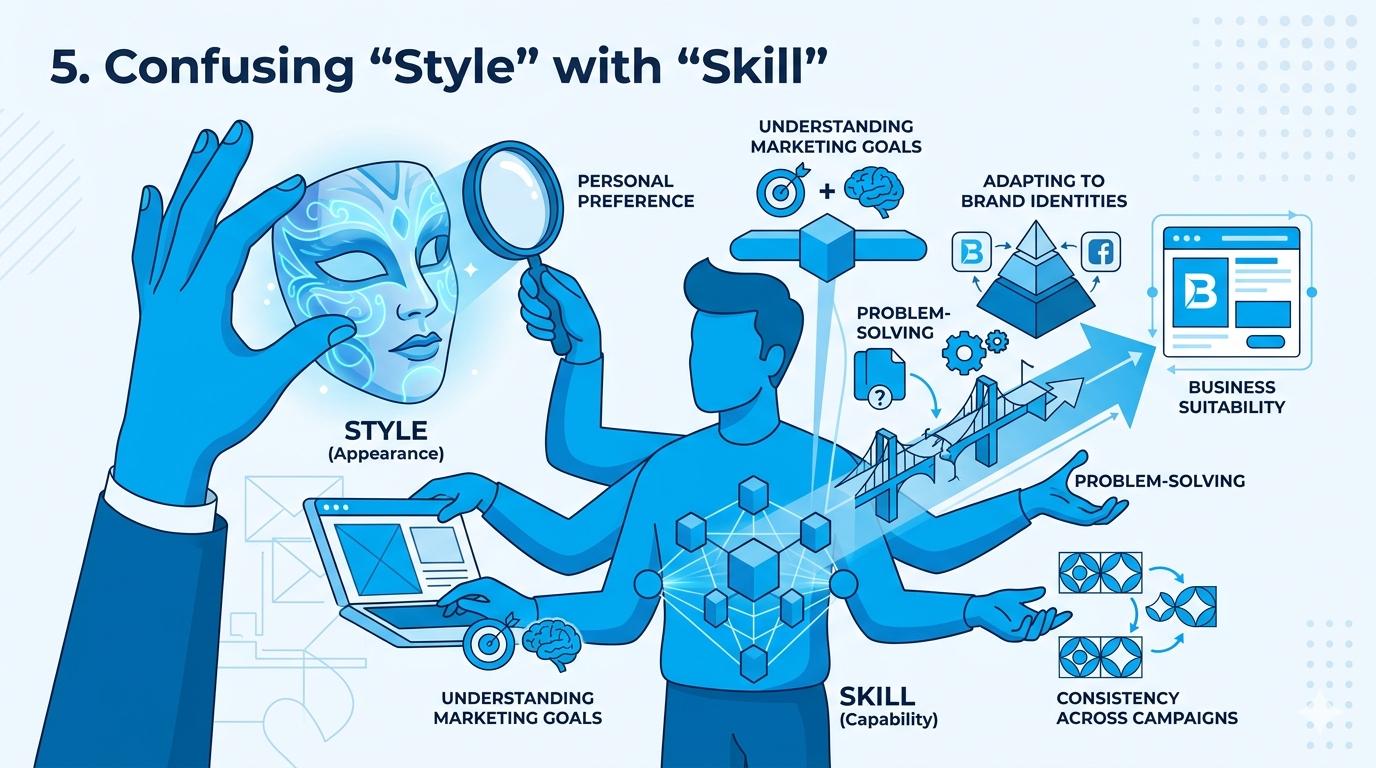
A common mistake is choosing designers based purely on style preference.
For example:
- “I like this aesthetic, so the designer must be good”
But design skill is not just about style, it includes:
- Understanding marketing goals
- Adapting to different brand identities
- Problem-solving
- Consistency across campaigns
A designer may have a style you like but may not be suitable for your business needs.
6. Poor Communication During Projects
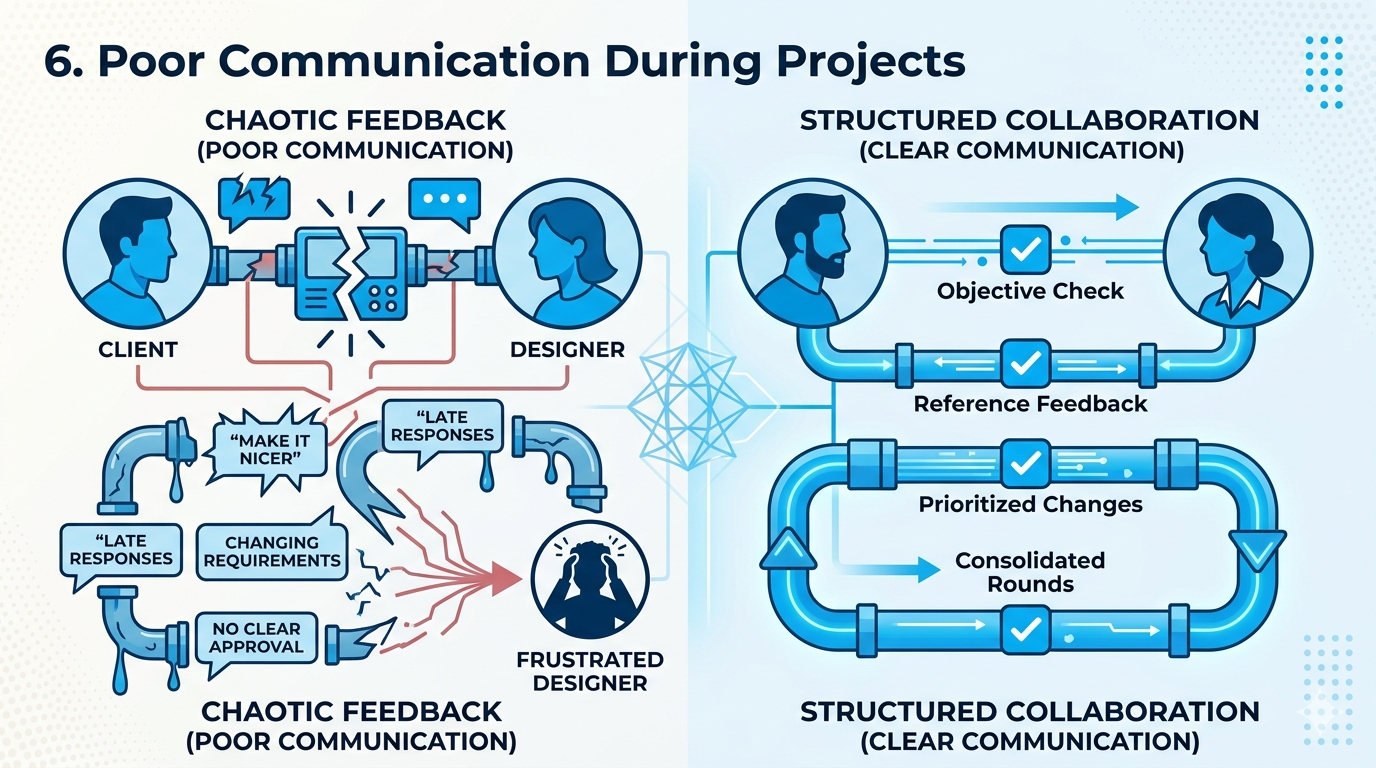
Even good designers struggle when communication is unclear.
Common issues include:
- Vague feedback (“make it nicer”)
- Late responses from clients
- Changing requirements mid-project
- No clear approval process
Design is a collaborative process. Without clear communication, even strong designers cannot deliver their best work.
7. No Clear Feedback System
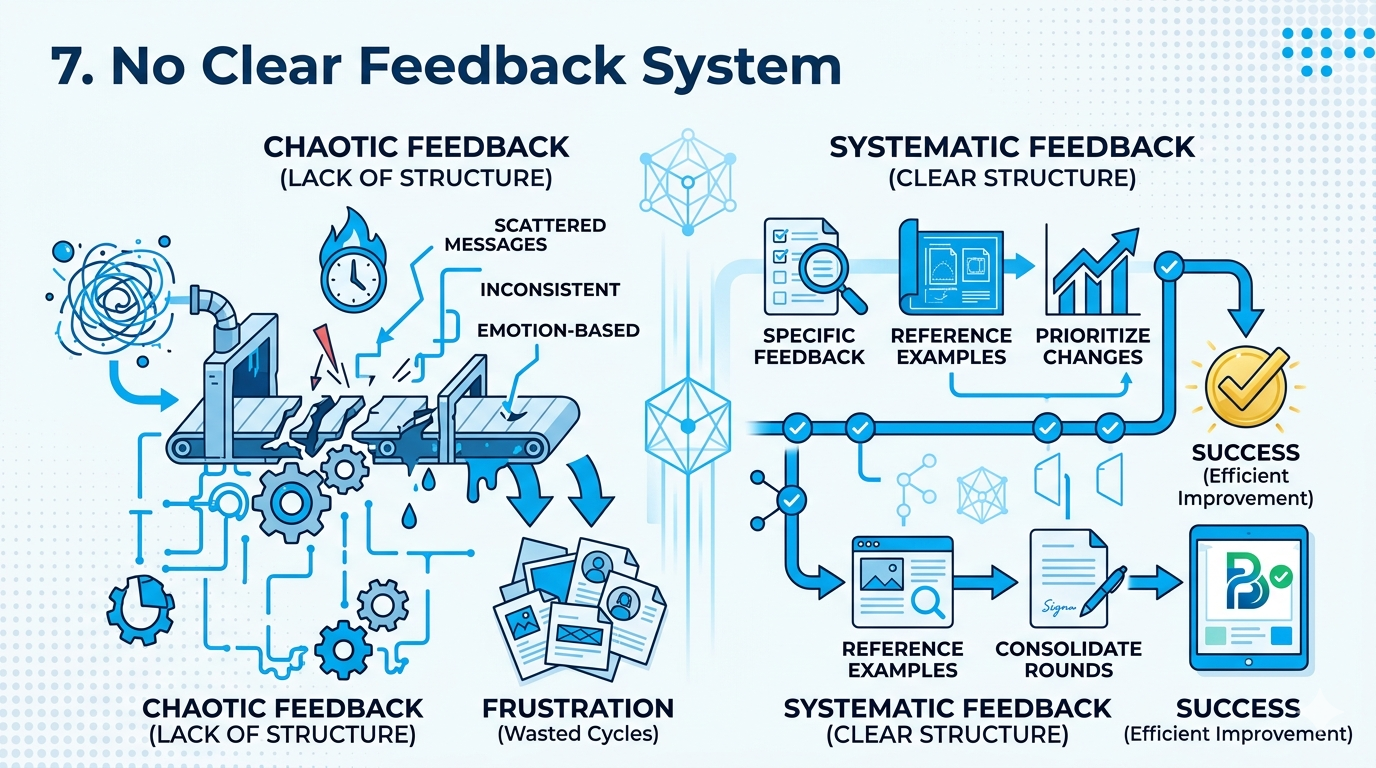
Many businesses do not provide structured feedback.
Instead, feedback is:
- Scattered across messages
- Inconsistent
- Emotion-based rather than objective
Better approach:
- Use specific feedback (“increase contrast in headline”)
- Reference examples
- Prioritise changes
- Consolidate feedback into one round
Clear feedback helps designers improve output quickly and efficiently.
8. Hiring Too Cheap (and Expecting Premium Results)
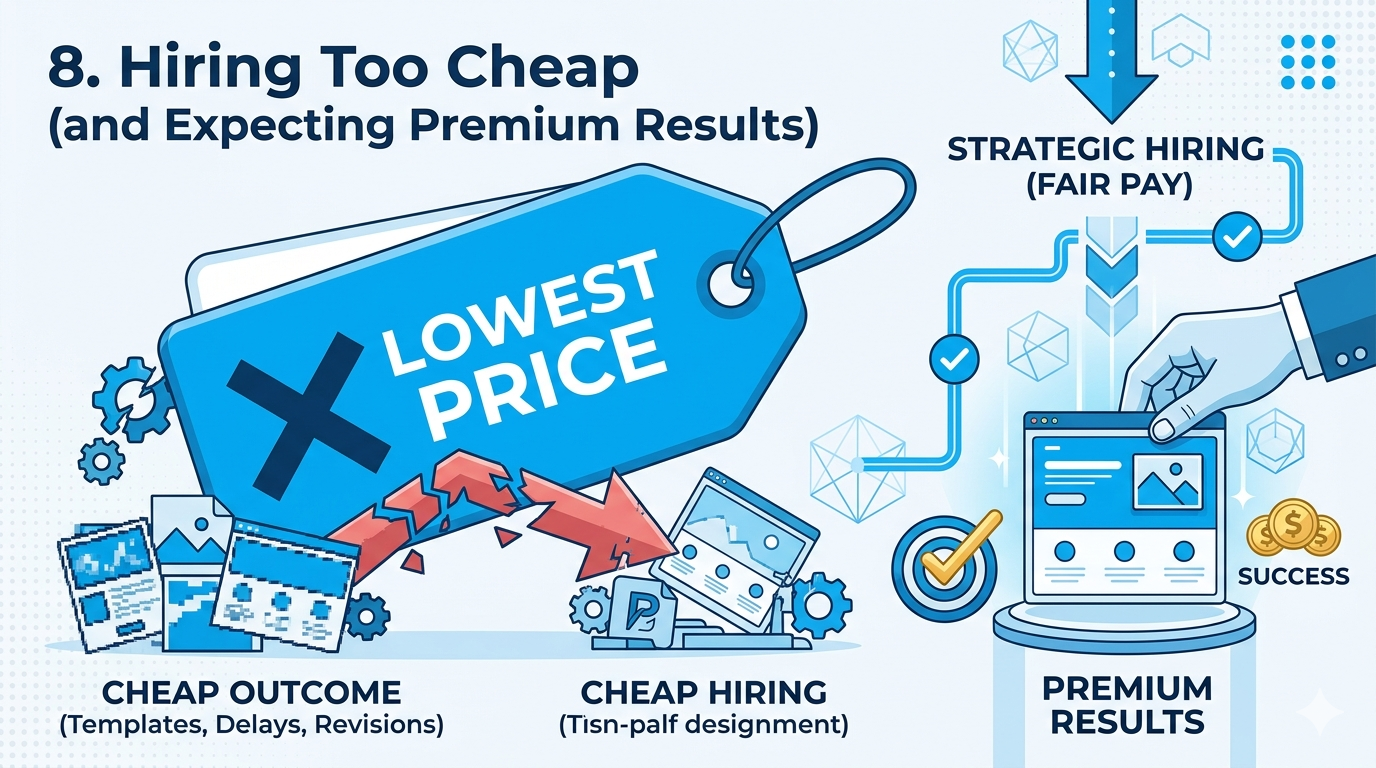
Budget plays a major role in hiring outcomes.
When businesses focus only on the lowest price, they often end up with:
- Inexperienced designers
- Template-based work
- High revision counts
- Missed deadlines
Good design requires time, experience, and strategic thinking.
Paying fairly increases the chances of better results.
9. Where Businesses Go Wrong Overall
Most hiring problems come down to one issue:
Lack of structure.
Businesses often:
- Don’t write proper briefs
- Don’t evaluate properly
- Don’t set clear expectations
- Don’t communicate effectively
When these gaps are fixed, hiring good designers becomes significantly easier.
How to Hire Good Designers More Effectively
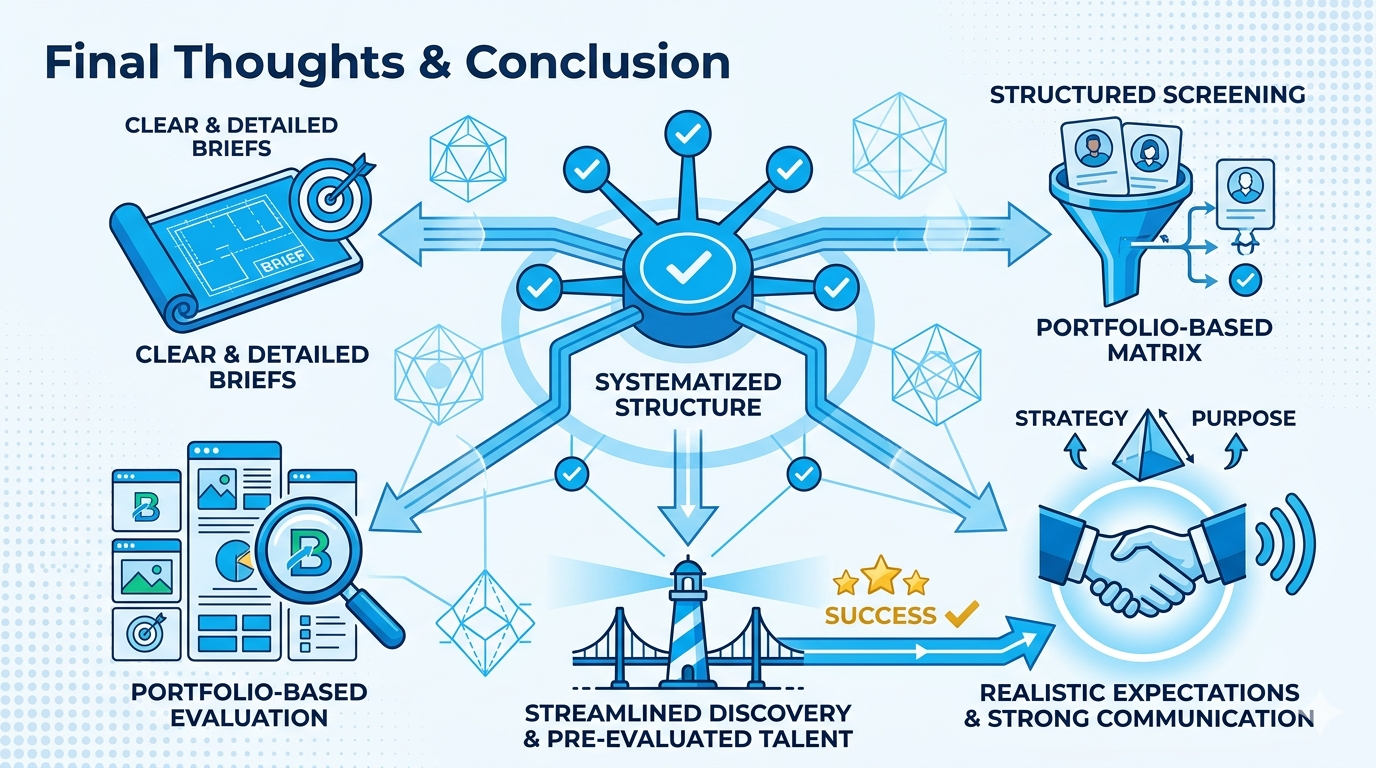
To improve your hiring success rate, focus on:
- Clear and detailed briefs
- Portfolio-based evaluation
- Structured screening process
- Realistic expectations
- Strong communication systems
And most importantly, treat hiring as a process, not a quick task.
For businesses looking to simplify creative hiring, platforms like www.rtist.co help streamline discovery by allowing you to review real designer portfolios before making hiring decisions, reducing guesswork and improving match quality.
Final Thoughts
Businesses don’t struggle to hire good designers because talent is missing.
They struggle because the hiring process is unclear, unstructured, and inconsistent.
When businesses improve how they brief, evaluate, and communicate, the quality of designers they attract improves dramatically.
Good design is available, but only when the right hiring system is in place.
Hire with www.rtist.co