When hiring freelancers, many SMEs in Malaysia focus heavily on finding the right talent—but overlook one of the most important parts of the entire process: the contract.
A freelancer contract is not just paperwork. It is a simple but powerful tool that protects both the business and the freelancer by clearly defining expectations, responsibilities, and deliverables.
Without a proper contract, even small projects can turn into misunderstandings, delays, or payment disputes.
In this article, we’ll break down the essential elements every freelancer contract should include so your projects run smoothly and professionally.
1. Scope of Work (The Most Important Section)
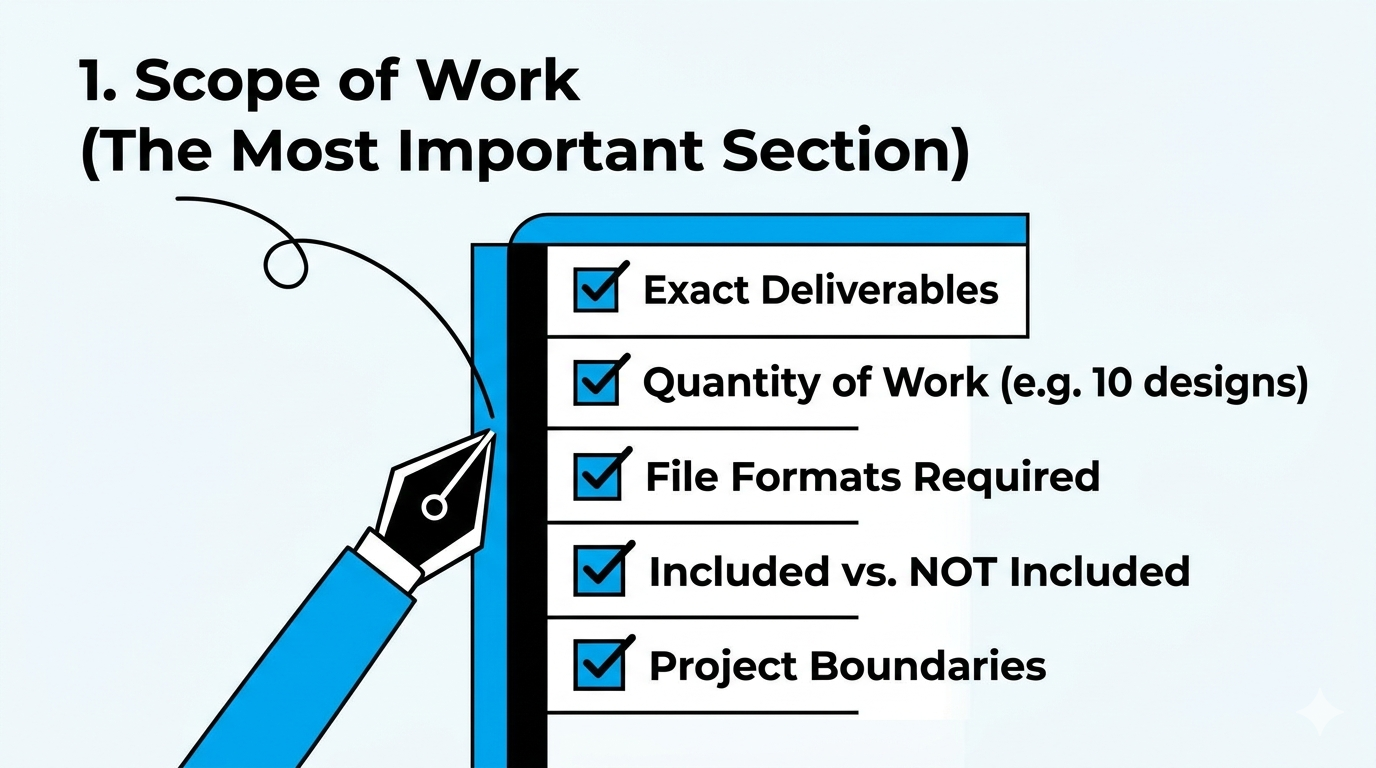
The scope of work defines exactly what the freelancer is responsible for.
This is where most misunderstandings happen if it’s not clearly written.
A strong scope should include:
- Exact deliverables
- Quantity of work (e.g. 10 designs, 5 videos, 1 website page)
- File formats required
- What is included and what is NOT included
- Project boundaries
Example:
Instead of:
“Design social media content”
Use:
“Design 12 Instagram posts and 4 story templates for a food brand campaign, including editable source files and final PNG exports.”
The clearer the scope, the fewer disputes later.
2. Payment Terms and Structure
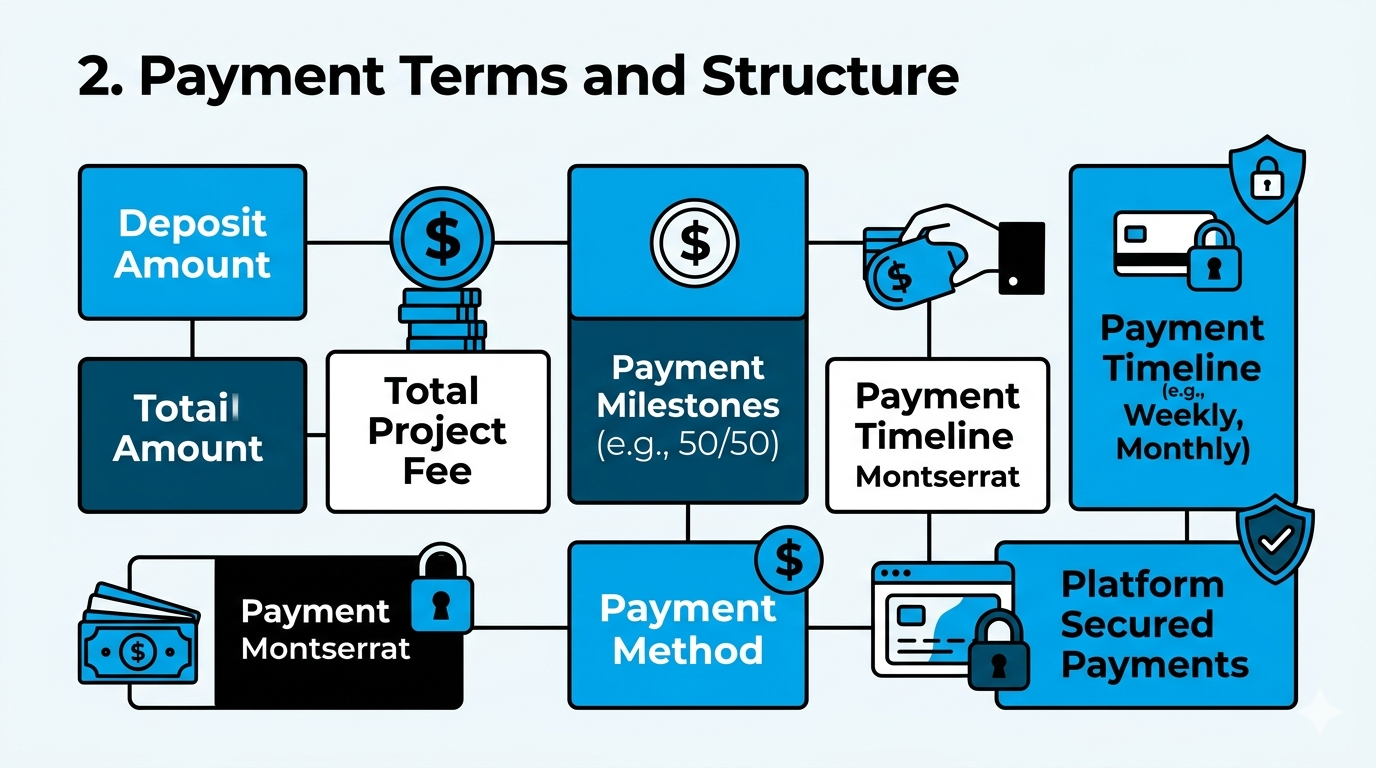
Payment issues are one of the most common freelancer problems.
Your contract should clearly define:
- Total project fee
- Deposit amount (if any)
- Payment milestones
- Payment method
- Payment timeline (e.g. upon delivery, weekly, or monthly)
Common structures:
- 50% upfront, 50% on completion
- Milestone-based payments
- Monthly retainer payments
- Platform secured payments (platform holds the payment until project is completed).
Clear payment terms ensure both parties stay committed and aligned throughout the project.
3. Timeline and Delivery Deadlines
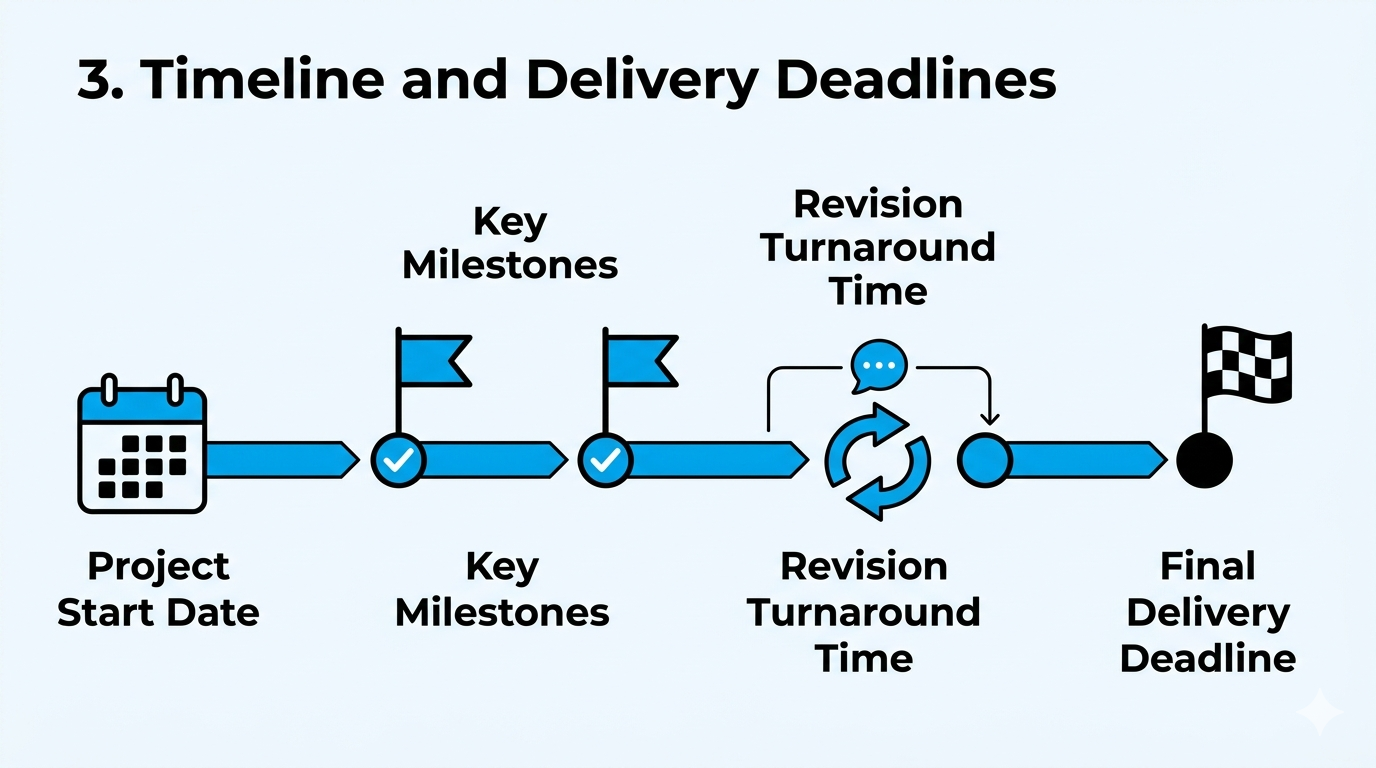
Time expectations must be clearly documented.
Your contract should include:
Project start date
- Key milestones
- Final delivery deadline
- Revision turnaround time
Example:
- Day 1–3: Initial concept
- Day 4: First draft
- Day 5: Feedback and revisions
- Day 6: Final delivery
Without clear timelines, projects can easily drag on indefinitely.
4. Revision Policy (Avoid Scope Creep)
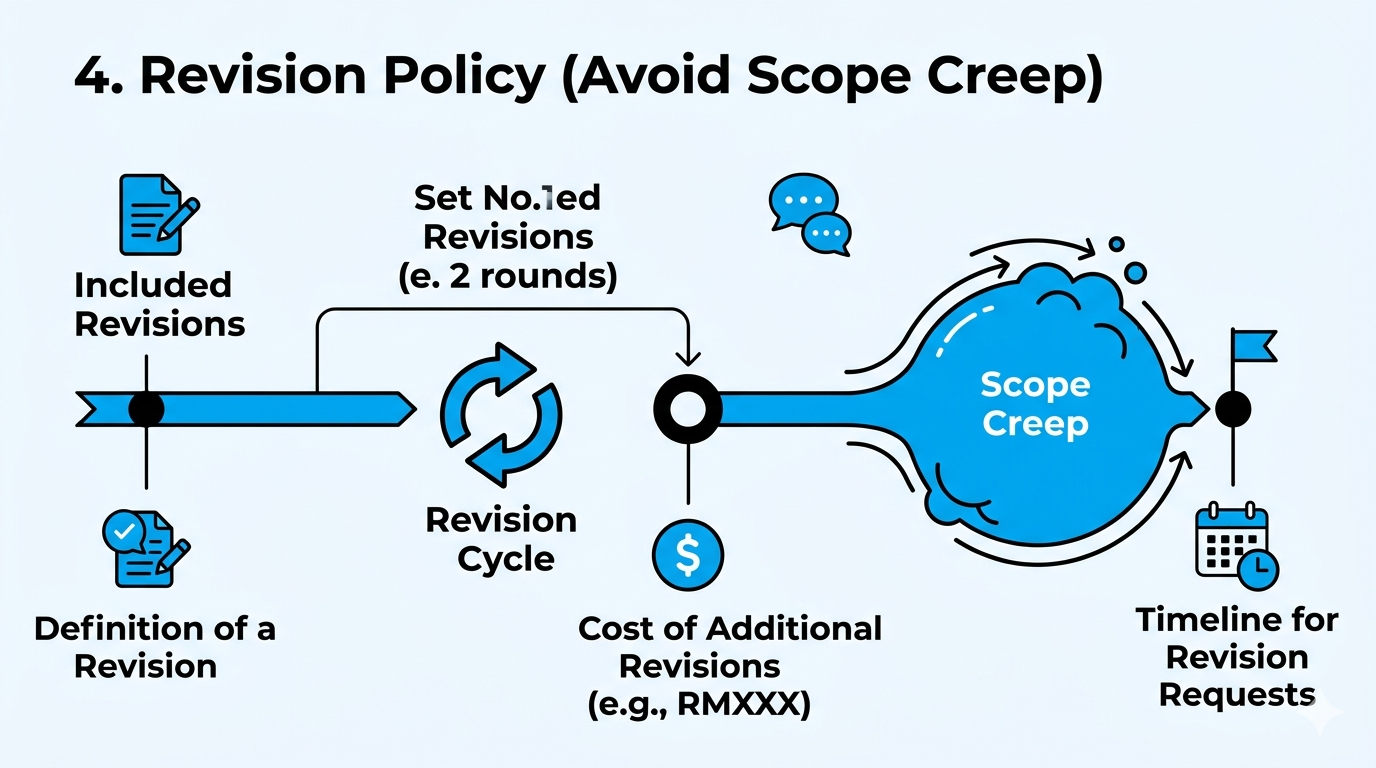
Revisions are where many projects become unprofitable or frustrating.
Your contract should clearly state:
- Number of included revisions
- What qualifies as a revision
- Cost of additional revisions
- Timeline for revision requests
Example:
“Two rounds of revisions included. Additional revisions beyond scope will be charged at RMXXX per revision cycle.”
This protects both parties and prevents endless changes.
5. Ownership Rights and Usage
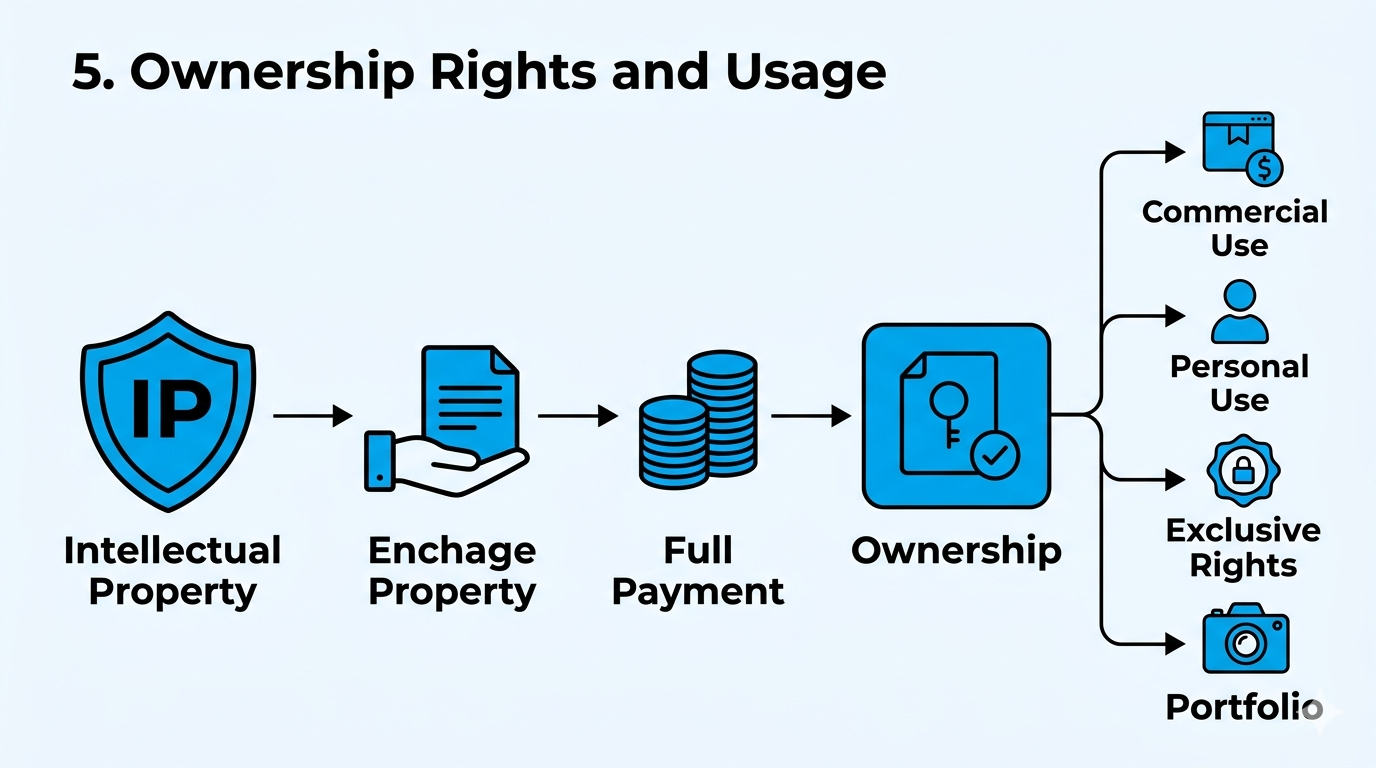
One of the most overlooked parts of freelance contracts is ownership.
You must clearly define:
- Who owns the final work
- When ownership is transferred (usually after full payment)
- Usage rights (commercial, personal, exclusive, etc.)
- Whether the freelancer can showcase the work in their portfolio
Why this matters:
Without clear ownership terms, businesses may face legal or branding issues later.
6. Communication Expectations
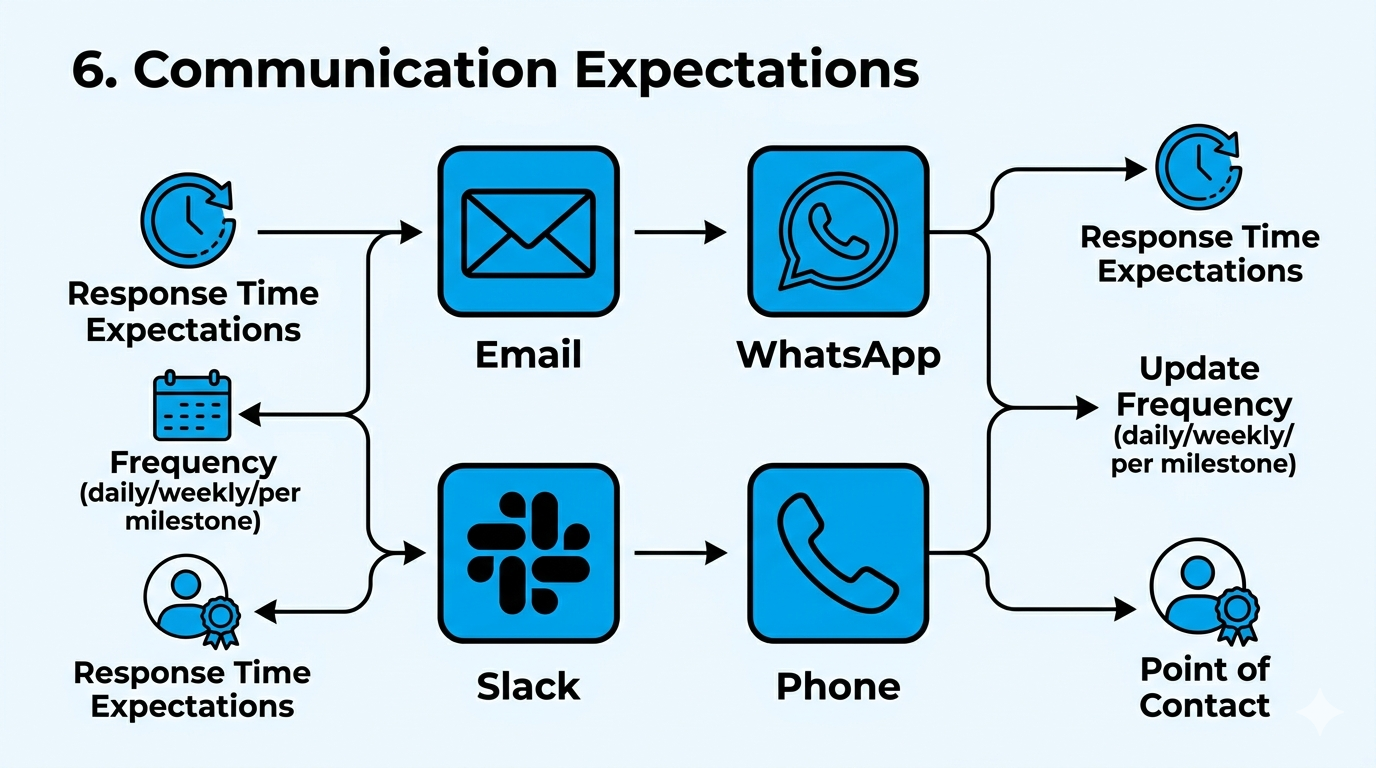
Good communication prevents most project failures.
Your contract should outline:
- Preferred communication channel (WhatsApp, email, Slack, etc.)
- Response time expectations
- Update frequency (daily, weekly, per milestone)
- Point of contact from both sides
This ensures smooth collaboration and avoids delays caused by miscommunication.
7. Confidentiality and Data Protection
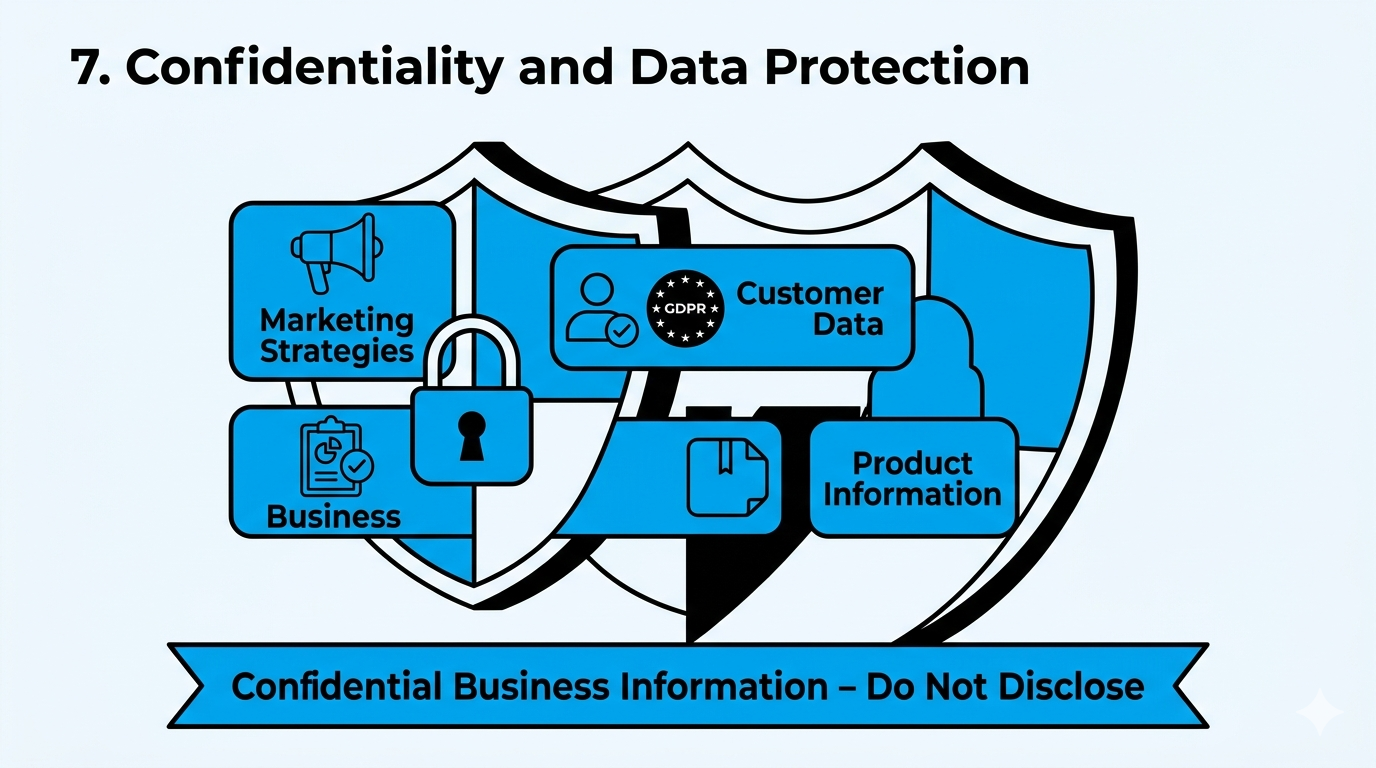
For many businesses, freelancers will have access to sensitive information such as:
- Marketing strategies
- Customer data
- Business plans
- Product information
A basic confidentiality clause ensures that this information is not shared externally.
Even a simple statement like:
“The freelancer agrees not to disclose any confidential business information.”
can provide essential protection.
8. Termination Clause (Exit Protection)
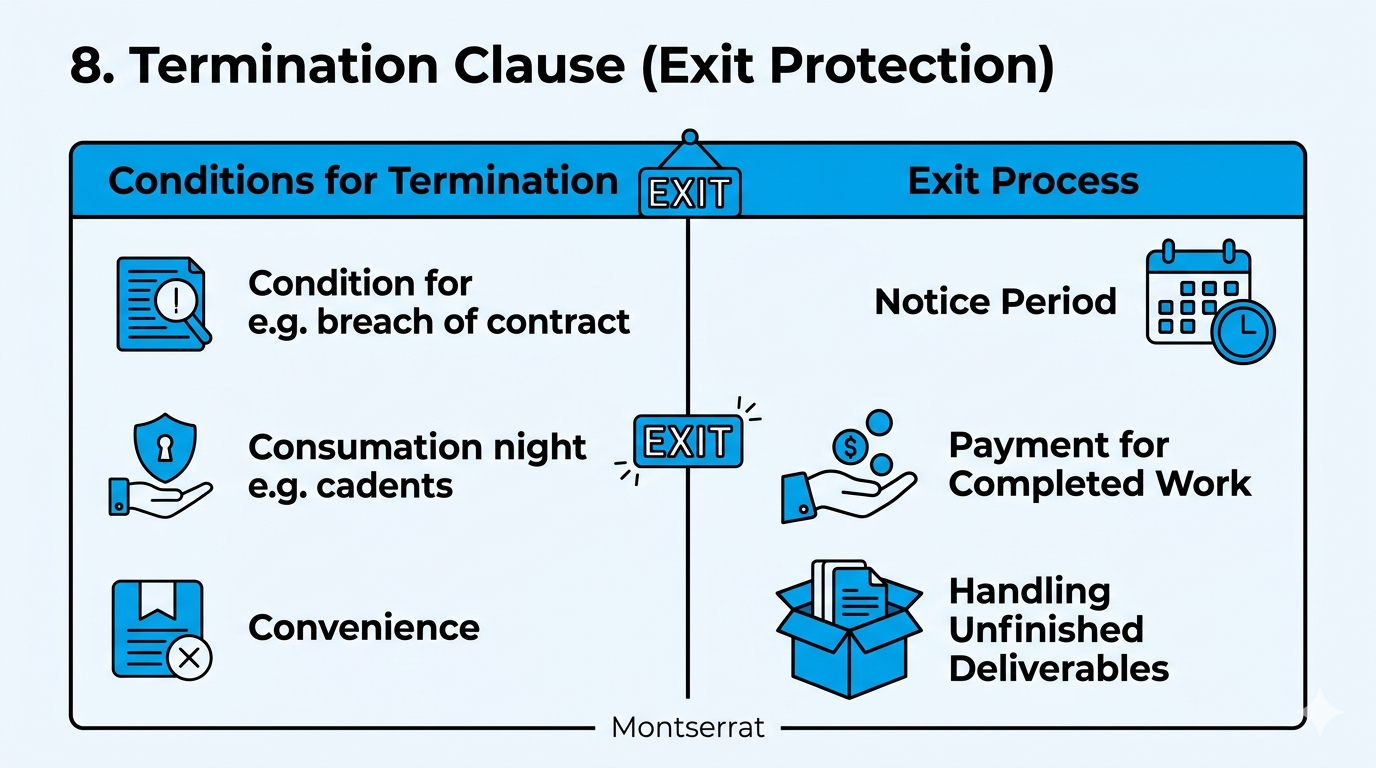
Not every freelance relationship works out.
Your contract should include:
- Conditions for termination
- Notice period (if applicable)
- Payment for completed work
- Handling of unfinished deliverables
This ensures both parties can exit the agreement fairly if needed.
9. Revisions to Scope (Change Management)
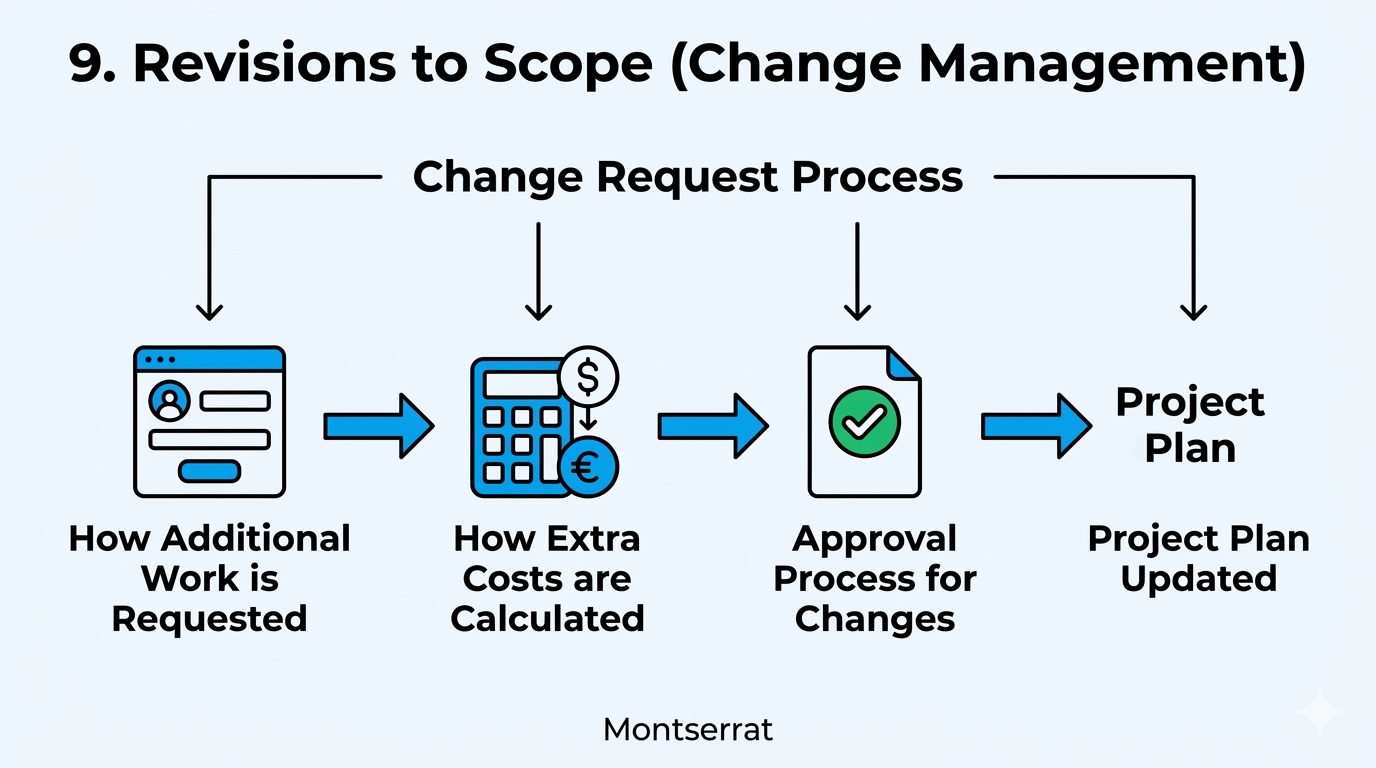
Projects often evolve.
Instead of assuming changes are included, your contract should define:
- How additional work is requested
- How extra costs are calculated
- Approval process for scope changes
This prevents freelancers from being overworked without compensation.
10. Risk Protection for SMEs
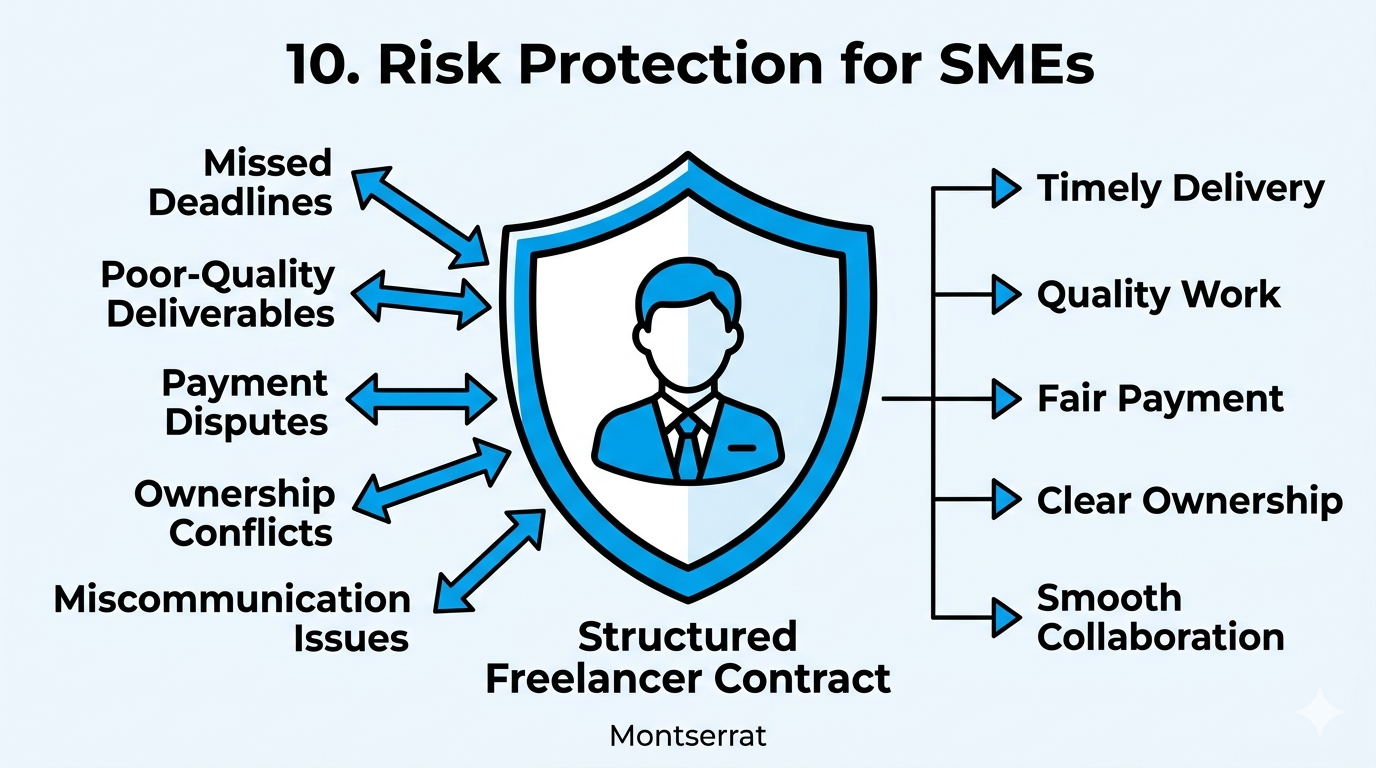
A well-written contract protects your business from:
- Missed deadlines
- Poor-quality deliverables
- Payment disputes
- Ownership conflicts
- Miscommunication issues
It also protects freelancers by ensuring they are paid fairly and treated professionally.
Contracts create structure, and structure leads to better outcomes.
Why Contracts Are Especially Important for SMEs
Many SMEs in Malaysia skip contracts for small projects because they seem unnecessary.
However, even small freelance jobs can lead to:
- Misunderstandings
- Delays
- Rework costs
- Relationship breakdowns
A simple contract prevents these issues and creates a more professional working environment.
Where to Find Reliable Freelancers?

A good contract is important, but so is choosing the right freelancer in the first place.
Instead of relying on scattered profiles or uncertain recommendations, businesses can use platforms like www.rtist.co to discover creative professionals such as designers, illustrators, video editors, and content creators through verified portfolios.
Starting with the right talent reduces contract risks significantly because expectations are easier to align from the beginning.
Final Thoughts
Freelancer contracts don’t need to be complicated, but they do need to be clear.
A strong contract should always cover:
- Scope of work
- Payment terms
- Timeline
- Revisions
- Ownership rights
- Communication expectations
- Risk protection clauses
For SMEs, having these basics in place can be the difference between a smooth project and a stressful one.
When expectations are clearly defined from the start, freelancers can focus on what they do best, delivering high-quality work efficiently.
And when paired with reliable talent sources like www.rtist.co , businesses can build a freelance workflow that is both structured and scalable.