Hiring a graphic designer is not just about finding someone who can “make things look good.” Strong design work is a combination of technical ability, creative thinking, branding understanding, and communication skills.
For SMEs and startups in Malaysia, choosing the right designer can directly impact how your brand is perceived, how your campaigns perform, and how consistently your visuals communicate your message.
To make better hiring decisions, here’s a clear breakdown of the key skills you should look for in a graphic designer.
1. Technical Skills (Tools and Execution Ability)
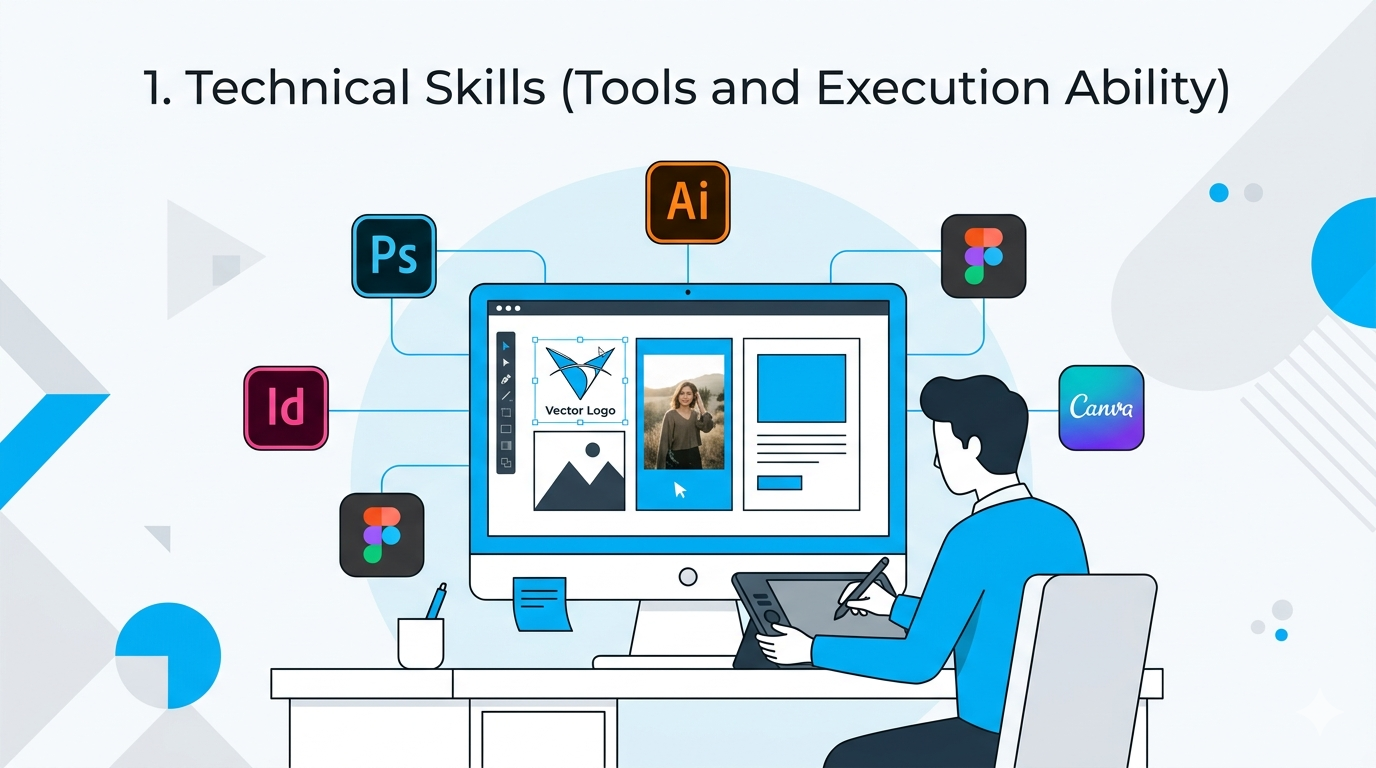
Technical skills are the foundation of a designer’s ability to execute ideas effectively.
Key tools to look for:
- Adobe Photoshop (image editing, marketing visuals)
- Adobe Illustrator (logos, illustrations, vector work)
- Adobe InDesign (print layouts, brochures, reports)
- Figma (UI/UX design, digital interfaces, collaboration)
- Canva (basic content design, social media assets)
What to assess:
A strong designer should be able to:
- Create clean, production-ready files
- Work across multiple formats (digital + print)
- Export correctly for different platforms
- Maintain file organisation and version control
Important note:
Tool knowledge alone is not enough. Many designers know software but lack design thinking. Technical skill must be paired with creativity and understanding.
2. Creative Skills (Visual Thinking and Execution)
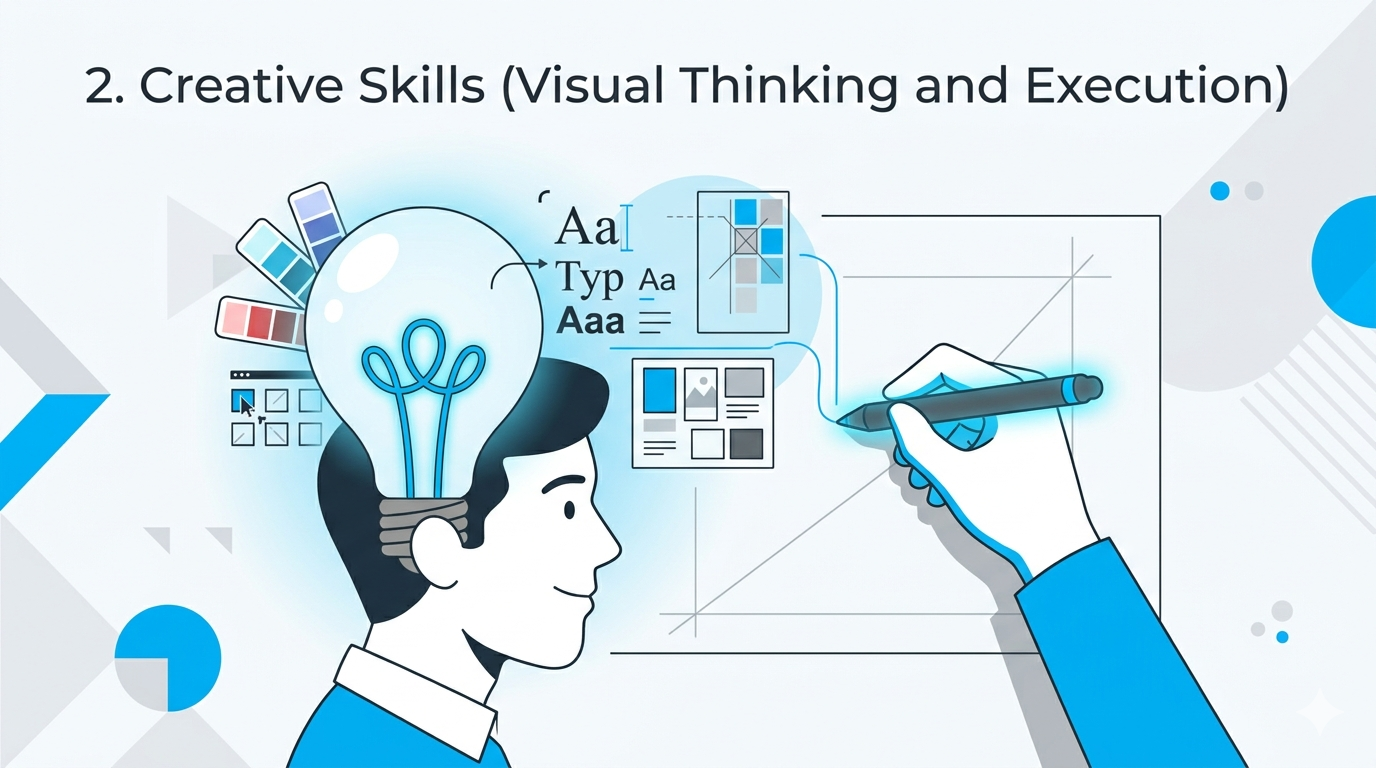
This is where true design quality shows.
Creative skills determine how well a designer can translate ideas into visuals.
Look for abilities such as:
- Composition and layout balance
- Typography selection and hierarchy
- Colour theory application
- Visual storytelling
- Attention to detail
Ability to create multiple design variations
What strong creative designers do:
- Turn abstract ideas into clear visuals
- Adapt styles based on brand identity
- Create designs that communicate, not just decorate
- Maintain consistency across campaigns
Red flags:
- Over-reliance on templates
- Repetitive design styles across all work
- Weak understanding of spacing and hierarchy
3. Branding Understanding (Business Thinking in Design)
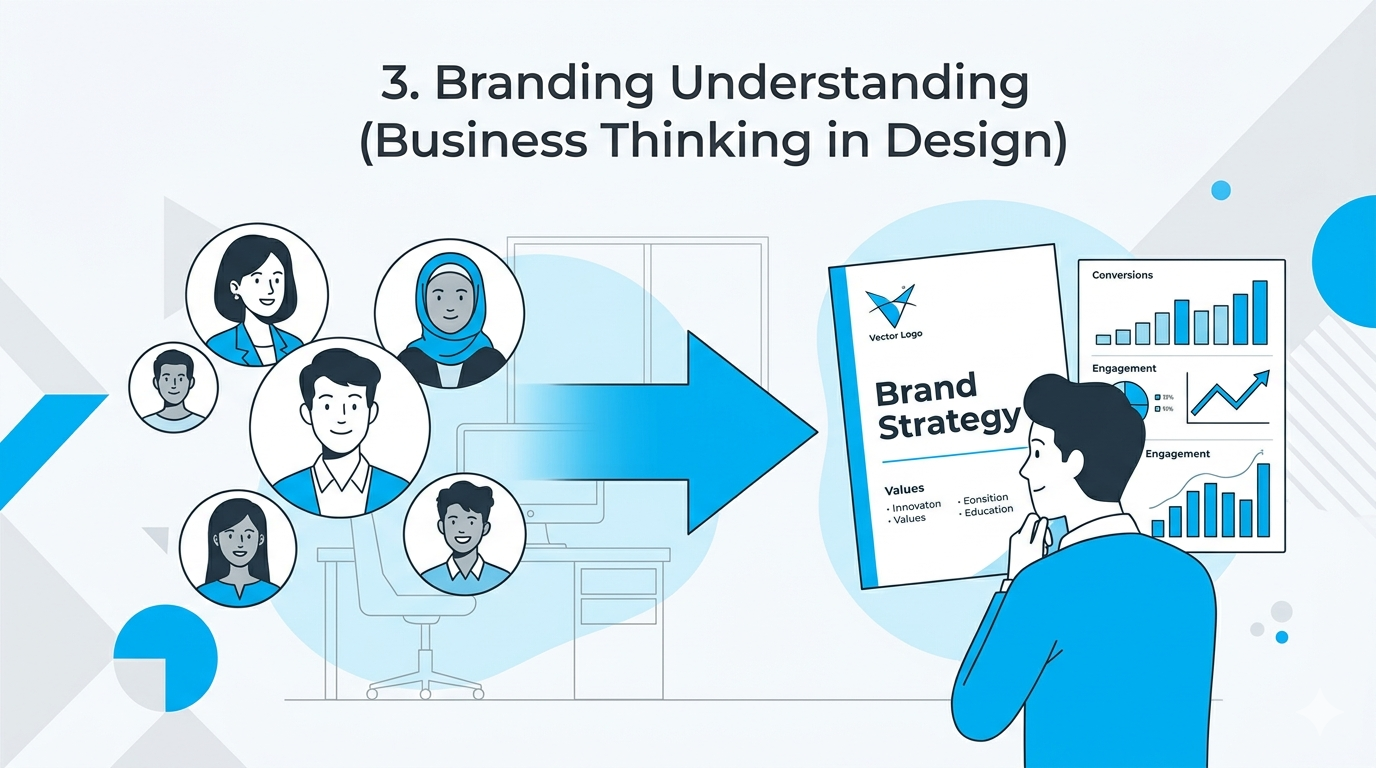
One of the most important but often overlooked skills is branding understanding.
A good designer does not just design visuals, they help shape how people perceive your brand.
Key branding skills include:
- Understanding target audience
- Translating brand values into visuals
- Maintaining visual consistency
- Adapting design style to different campaigns
- Aligning visuals with marketing goals
Questions to ask yourself:
- Does this designer understand who the design is for?
- Can they adapt their style to different brands?
- Do they understand business objectives, not just aesthetics?
Why this matters:
A visually good design that doesn’t align with your brand can still fail in marketing performance.
4. Communication Skills (Often the Dealbreaker)
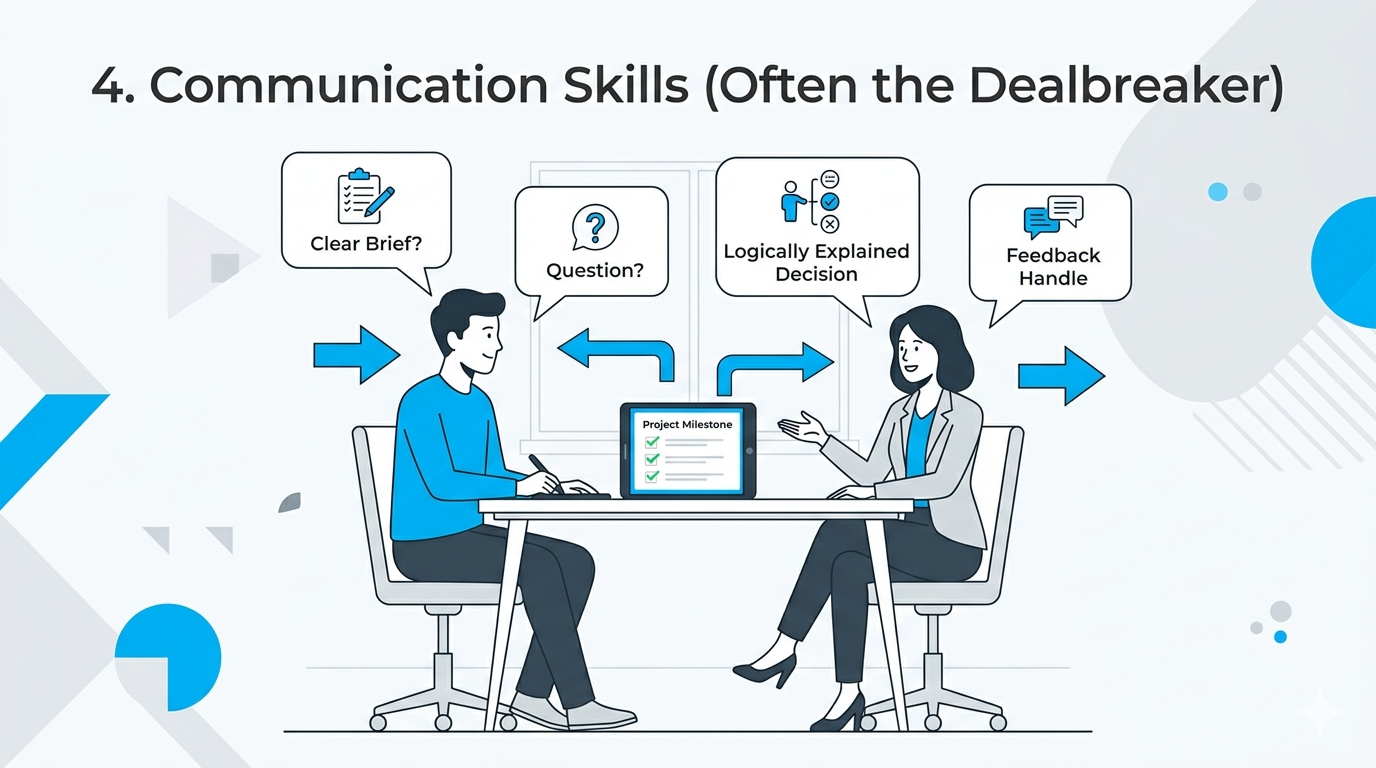
Communication is one of the most important skills in freelance and in-house design work.
Even a highly skilled designer can fail if communication is weak.
Look for:
- Clear explanations of design decisions
- Ability to ask clarifying questions
- Responsiveness during feedback cycles
- Professional tone in communication
- Ability to interpret vague briefs correctly
Strong designers usually:
- Confirm requirements before starting
- Provide structured updates
- Explain design choices logically
- Handle feedback professionally
Weak communication signs:
- Delayed responses without updates
- Vague answers
- Misinterpretation of instructions
- Defensive reactions to feedback
5. Problem-Solving Skills (Design Thinking)
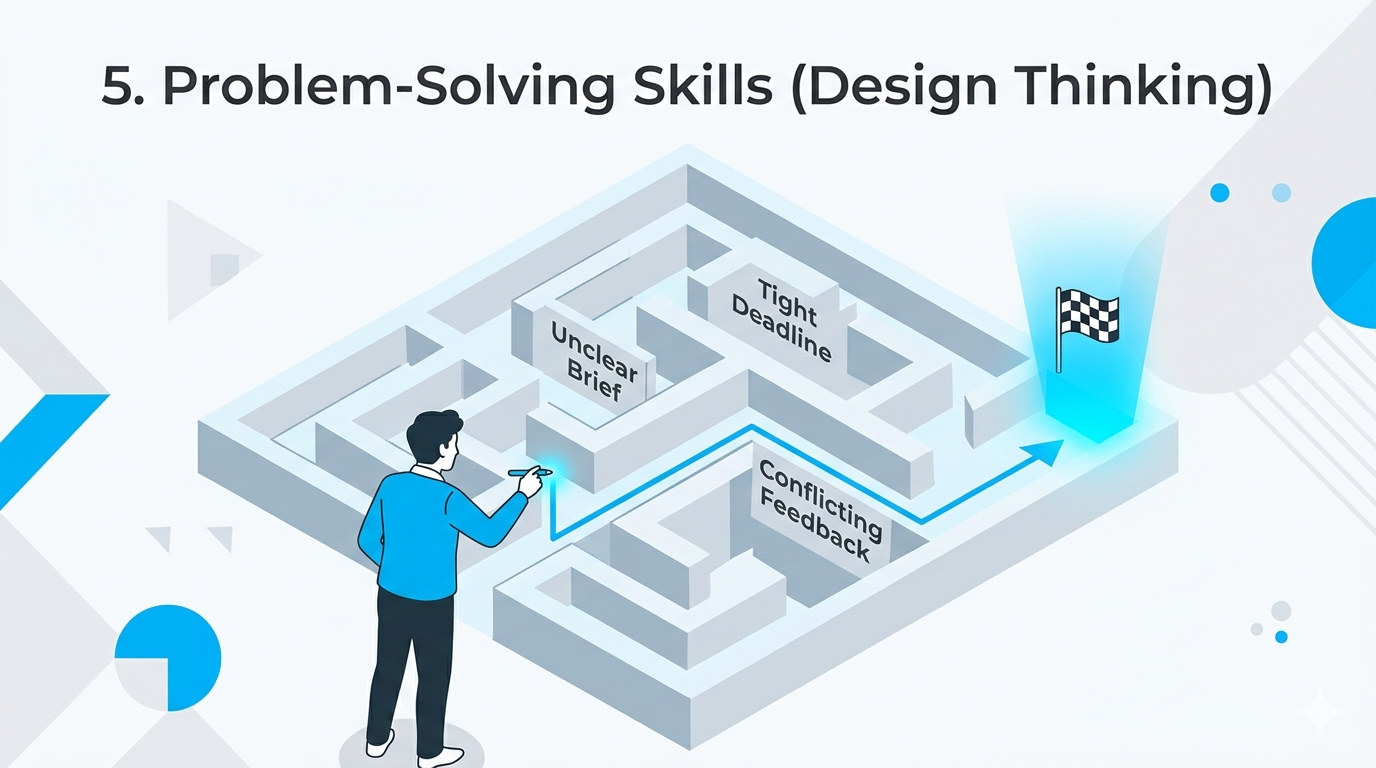
Design is not just execution, it is problem-solving.
A strong designer should be able to handle:
- Unclear briefs
- Tight deadlines
- Multiple stakeholder feedback
- Changing requirements
What to look for:
- Ability to explain “why” behind design choices
- Experience solving real business problems through design
- Flexibility when adapting to feedback
- Logical thinking behind creative decisions
A designer who only focuses on visuals without reasoning often struggles in real business environments.
6. Consistency and Attention to Detail
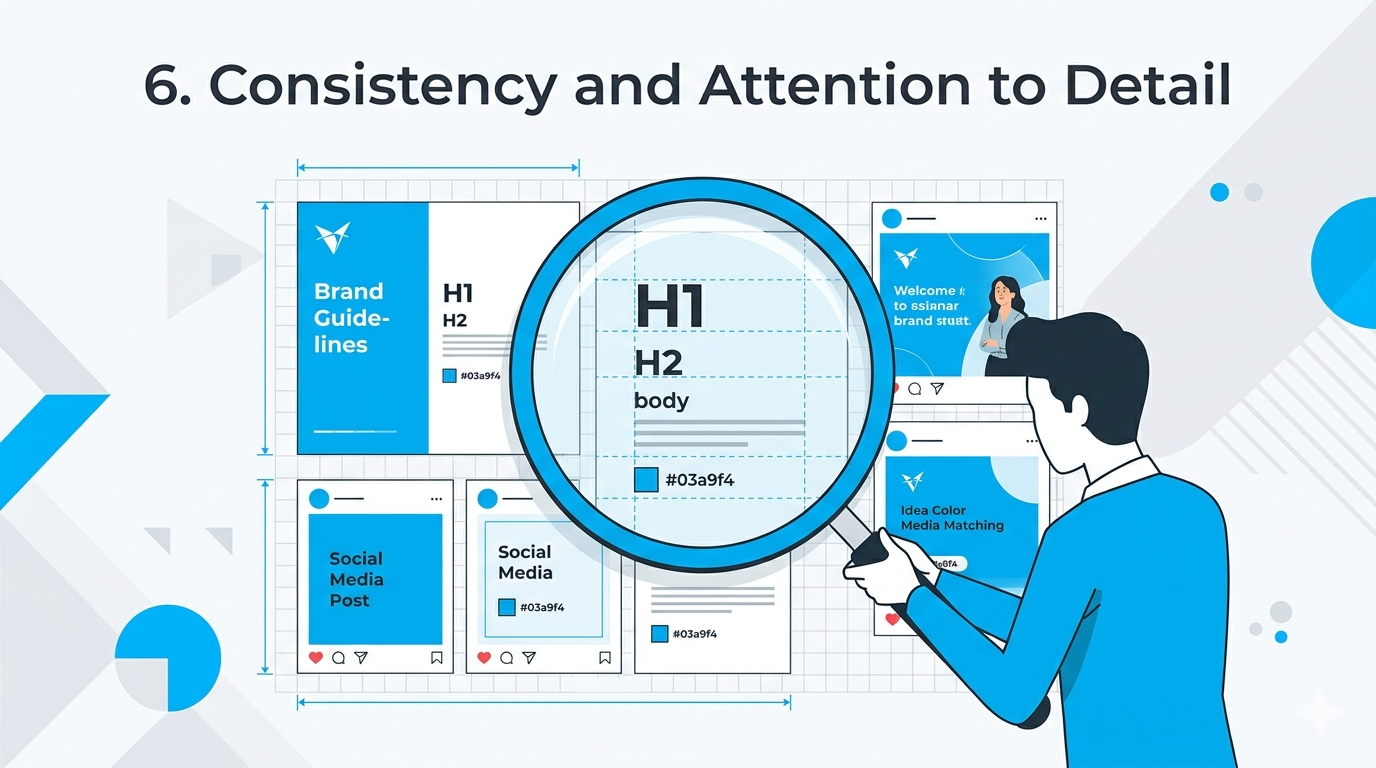
Consistency is what separates amateur designers from professionals.
Look for:
- Consistent quality across all portfolio work
- Alignment in spacing, typography, and alignment
- Clean file structure and presentation
- No obvious errors or careless mistakes
Why it matters:
- Small design mistakes can affect:
- Brand perception
- Advertising performance
- User trust
- Marketing effectiveness
Attention to detail is a core indicator of professionalism.
7. Time Management and Reliability

A good designer must be able to deliver work on time without constant follow-ups.
Look for:
- Ability to estimate timelines accurately
- History of meeting deadlines
- Clear communication if delays happen
- Ability to handle multiple projects
Red flags:
- Overpromising fast delivery
- No clarity on timelines
- Frequent last-minute delays
8. Strategic Thinking (Advanced Skill)
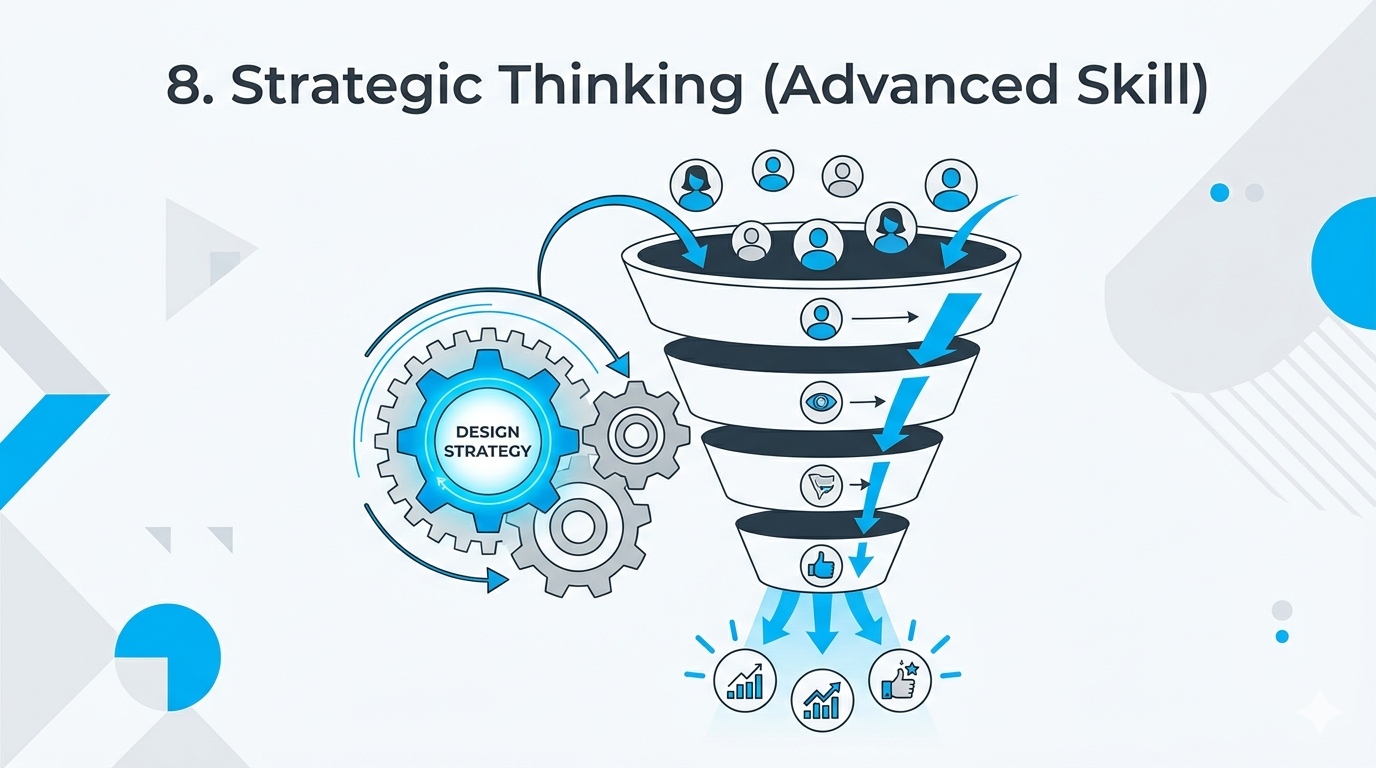
Top-tier designers go beyond execution, they think strategically.
They understand:
- Why the design exists
- What action it should drive
- How it fits into a campaign
- How users will interact with it
This level of thinking is especially important for:
- Branding projects
- Marketing campaigns
- Product UI/UX design
9. Where to Find Designers With These Skills
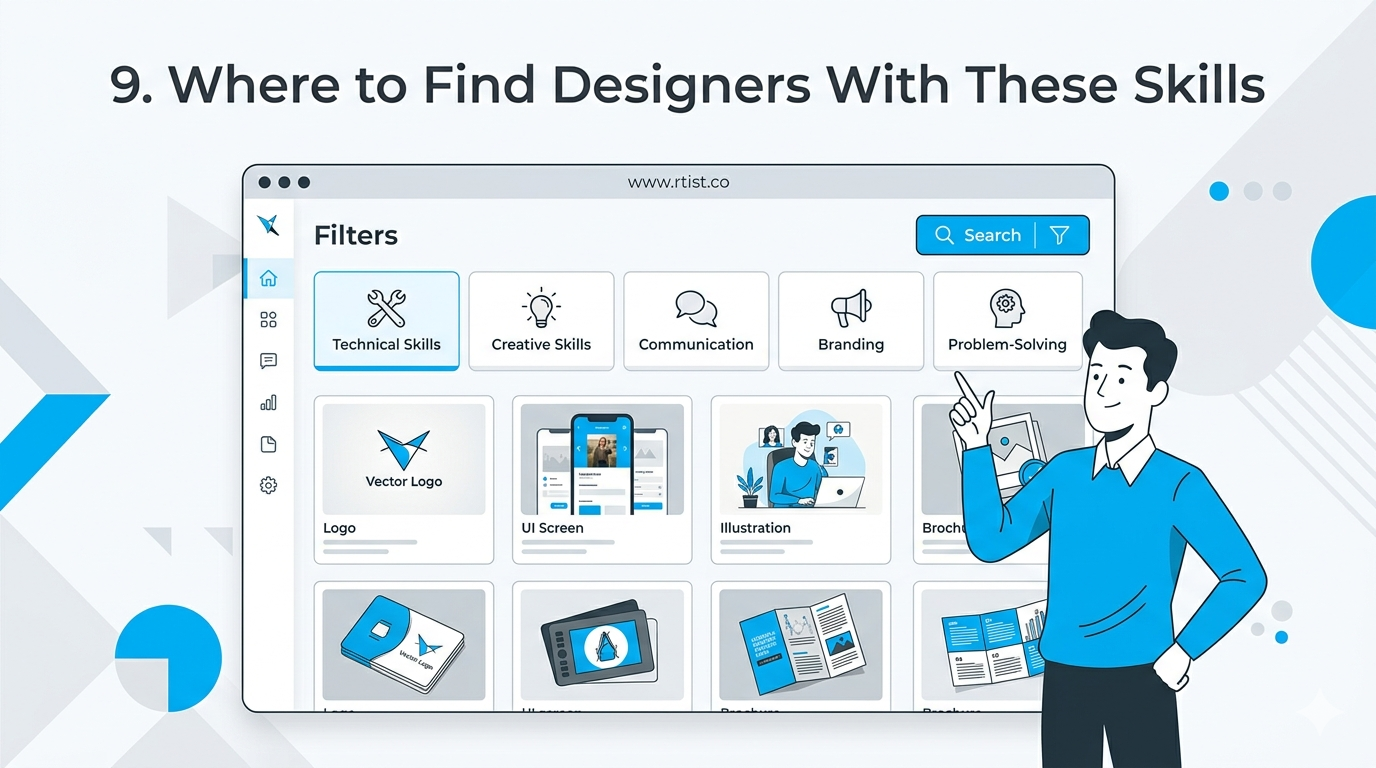
Finding designers with the right mix of technical, creative, and communication skills can be challenging when searching across multiple platforms.
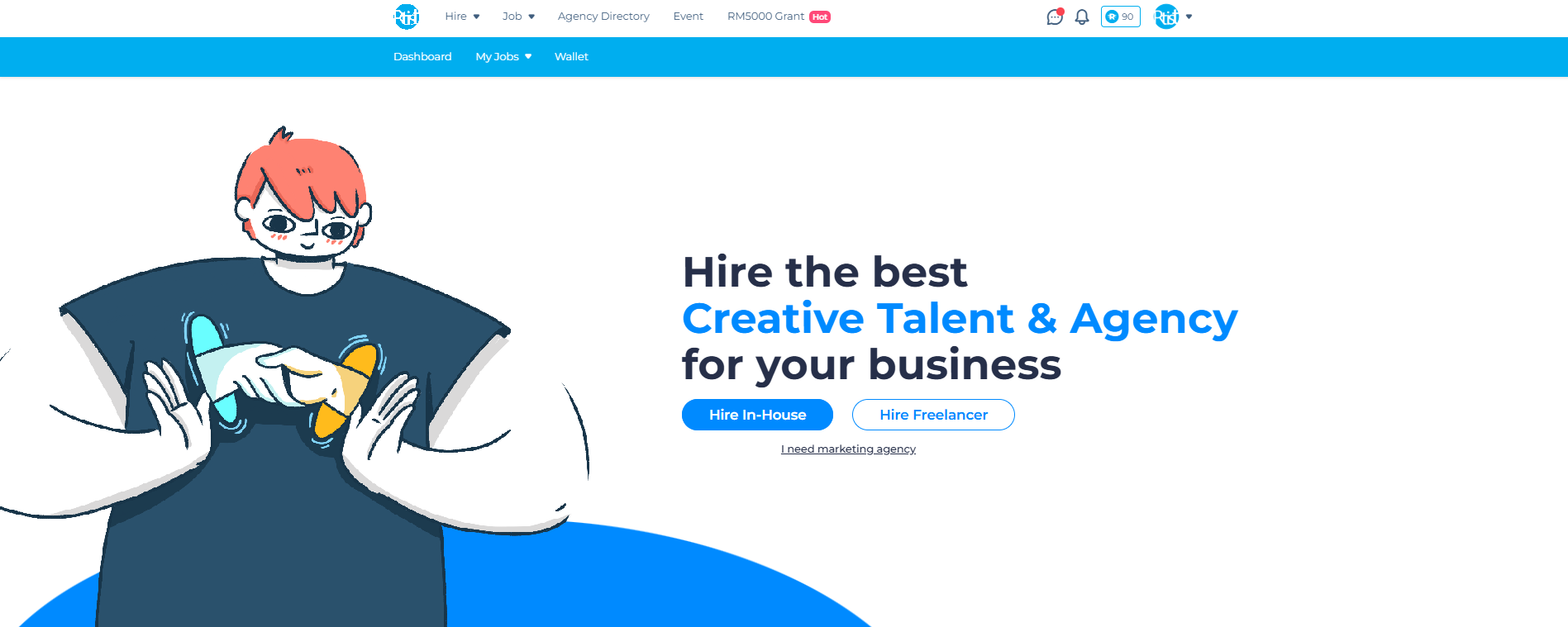
Instead of relying on scattered profiles, businesses can use platforms like www.rtist.co to browse structured portfolios of graphic designers, illustrators, UI/UX designers, and other creative professionals.
This allows companies to evaluate:
- Real work quality
- Style consistency
- Experience level
- Design versatility
before making hiring decisions.
Final Thoughts
A great graphic designer is not defined by tools alone.
The best designers combine:
- Technical execution skills
- Strong creative thinking
- Branding and marketing understanding
- Clear communication
- Problem-solving ability
When hiring, focus less on flashy visuals and more on how the designer thinks, communicates, and solves problems.
And when combined with structured discovery platforms like www.rtist.co, businesses can significantly improve their chances of finding designers who truly fit their needs.