When hiring a designer, most companies start by looking at portfolios. The problem is that many businesses don't actually know what they should be looking for.
A portfolio filled with beautiful visuals does not automatically mean the designer can solve business problems. Likewise, some designers with less flashy portfolios may have strong commercial thinking and consistently deliver results for clients.
For Malaysian SMEs, startups, and marketing teams, the goal is not simply to find a talented designer, it is to find someone who can help achieve business objectives through design.
This guide explains how to evaluate a designer portfolio properly, including creativity, case studies, commercial awareness, communication skills, and overall fit for your business.
1. Understand What You Are Hiring For
Before reviewing portfolios, clarify your hiring objective.

Different projects require different skills
For example:
- A branding project requires strong identity design skills
- A startup app requires UI/UX expertise
- A marketing campaign requires conversion-focused creatives
- An e-commerce business needs promotional design experience
A common hiring mistake is judging all portfolios using the same criteria.
A designer who excels at branding may not be the best choice for performance marketing creatives.
2. Look Beyond Visual Appeal

One of the biggest mistakes companies make is choosing the most visually attractive portfolio without understanding the thinking behind the work.
Ask these questions
- What problem was the designer solving?
- Who was the target audience?
- Why was this design approach chosen?
- Did the project achieve its objective?
Good design should serve a purpose.
For example, a social media advertisement that generates sales is often more valuable than an artistic design that receives attention but produces no business outcome.
3. Evaluate Portfolio Relevance

Not every strong designer is the right designer for your project.
Look for similar project experience
If you are:
- An F&B business, look for restaurant or consumer brand projects
- A startup, look for product or SaaS experience
- An e-commerce company, look for campaign and conversion-focused work
- A corporate business, look for professional branding projects
Malaysian business example
A skincare SME selling on Shopee should prioritize designers who have experience creating product visuals, promotional banners, and campaign creatives rather than someone focused entirely on illustration work.
Relevant experience reduces onboarding time and improves project outcomes.
4. Review Case Studies, Not Just Images
The strongest portfolios include case studies.
What a good case study should include
- Project background
- Business challenge
- Design process
- Final solution
- Results or outcomes
Case studies reveal how a designer thinks.
Anyone can display a finished logo. Fewer designers can explain how they arrived at the final solution and why it worked for the client.
What to watch out for
Portfolios that only show final visuals without context may make it difficult to assess actual problem-solving ability.
5. Assess Creativity Properly

Creativity is important, but it should be evaluated carefully.
Signs of strong creativity
- Original concepts
- Adaptability across industries
- Unique visual approaches
- Fresh problem-solving ideas
Signs of weak creativity
- Repetitive styles across all projects
- Heavy reliance on trends
- Designs that look similar to competitors
The best designers can adapt their creativity to different audiences and business objectives rather than applying the same style everywhere.
6. Evaluate Commercial Thinking

Many businesses overlook this area entirely.
What is commercial thinking?
Commercial thinking means understanding how design contributes to business goals.
Examples include:
- Improving conversion rates
- Supporting sales campaigns
- Increasing brand recognition
- Enhancing user experience
Questions to ask
- How would this designer improve a landing page?
- Can they explain design decisions from a business perspective?
- Do they understand customer behaviour?
For example, an e-commerce designer should understand how product images, promotions, and call-to-action placement affect customer purchasing decisions.
Reviewing portfolios can be time-consuming, especially when comparing dozens of candidates. Malaysian businesses use platforms like Rtist.co to access designers with curated portfolios and relevant industry experience, making the evaluation process more efficient.
7. Look for Consistency

A portfolio should demonstrate consistent quality.
Strong portfolios show
- Consistent attention to detail
- Professional execution
- Reliable quality across projects
- Strong visual standards
Red flags
- One exceptional project surrounded by weaker work
- Inconsistent design quality
- Large differences in execution standards
Consistency often predicts future performance better than a single standout project.
8. Interview for Design Thinking

Once you've shortlisted candidates, use interviews to validate what you saw in the portfolio.
Questions to ask
- Walk me through one of your projects.
- What challenges did you face?
- How did you handle client feedback?
- What would you improve if you could revisit the project?
The goal is to understand how they think, not just what they designed.
10. Common Portfolio Evaluation Mistakes
Choosing based on style alone
Visual style matters, but business impact matters more.
Ignoring industry relevance
Experience in your sector can significantly improve outcomes.
Overlooking communication skills
Poor communication can derail otherwise successful projects.
Focusing only on technical skills
Software proficiency does not automatically translate into strategic design thinking.
Rushing the review process
A portfolio should be reviewed carefully, especially for long-term hires.
11. A Simple Portfolio Evaluation Checklist
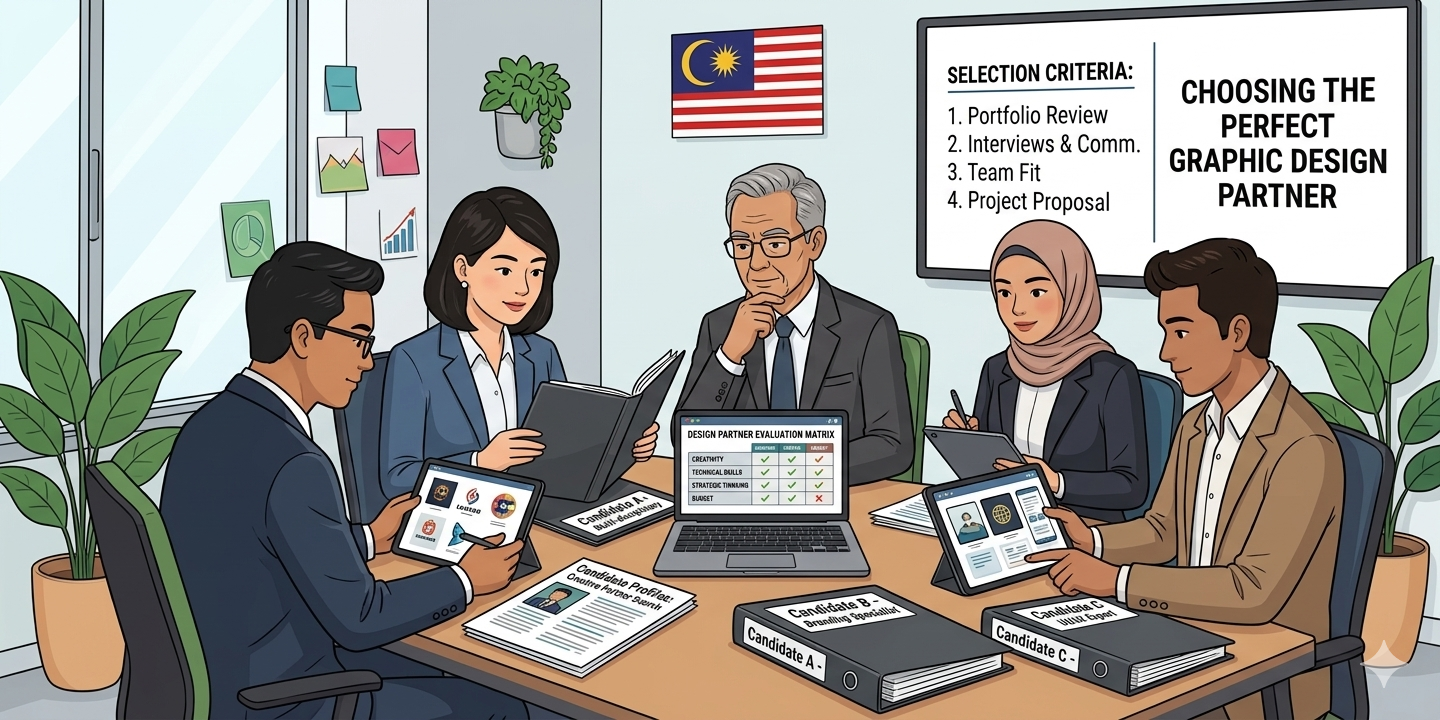
Before hiring, ask:
- Does the portfolio contain relevant project experience?
- Are there detailed case studies?
- Can the designer explain their decisions?
- Is the quality consistent?
- Do they demonstrate commercial awareness?
- Do they communicate clearly?
- Can they adapt to different business needs?
If the answer is "yes" to most of these questions, the designer is likely worth progressing to the next stage.
Conclusion
Evaluating a designer portfolio is about much more than finding attractive visuals. The best designers combine creativity with problem-solving, commercial thinking, and strong communication skills.
For Malaysian businesses, the goal should be to identify designers who understand both design and business outcomes. A portfolio should reveal not only what a designer created, but also how they think, solve problems, and contribute to business growth.
When companies focus on these factors, they make better hiring decisions and build stronger creative teams.
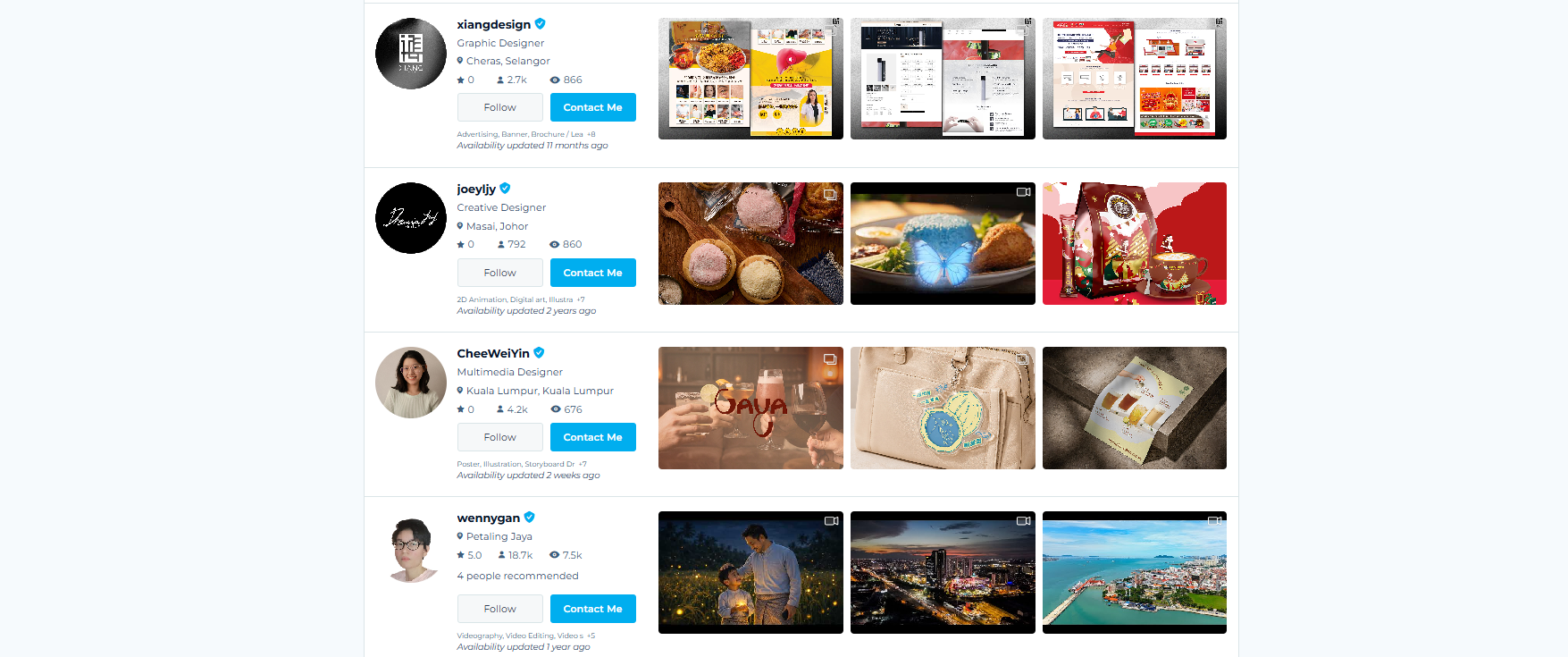
If you're reviewing multiple designers and want a more efficient way to identify qualified creative talent, platforms like Rtist.co help Malaysian businesses discover designers through portfolio-driven profiles, making it easier to evaluate skills, experience, and creative fit before hiring.