Hiring a good designer is not just about finding someone with strong visuals, it’s about finding someone who understands your brand, your goals, and your audience.
However, many SMEs and startups in Malaysia still make avoidable mistakes when hiring designers. These mistakes often lead to poor-quality output, repeated revisions, wasted budget, and frustration on both sides.
In this article, we’ll break down the most common hiring mistakes companies make when hiring designers and how to fix them.
1. Price Bias: Choosing the Cheapest Designer
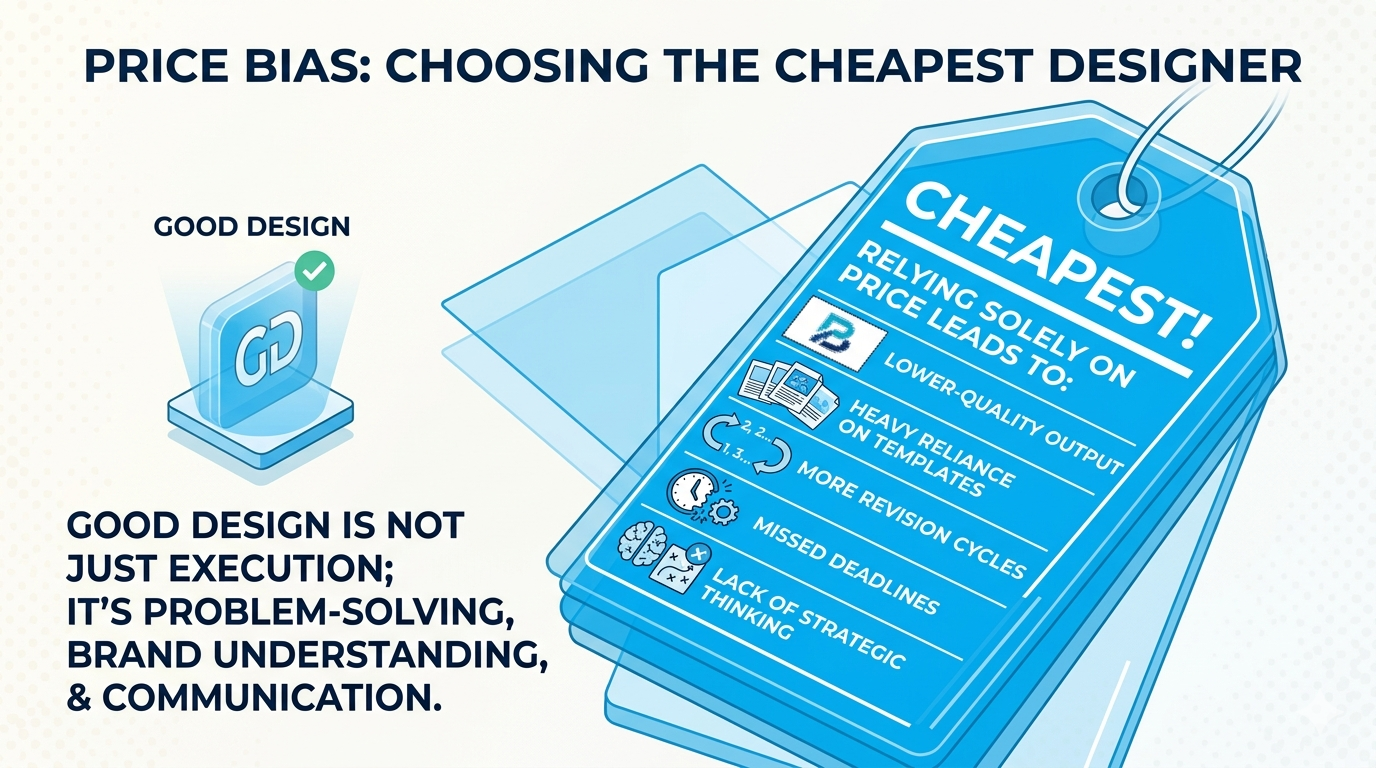
One of the most common mistakes is hiring based on price alone.
Many businesses assume:
“All designers can do the same job, so we’ll just pick the cheapest one.”
This is rarely true.
What actually happens:
- Lower-quality output
- Heavy reliance on templates
- More revision cycles
- Missed deadlines
- Lack of strategic thinking
Good design is not just execution, it’s problem-solving, brand understanding, and communication.
Better approach:
Instead of choosing the cheapest option, evaluate:
- Portfolio quality
- Industry experience
- Communication skills
- Consistency of past work
- Cheaper often ends up costing more in revisions and delays.
2. Ignoring Portfolio Depth

Many companies only look at a designer’s best-looking work and assume they are skilled.
This is a mistake.
A strong portfolio is not about one or two impressive pieces, it’s about consistency across multiple projects.
What businesses should check:
- Consistency across different designs
- Real client work vs personal concepts
- Ability to adapt across styles
- Problem-solving in different industries
A designer who only shows “nice visuals” but lacks depth may struggle with real business requirements.
For creative hiring, platforms like Rtist help businesses evaluate designers more effectively by showcasing structured portfolios, making it easier to compare real-world work instead of isolated samples.
3. Unclear Scope of Work
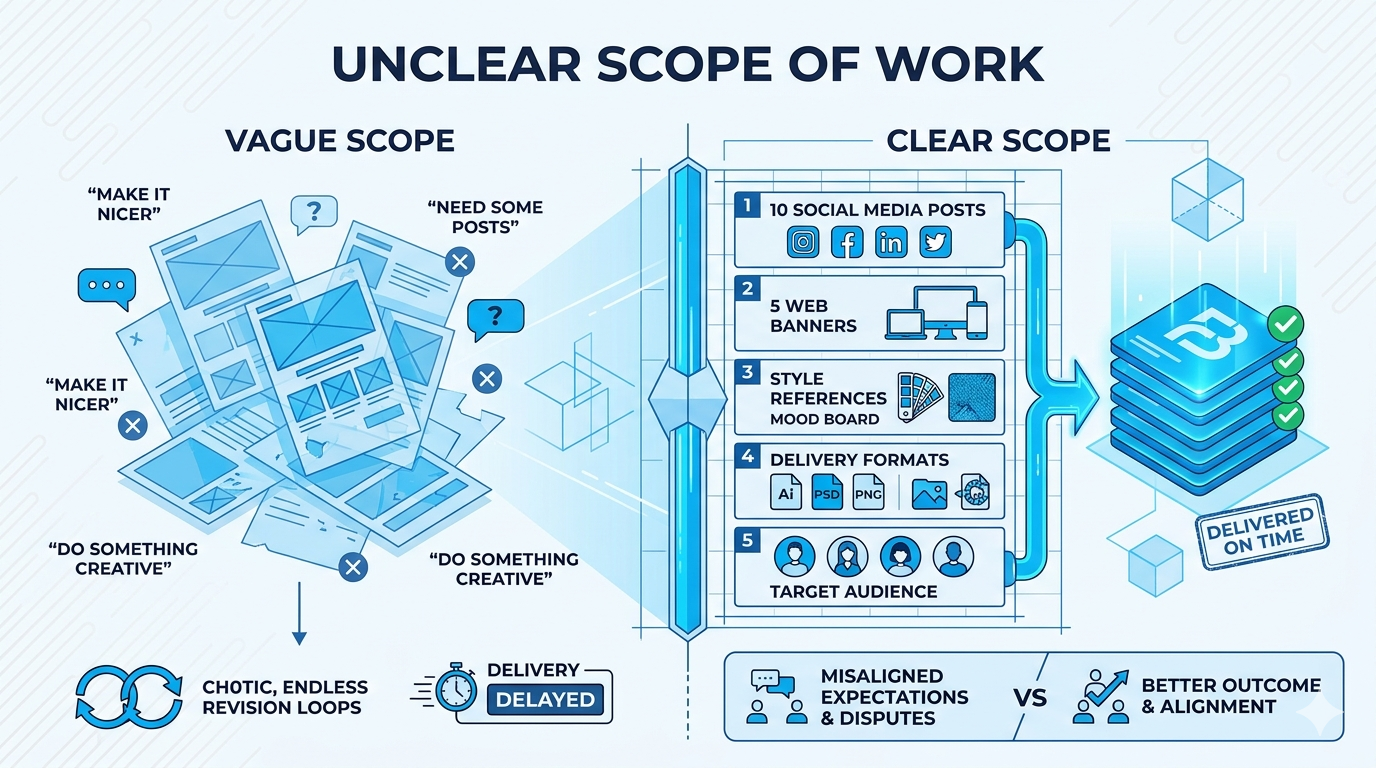
A vague job description is one of the fastest ways to get poor results.
Many companies say:
“Design some social media posts for our brand.”
But this leaves too much room for interpretation.
Common problems caused by unclear scope:
- Misaligned expectations
- Constant revisions
- Delays in delivery
- Disputes over deliverables
What a clear scope should include:
- Number of deliverables (e.g. 10 posts, 5 banners)
- Format requirements (PNG, AI, PSD, etc.)
- Target audience
- Platform usage (Instagram, ads, print, etc.)
- Style references
The clearer the scope, the better the outcome.
4. Weak Interview Process
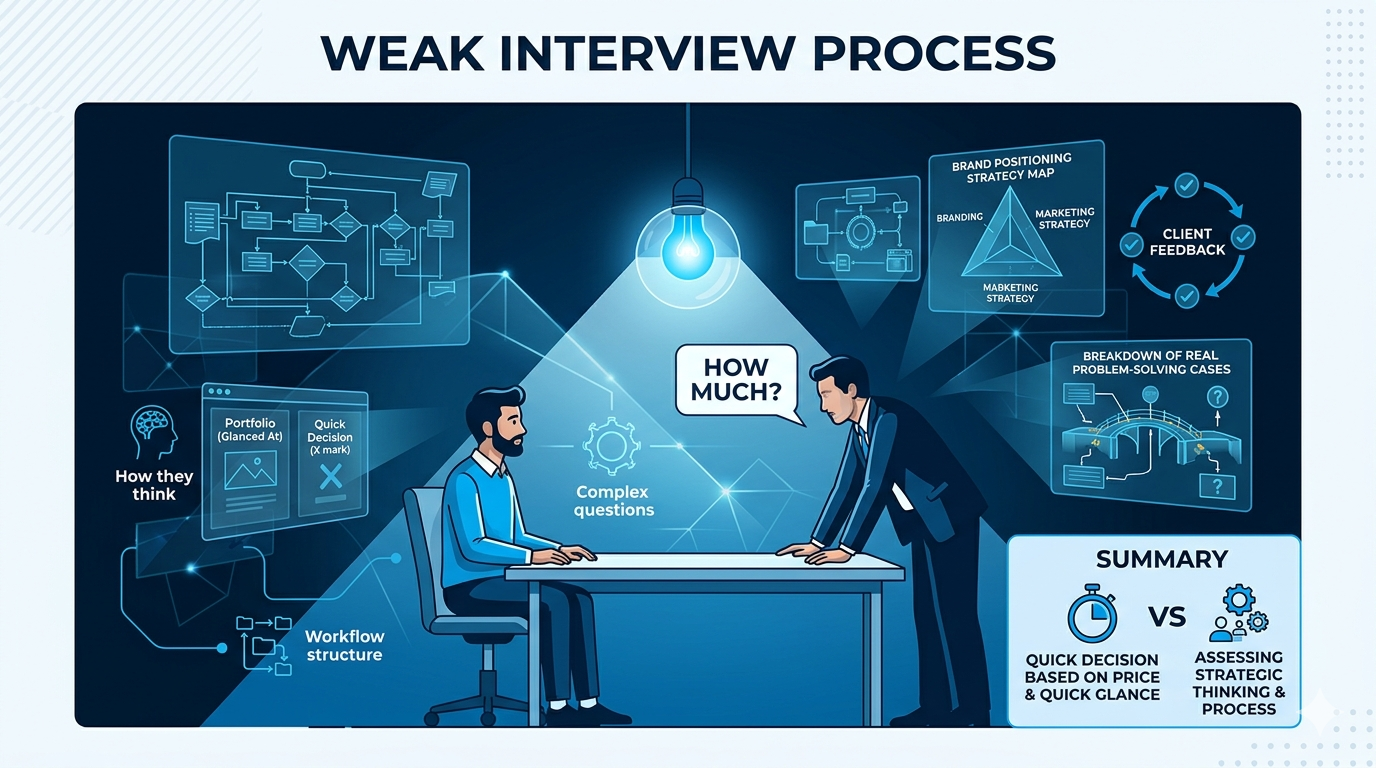
Many companies don’t actually “interview” designers properly.
Instead, they:
- Glance at a portfolio
- Ask about price
- Make a quick decision
This is not enough.
A proper interview should assess:
- How the designer thinks (not just how they design)
- Their understanding of branding and marketing
- Their process from concept to final output
- How they handle feedback and revisions
Questions to ask:
- Can you walk me through your design process?
- How do you handle client feedback?
- How do you approach a new brand you’ve never worked with before?
- Can you explain a project where you solved a design problem?
Good designers don’t just “make things look good”, they think strategically.
5. Confusing Style with Skill
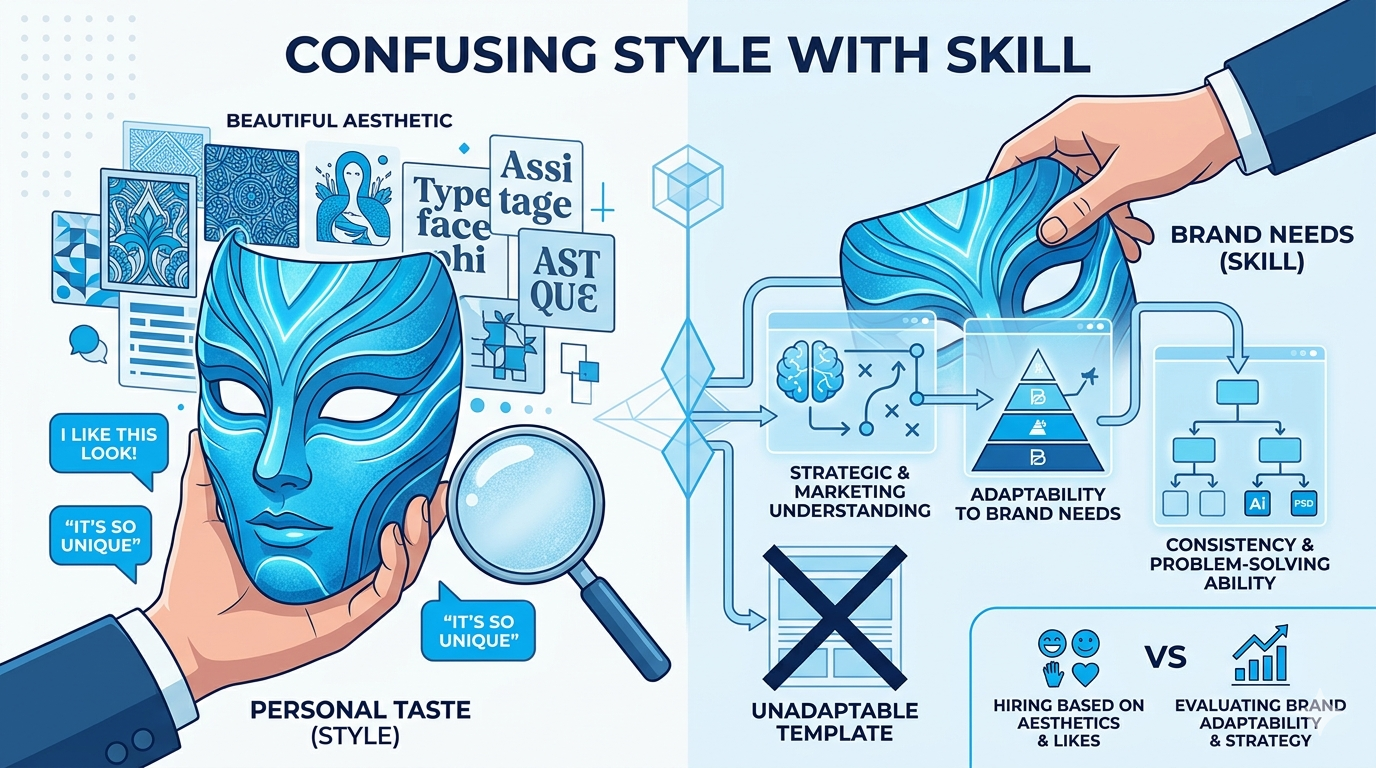
A common mistake is choosing designers based on personal taste.
For example:
“I like this style, so this designer must be good.”
But style is not the same as skill.
A designer may have a beautiful aesthetic but lack:
- Adaptability
- Marketing understanding
- Consistency
- Problem-solving ability
The right designer is not just someone whose style you like, but someone who can adapt to your brand needs.
6. Not Testing Before Large Projects

Many companies assign big projects immediately without testing the designer first.
This increases risk.
Better approach:
Start with a small paid task such as:
- One social media post
- One campaign visual
- One logo concept
- One landing page design
This helps evaluate:
- Quality
- Communication
- Speed
- Attention to detail
A small test can prevent costly mistakes later.
7. Poor Communication During Hiring
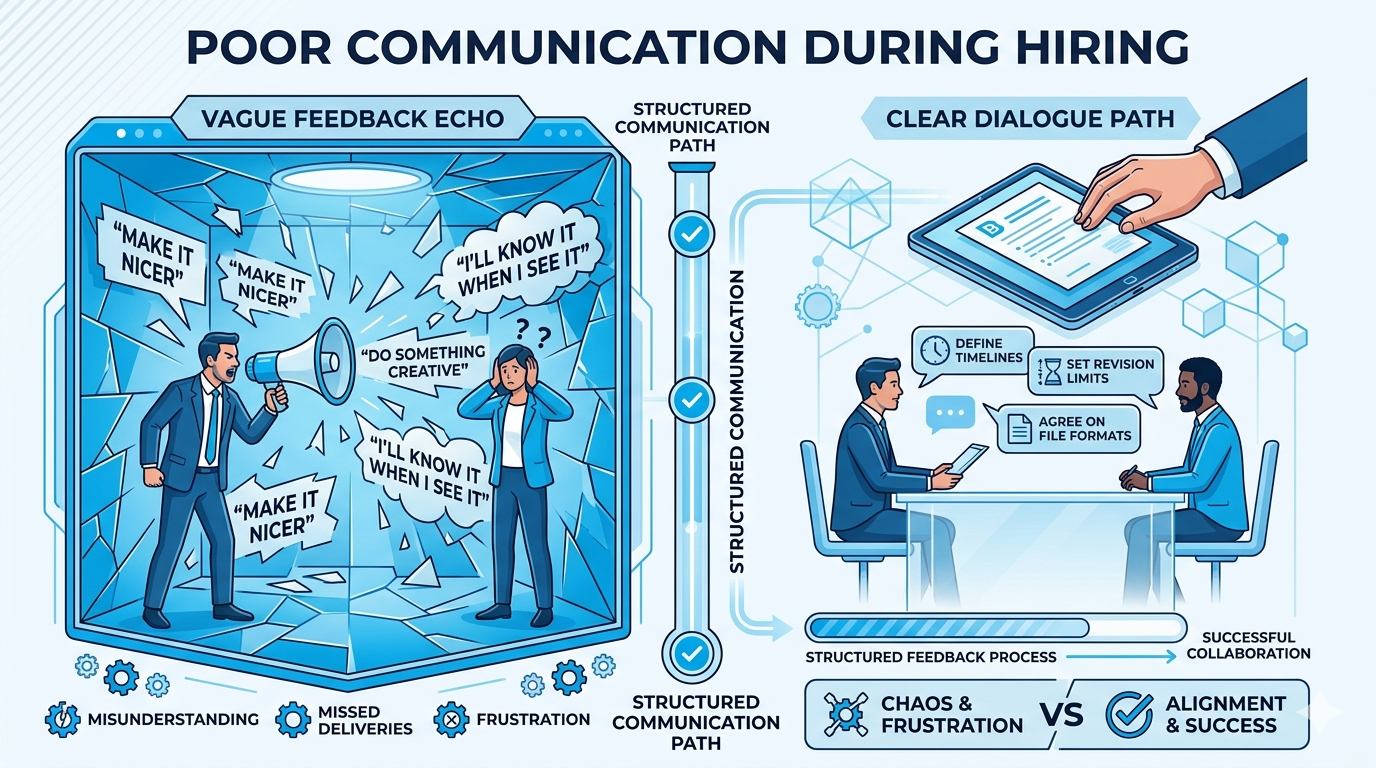
Even skilled designers fail when communication is unclear.
Common issues include:
- Vague feedback like “make it nicer”
- Delayed responses from clients
- Changing direction mid-project
- No structured approval process
Good communication is as important as design skill.
Without it, even the best designers will struggle.
8. No Structured Hiring Process
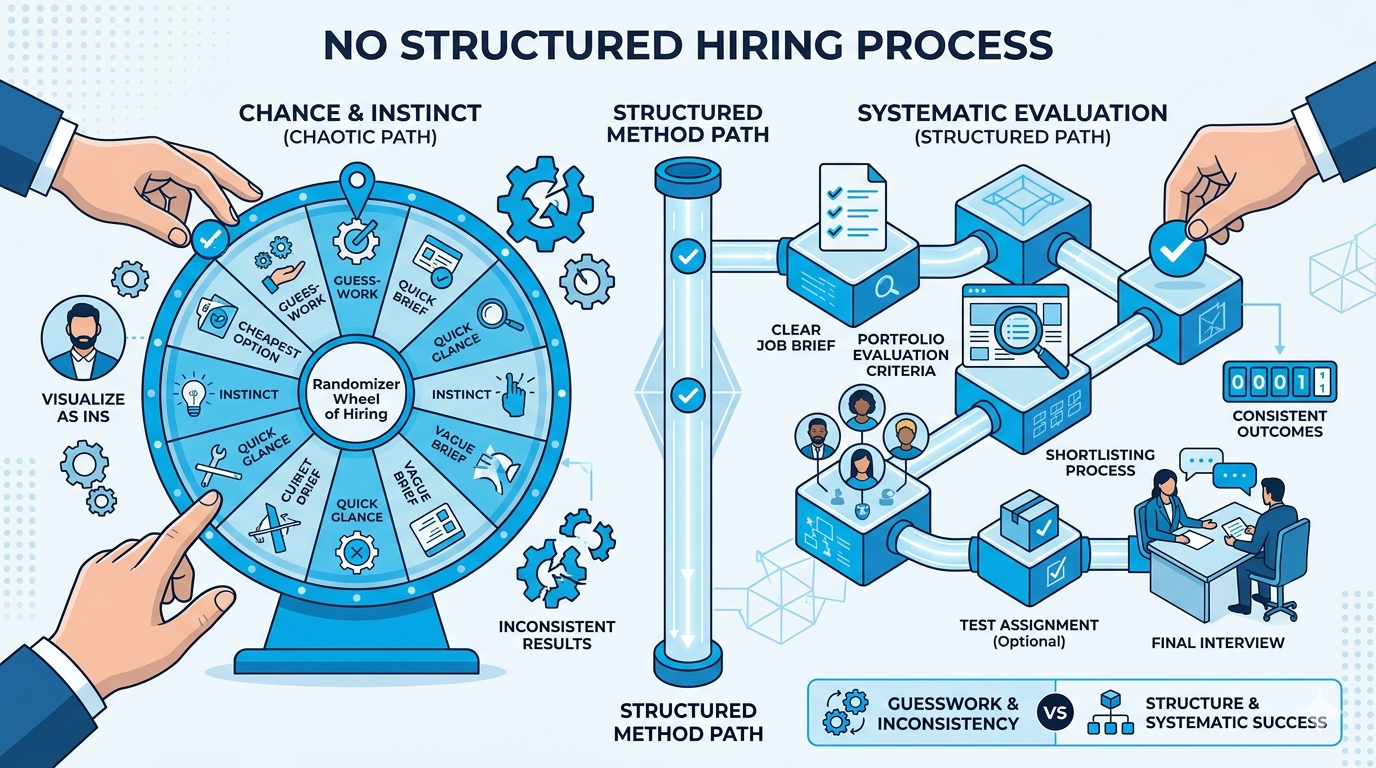
Many companies treat designer hiring as an informal decision.
There is:
- No checklist
- No evaluation criteria
- No comparison framework
This leads to inconsistent hiring decisions.
A structured process should include:
- Clear job brief
- Portfolio evaluation criteria
- Shortlisting process
- Test assignment (optional)
- Final interview
Structure leads to better hiring outcomes.
9. Overlooking Real-World Experience
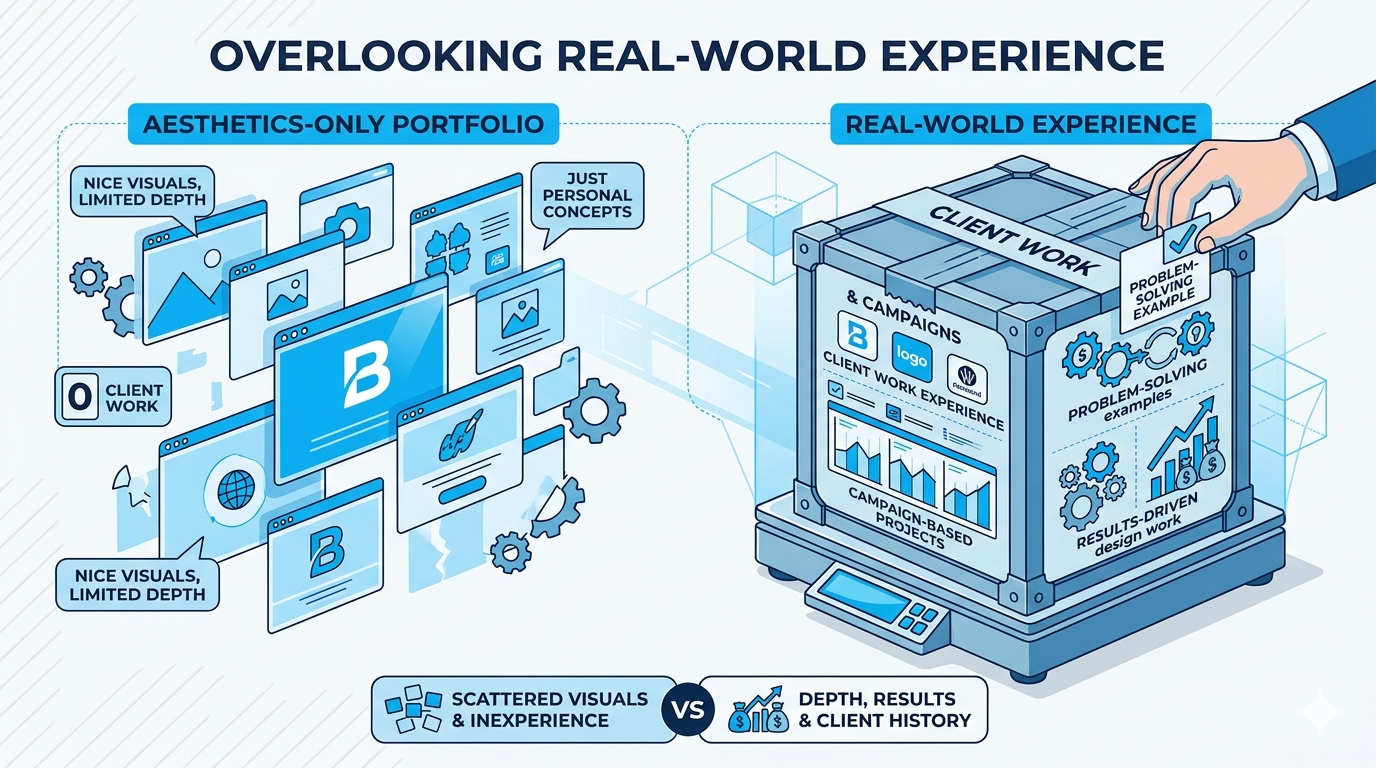
Some designers have strong visuals but limited real-world experience.
Businesses should look for:
- Client work experience
- Campaign-based projects
- Problem-solving examples
- Results-driven design work
Real-world experience matters more than aesthetic-only portfolios.
10. Not Aligning on Expectations Early
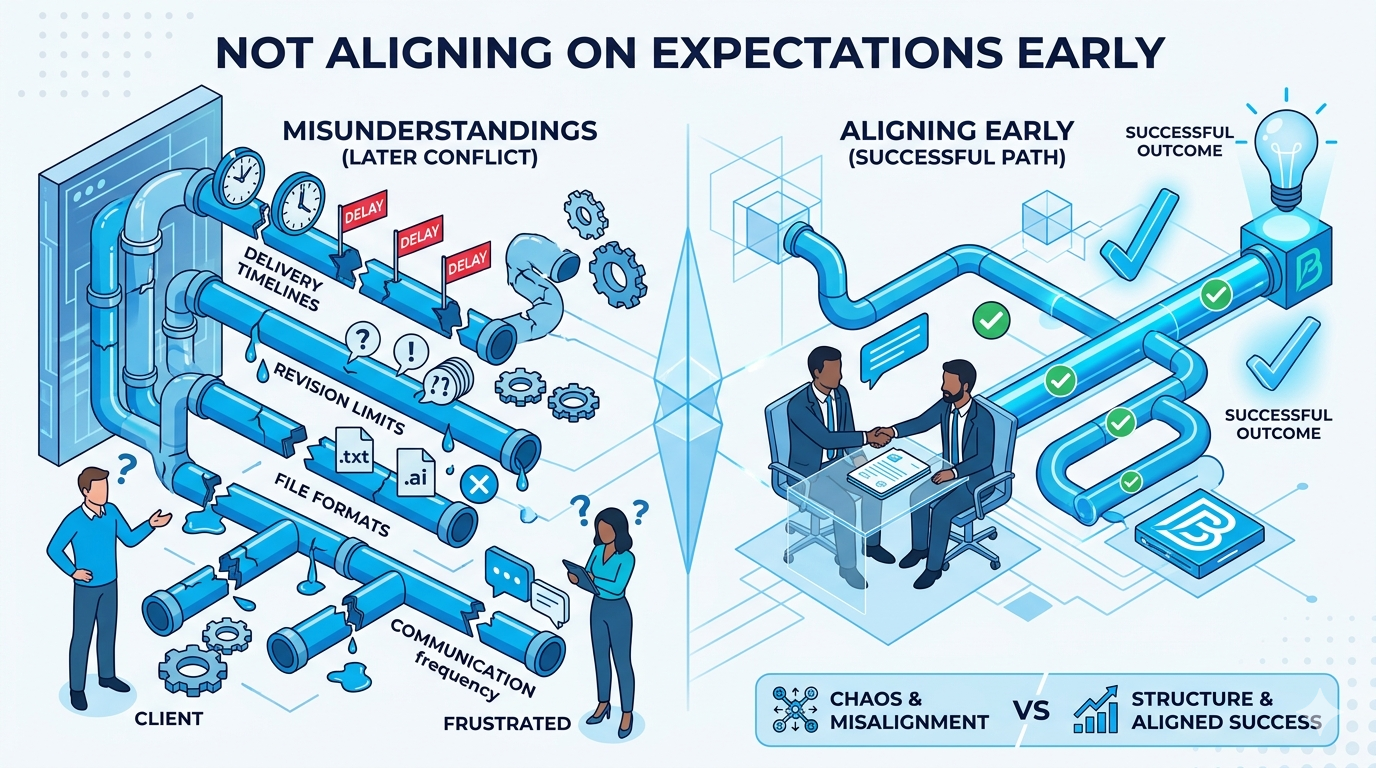
Many problems happen because expectations are not aligned at the start.
This includes:
- Delivery timelines
- Revision limits
- Communication frequency
- File formats and outputs
When expectations are unclear, misunderstandings are inevitable.
Final Thoughts
Most hiring mistakes when choosing designers come from one root issue:
Lack of structure in the hiring process.
Instead of relying on instinct or price alone, companies should adopt a more systematic approach:
- Clear briefs
- Proper portfolio evaluation
- Structured interviews
- Small test projects
- Defined expectations
When these elements are in place, businesses are far more likely to hire designers who deliver high-quality, consistent results.
For companies looking to simplify creative hiring, platforms like www.rtist.co make it easier to review structured portfolios and compare designers before making a decision, reducing guesswork and improving hiring accuracy