When Malaysian companies need to hire designers, they usually consider two very different routes: traditional recruitment agencies and modern creative platforms like Rtist. Both can help you fill roles, but they are built for completely different hiring needs.
The real difference comes down to how fast you can hire, how much it costs, how well the talent fits creative roles, and how flexible the process is.
1. Core Approach: Job Matching vs Creative Hiring Platform
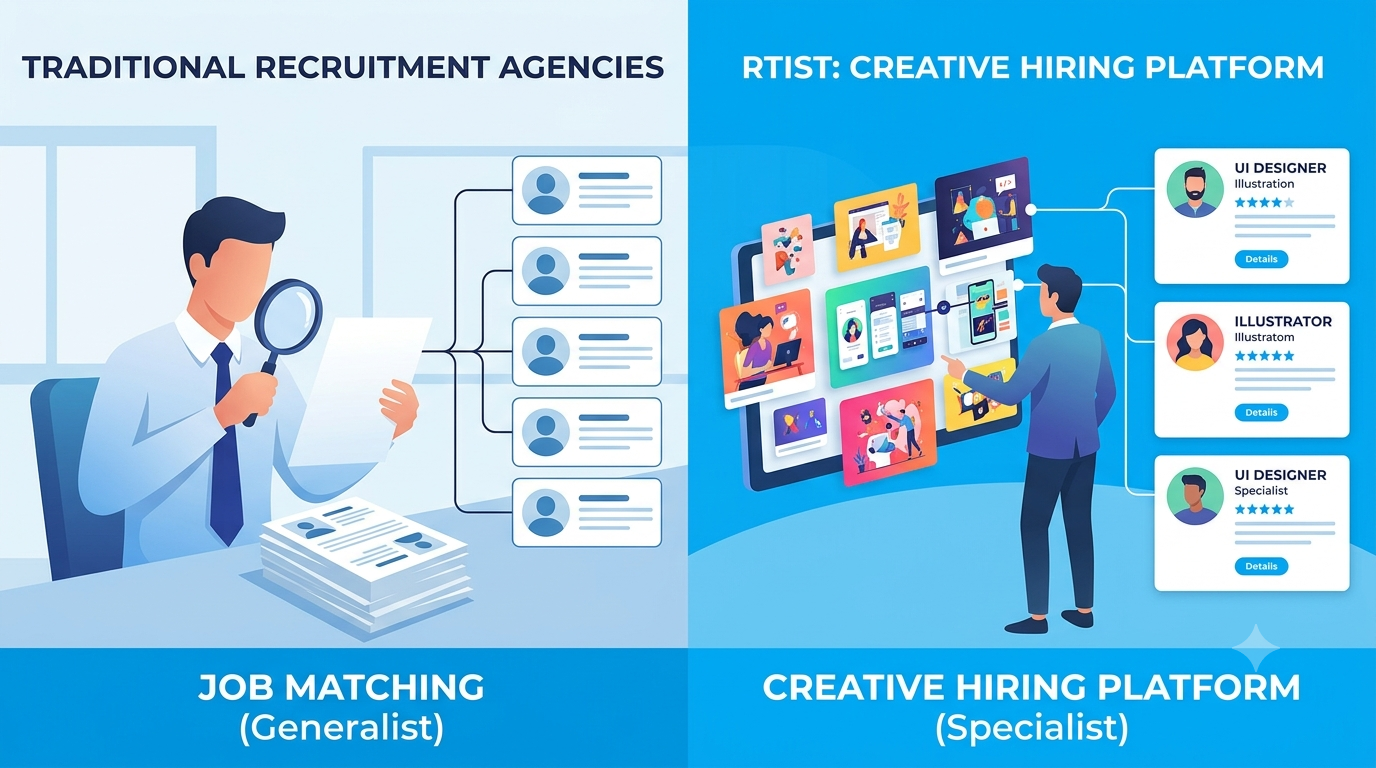
Traditional recruitment agencies
Recruitment agencies are built to fill job vacancies across many industries, including design roles. Their process is typically:
- Understand job requirements
- Search internal candidate database
- Source candidates from job boards
- Pre-screen and shortlist applicants
- Arrange interviews with employers
They are structured around long-term employment hiring.
Rtist
Rtist is built specifically for creative hiring, focusing on designers, illustrators, UI/UX talent, and other creative professionals.
The process is more direct:
- Browse creative portfolios
- Evaluate real design work instantly
- Shortlist based on style and capability
- Engage talent for freelance or project-based work
It is designed for speed and visual decision-making.
2. Speed of Hiring
Recruitment agencies
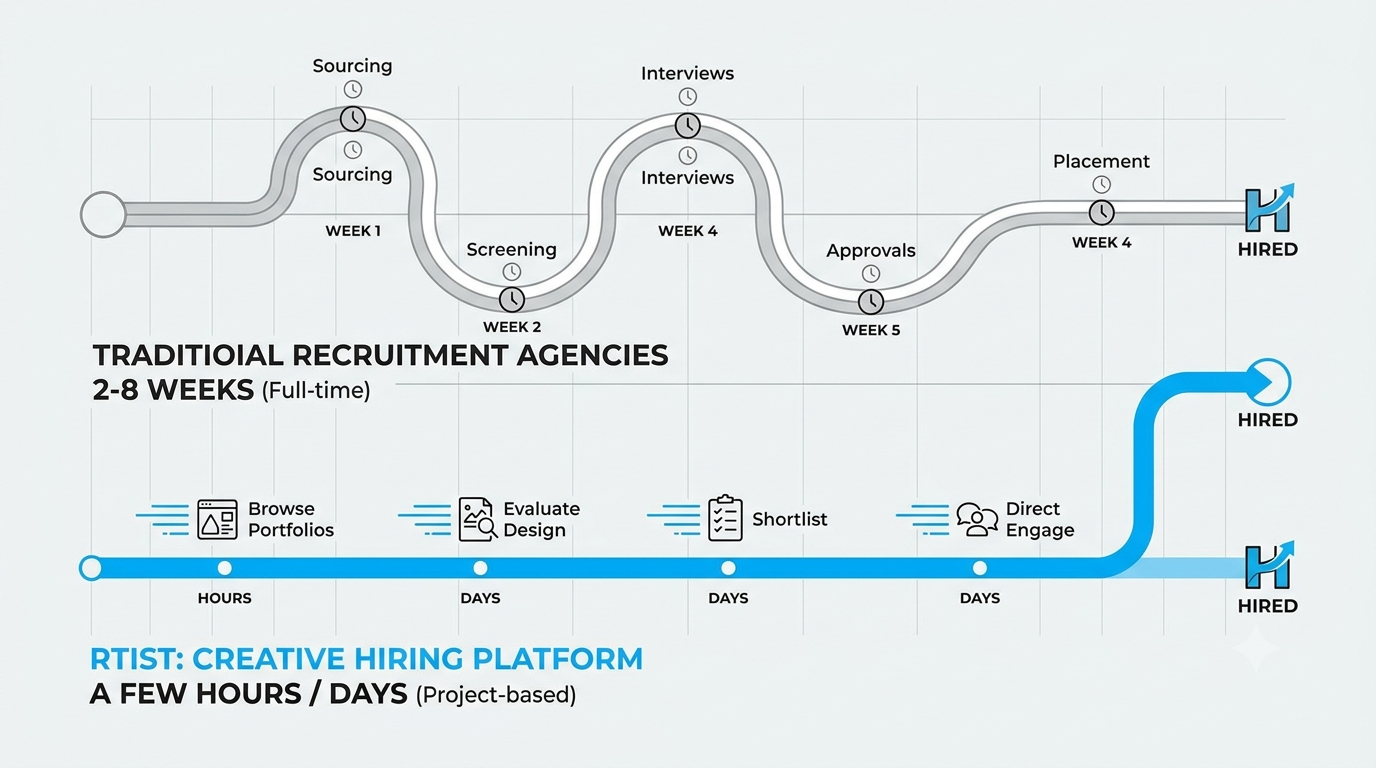
Hiring through agencies is usually slower because:
- Candidate sourcing takes time
- Screening and interviews are scheduled
- Multiple approval stages are involved
- Focus is on full-time placements
Typical timeline:
- 2 to 8 weeks depending on role and seniority
This works well for permanent hires but is not ideal for urgent design work.
Rtist
Rtist is significantly faster because:
- No long sourcing process
- Portfolios are immediately visible
- Shortlisting is visual and direct
- Designers can be engaged quickly for projects
Typical timeline:
- A few hours to a few days depending on decision-making speed and types of role.
This makes it more suitable for fast-moving marketing needs.
3. Cost Structure
Recruitment agencies
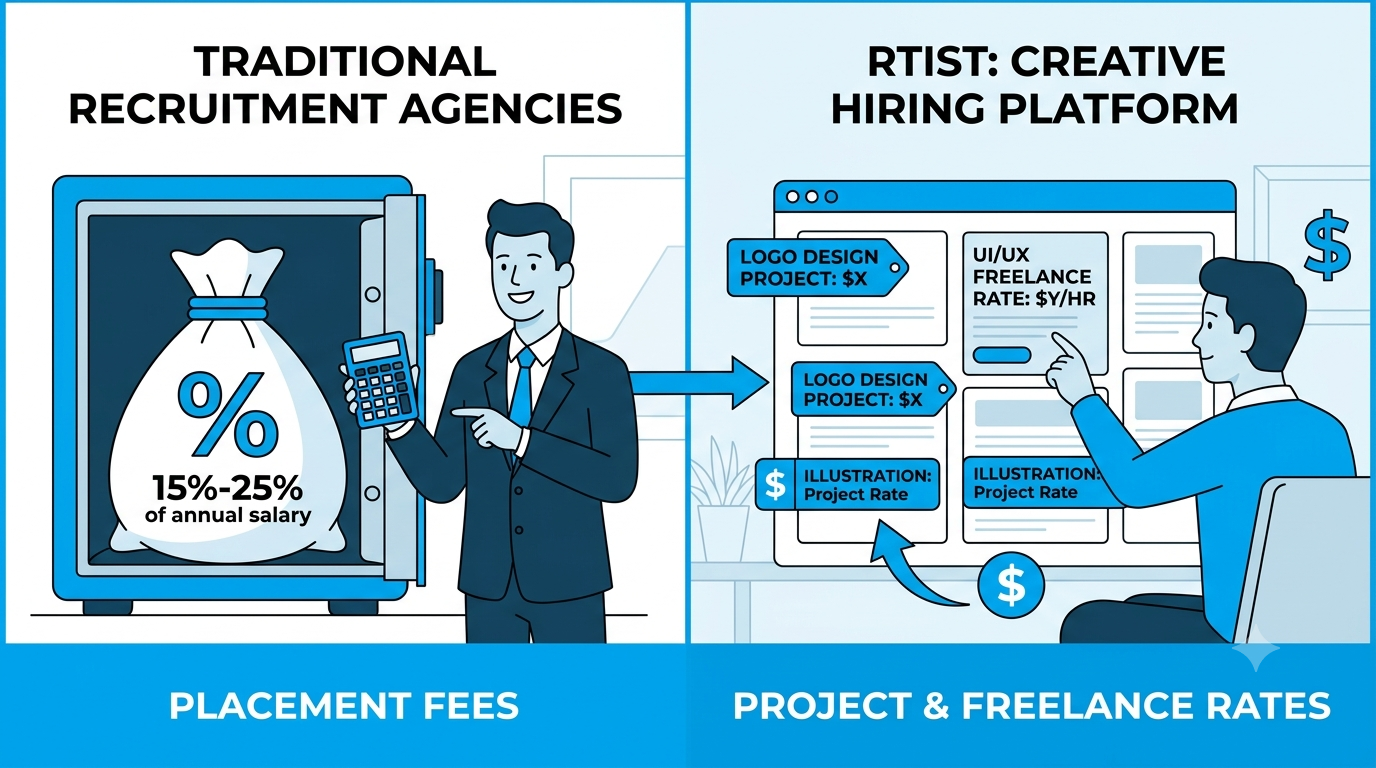
Agencies usually charge:
- A percentage of annual salary (often 15% to 25%)
- Or fixed placement fees
For design roles, this can become expensive, especially for startups or SMEs hiring multiple creatives.
Other cost considerations:
- Replacement guarantees (sometimes limited)
- Long hiring cycles increasing opportunity cost
Rtist
Rtist operates more like a creative hiring platform:
- Project-based pricing or freelance rates
- No large placement fees
- Cost is directly tied to work delivered
- More flexible budgeting for SMEs
This makes it more predictable and scalable for project-based hiring.
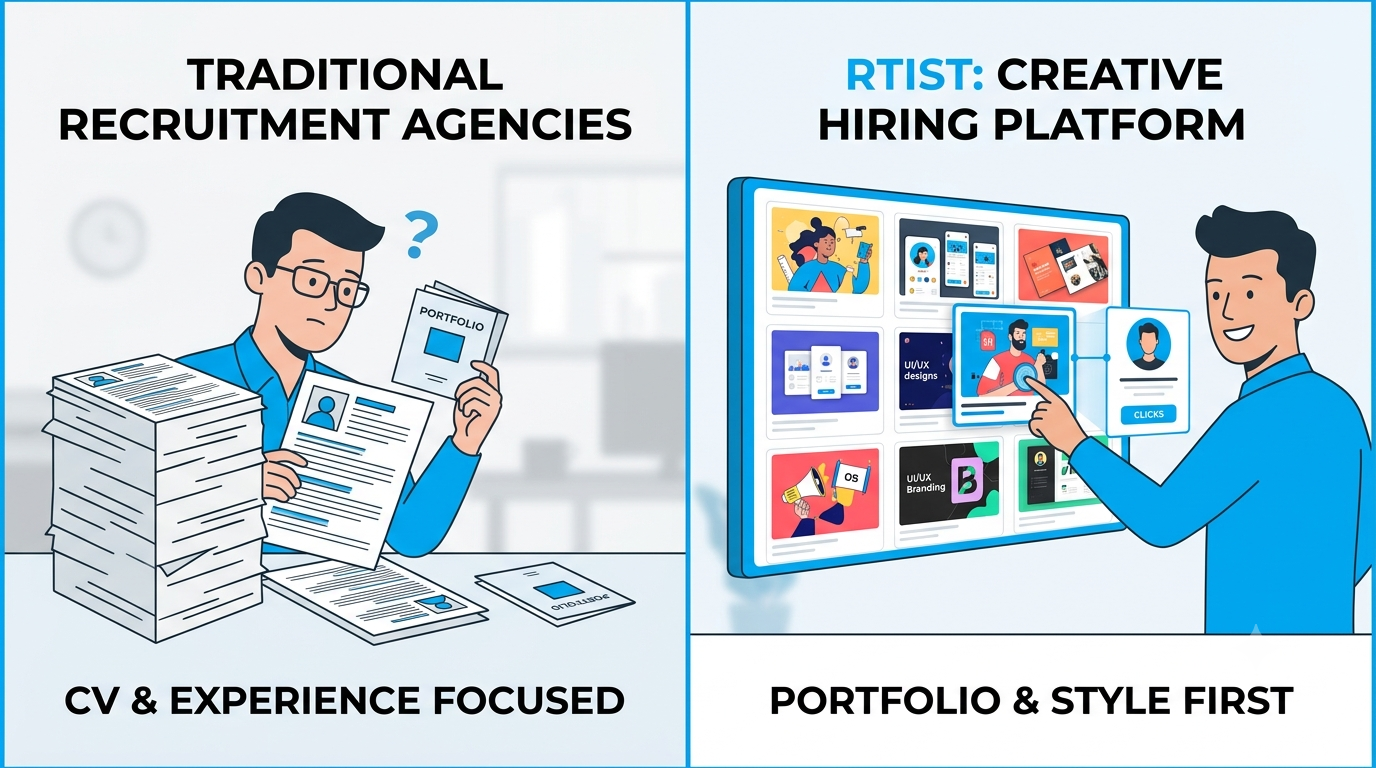
4. Talent Quality and Fit for Design Roles
Recruitment agencies
Agencies are generalist by nature:
- They handle multiple industries, not just creative fields
- Design expertise depends on recruiter knowledge
- Portfolios are not always the main screening tool
- Focus is often on CVs and job experience
This can lead to mismatches in creative expectations.
Rtist
Rtist is focused specifically on creative professionals:
- Portfolio-first evaluation
- Strong emphasis on visual quality and style
- Better alignment with branding and marketing needs
- Easier to judge creative capability quickly
This reduces the risk of hiring someone who looks qualified on paper but cannot deliver visually strong work.
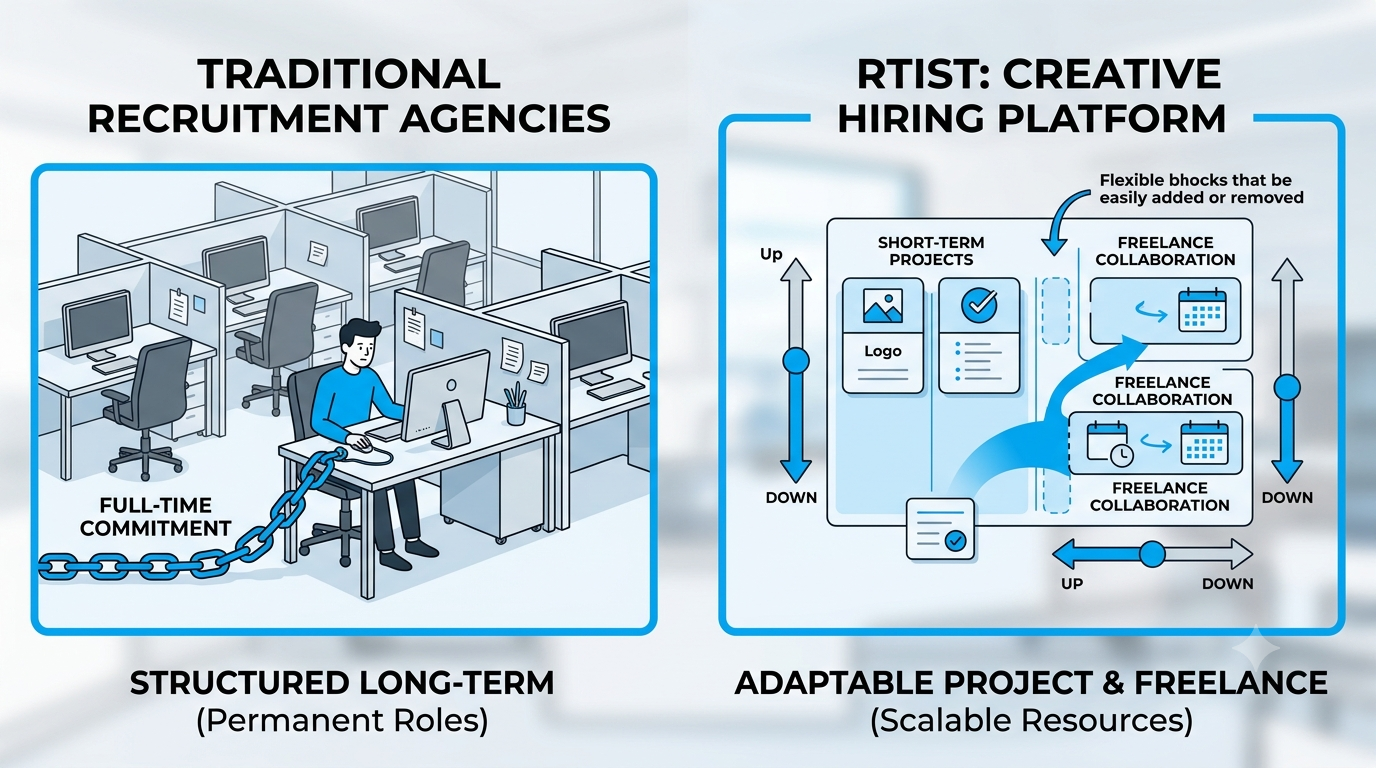
5. Hiring Flexibility
Recruitment agencies
Agencies are best suited for:
- Full-time permanent roles
- Structured corporate hiring processes
- Long-term employment contracts
- Senior or specialised positions
Less flexible for:
- Freelance work
- Short-term projects
- Fast campaign-based needs
Rtist
Rtist offers more flexibility:
- Freelance and project-based hiring
- Short-term or long-term collaboration
- Ability to scale design resources up or down
- Suitable for ongoing creative needs
This flexibility is especially important for SMEs and startups.
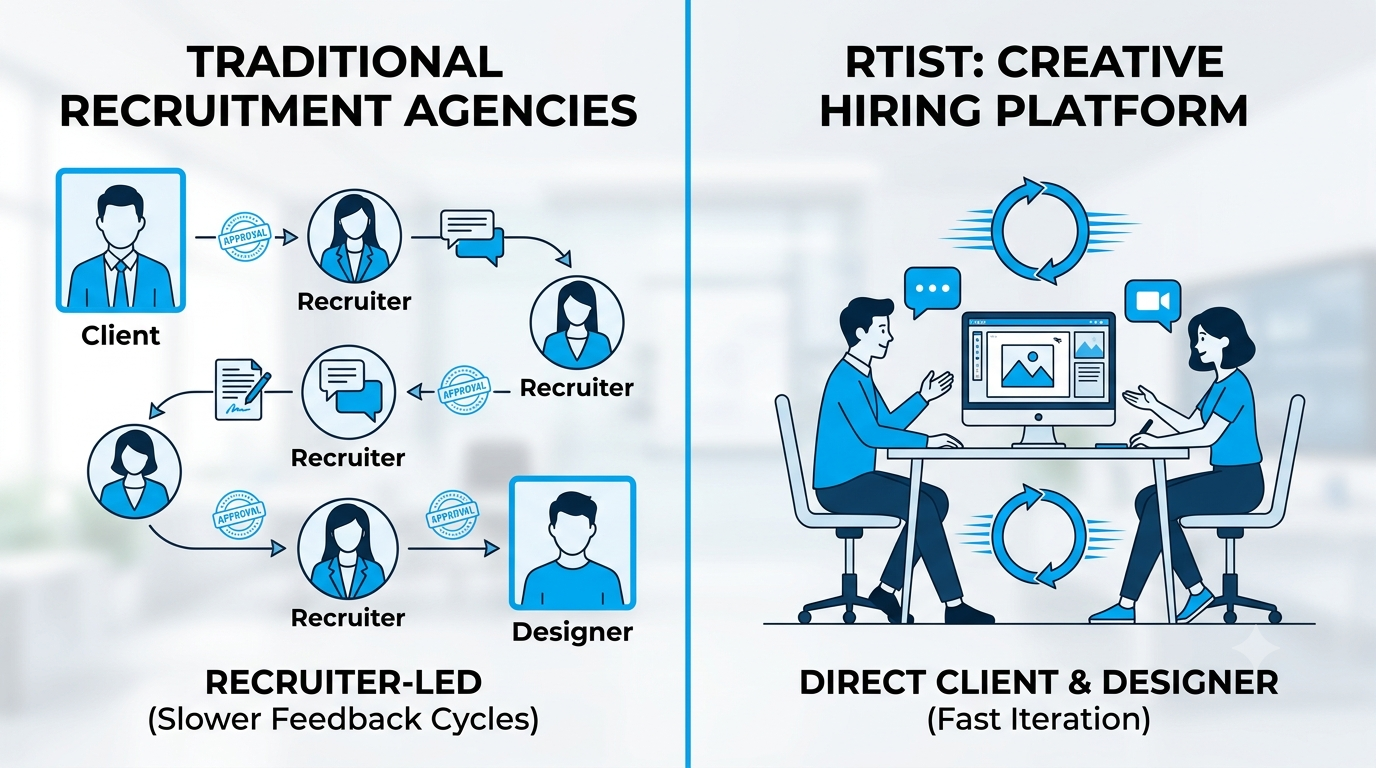
6. Communication and Workflow
Recruitment agencies
- Communication goes through recruiters
- Slower feedback cycles
- Formal interview-based process
- Less involvement in day-to-day project workflow
This adds structure but reduces speed.
Rtist
- Direct communication with designers
- Faster feedback loops
- More collaborative creative process
- Easier iteration during design work
This is more aligned with real-time marketing and branding needs.
7. Best Use Cases
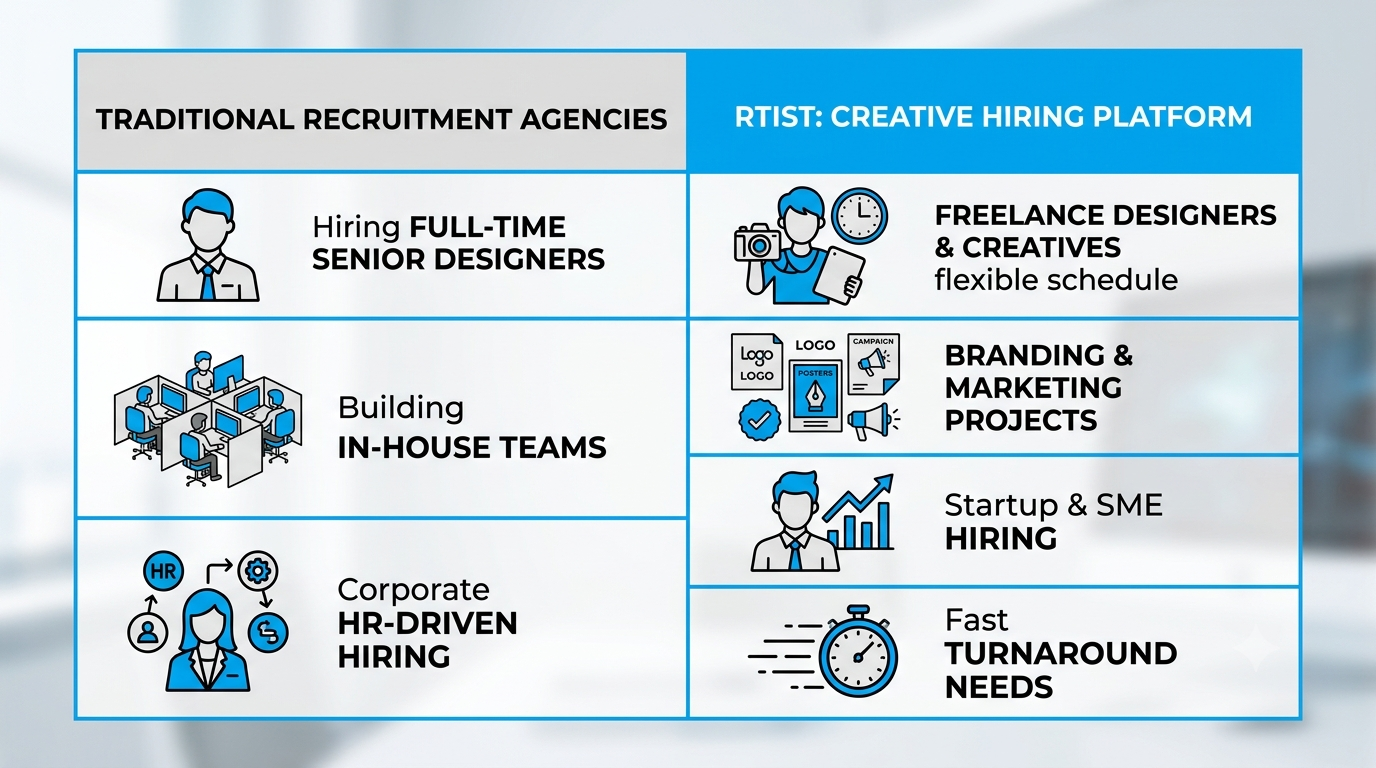
Traditional recruitment agencies are best for:
- Hiring full-time senior designers
- Building in-house creative teams
- Corporate HR-driven hiring processes
- Long-term organisational roles
They are strongest in structured employment hiring.
Rtist is best for:
- Freelance designers and creatives
- Branding and marketing projects
- Startup and SME hiring
- Fast turnaround creative needs
- Flexible or campaign-based work
It is designed for active creative production, not just employment placement.
8. Key Difference in One Line
- Recruitment agencies focus on filling jobs
- Rtist focuses on connecting businesses with active creative talent for real work
Final Verdict
Both options have value, but they solve different problems.
Recruitment agencies are better for structured, long-term hiring within established companies. However, they are often slower and more expensive, especially for creative roles that require frequent output.
Rtist is better for businesses that need fast, flexible, and visually-driven creative hiring, especially when working with freelancers or scaling design output quickly.
For most Malaysian SMEs, startups, and marketing teams, Rtist offers a more practical and efficient way to hire designers because it aligns better with how creative work actually happens today.
Where Rtist Fits In
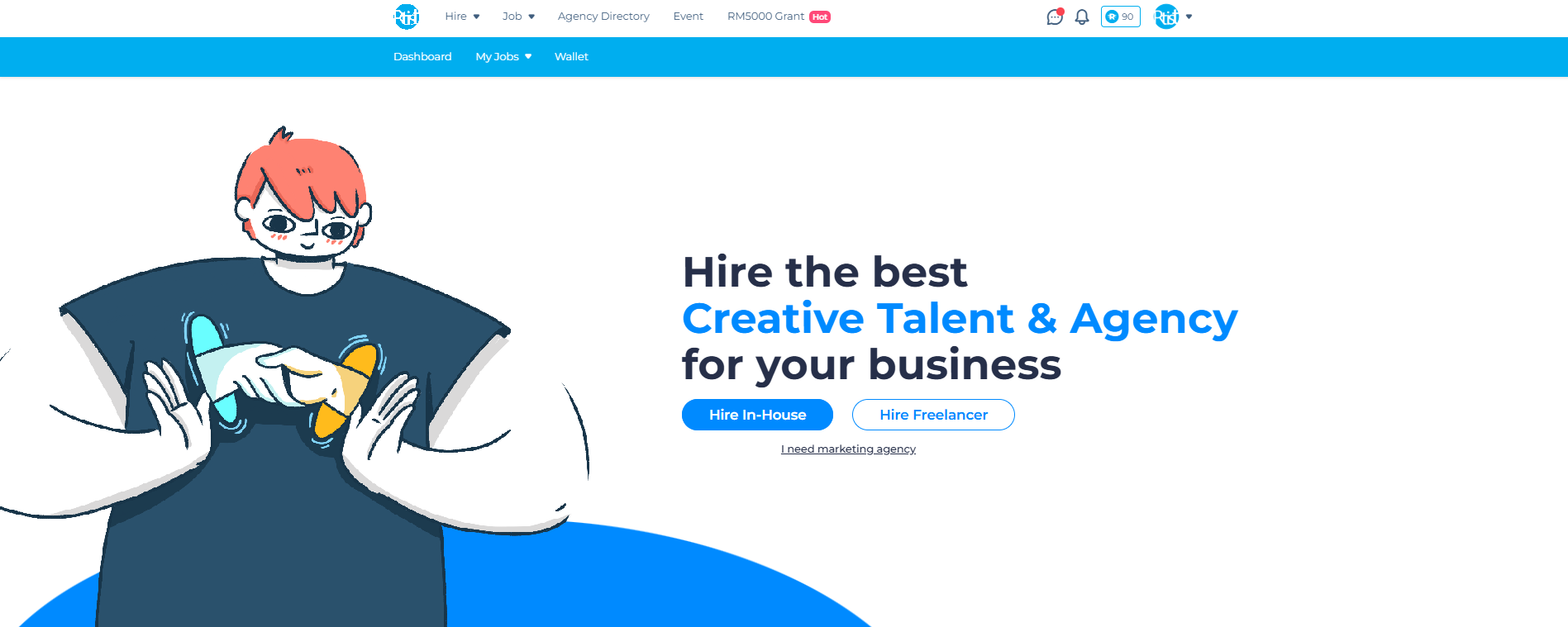
Platforms like www.rtist.co are built specifically to simplify creative hiring by focusing on portfolios, real work, and direct collaboration instead of long recruitment cycles.
This helps businesses move faster from hiring intent to actual creative output without the overhead of traditional agency processes.