A rebrand, a new app interface, or a full marketing campaign redesign can quietly consume tens of thousands of ringgit before a single sale comes in. Ask the marketing manager who approved that spend what it actually returned, and the answer is often "it looks better now," not a number anyone can defend in a budget meeting. This is the real challenge facing business owners, HR managers, and startup founders across Malaysia. Design spending is easy to approve and hard to prove. Getting this right starts long before a project ships. It starts with talent acquisition, because the return on any design investment is only as strong as the designer behind it.
Why Design ROI Feels Impossible to Pin Down

Design ROI is a measure that allows businesses to determine how much design investments translate into tangible business benefits, but for many entrepreneurs it remains difficult to quantify, full of seemingly soft metrics and subjective assessments. Unlike ad spend, where a click or a sale is easy to trace, design is subjective by nature and indirectly affects other areas of the business, including sales, marketing, support, and engineering.
That does not mean it cannot be measured. It means most companies are measuring the wrong things, or not measuring at all.
What the Data Actually Shows
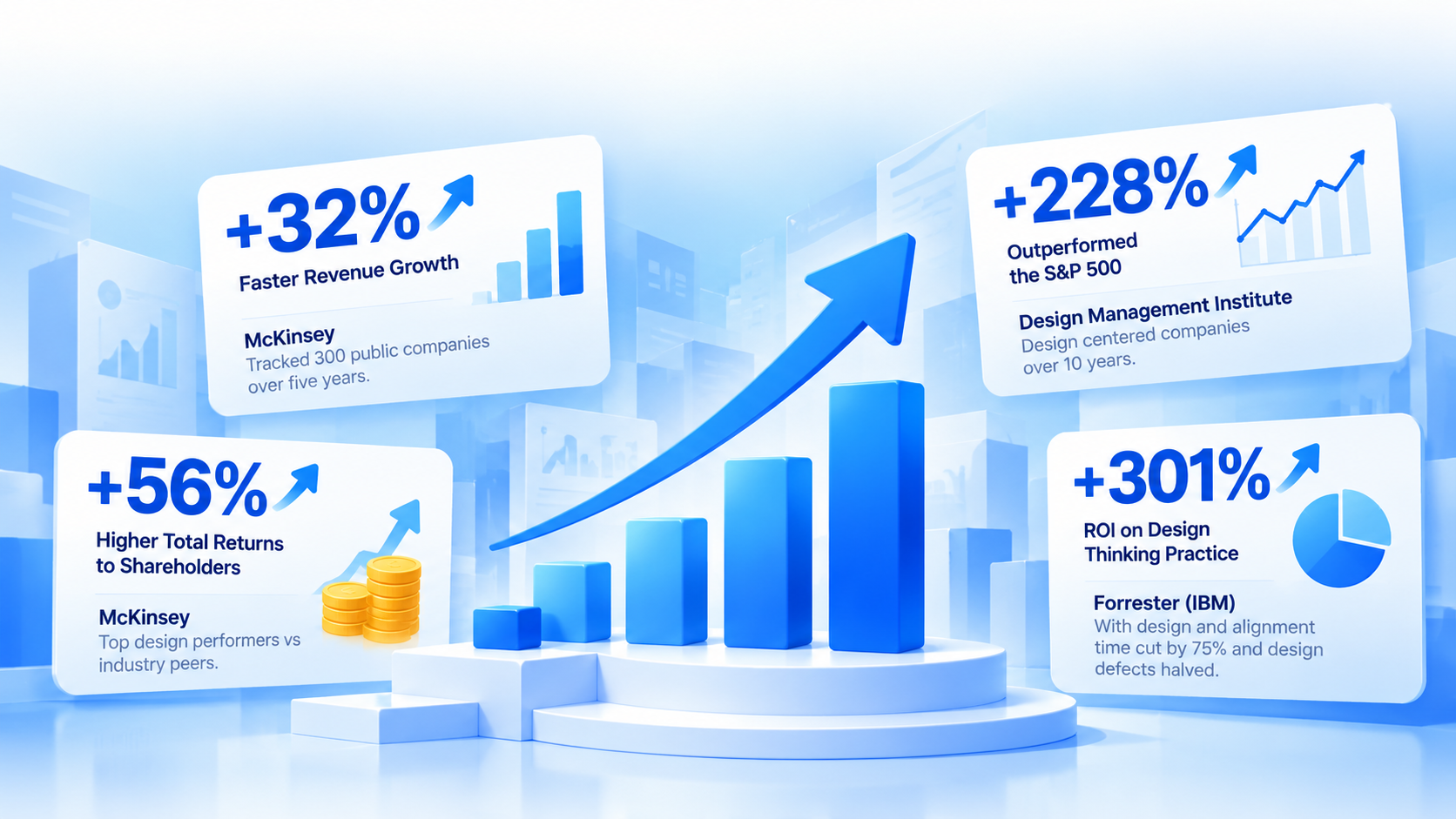
The evidence for design's business impact is stronger than most finance teams assume. McKinsey tracked 300 public companies over five years and found that top design performers achieve 32% faster revenue growth and 56% higher total returns to shareholders than their industry peers.
Separately, design centered companies outperformed the S&P 500 by 228% over a 10 year period, according to a Design Management Institute analysis. At the project level, Forrester measured a 301% ROI on IBM's design thinking practice, with design and alignment time cut by 75% and design defects halved.
Locally, the stakes are just as real.
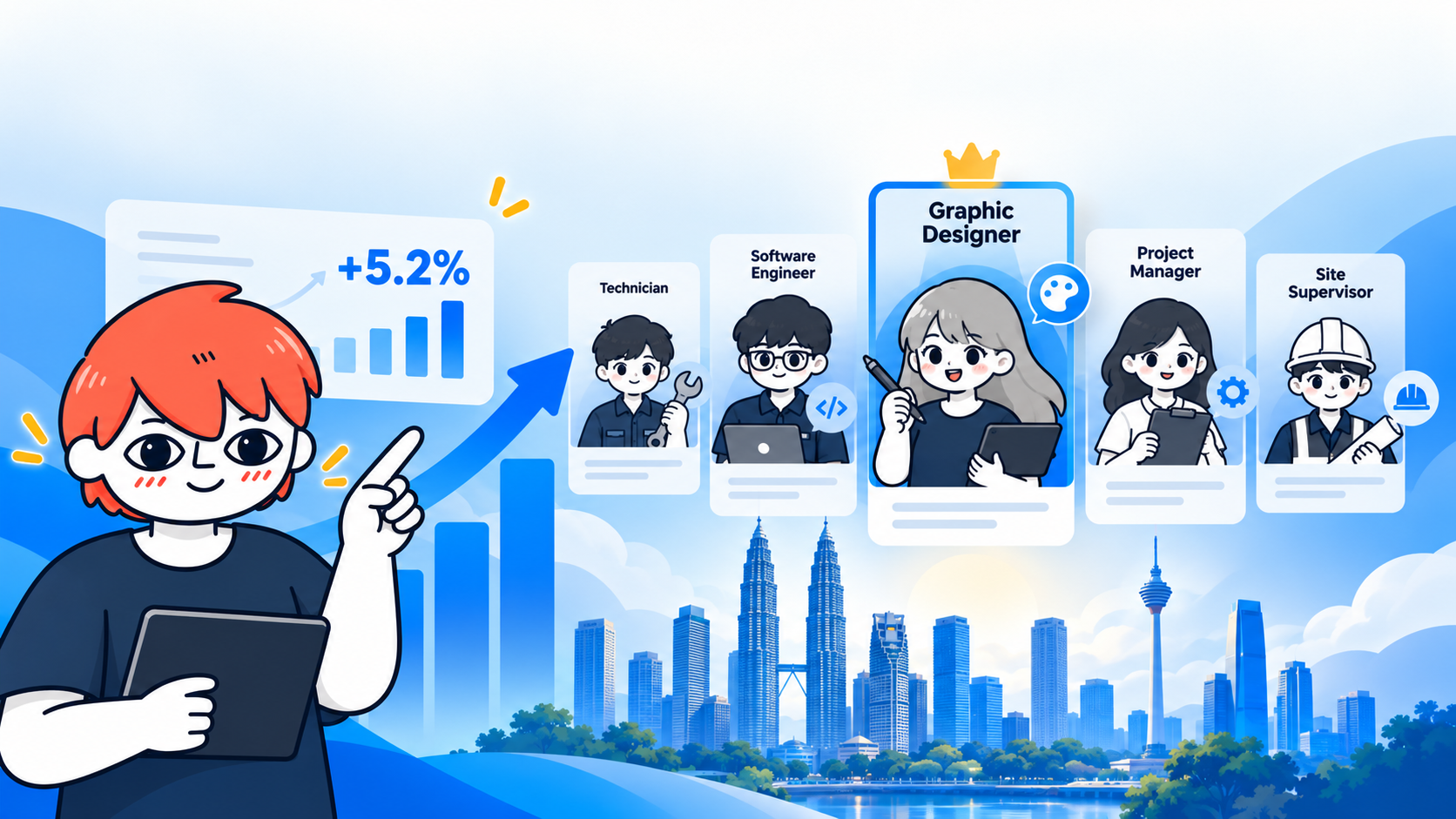
Malaysia's digital economy has created unprecedented demand for visual content creators, and with the local design market growing at 5.2% annually, businesses face both opportunities and challenges in securing top creative talent. Government labour data backs this up too.
During a recent quarter, Graphic Designer ranked among the five hottest STEM related jobs demanded by employers in Malaysia, alongside Technician, Software Engineer, Project Manager, and Site Supervisor.
A Simple Framework to Measure Your Design ROI
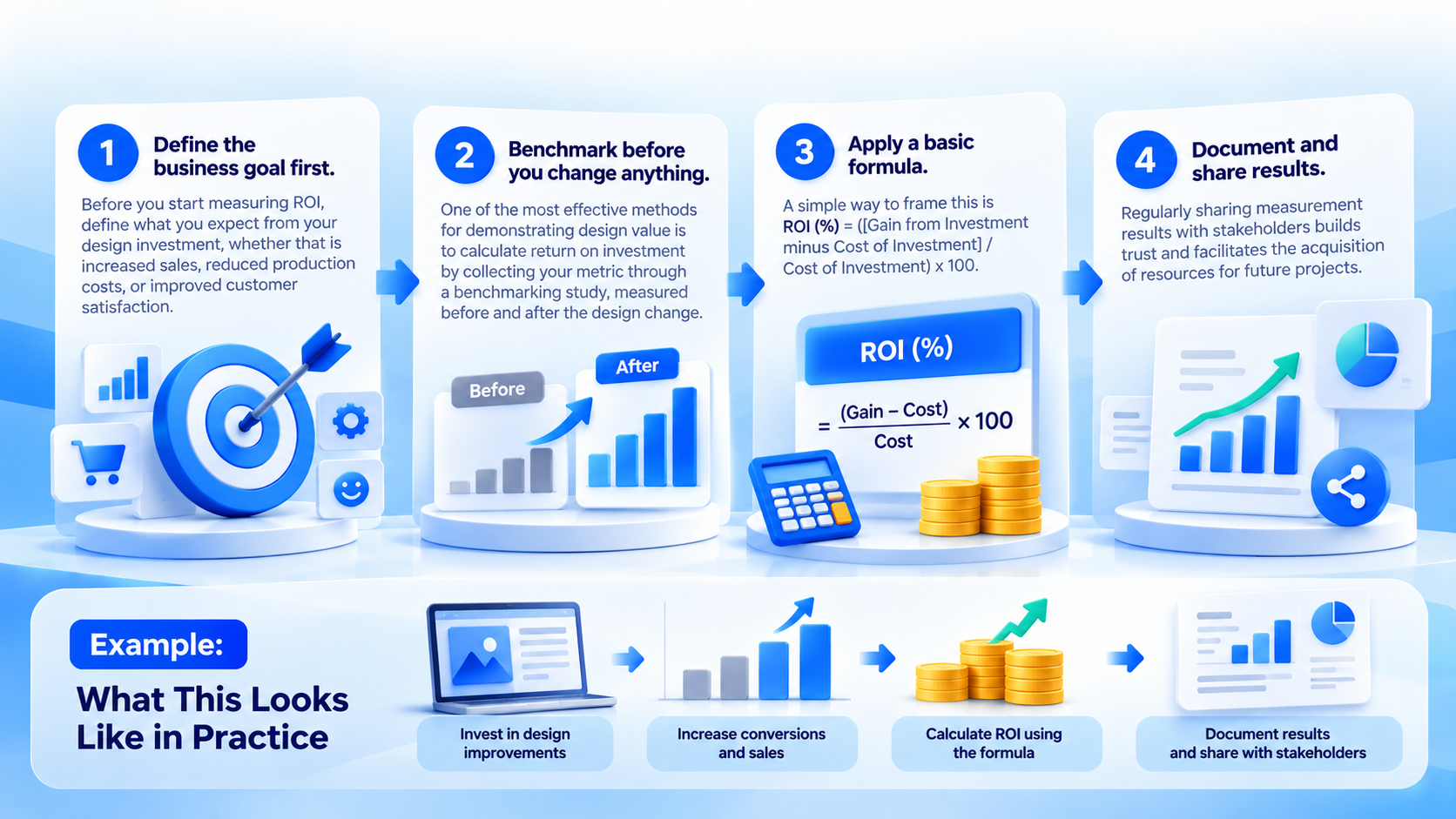
You do not need a finance degree to build a credible ROI case. Four steps work for most businesses:
1. Define the business goal first.
Before you start measuring ROI, define what you expect from your design investment, whether that is increased sales, reduced production costs, or improved customer satisfaction.
2. Benchmark before you change anything.
One of the most effective methods for demonstrating design value is to calculate return on investment by collecting your metric through a benchmarking study, measured before and after the design change.
3. Apply a basic formula.
A simple way to frame this is ROI (%) = ([Gain from Investment minus Cost of Investment] / Cost of Investment) x 100.
4. Document and share results.
Regularly sharing measurement results with stakeholders builds trust and facilitates the acquisition of resources for future projects.
Example: What This Looks Like in Practice
Consider a real world style case.
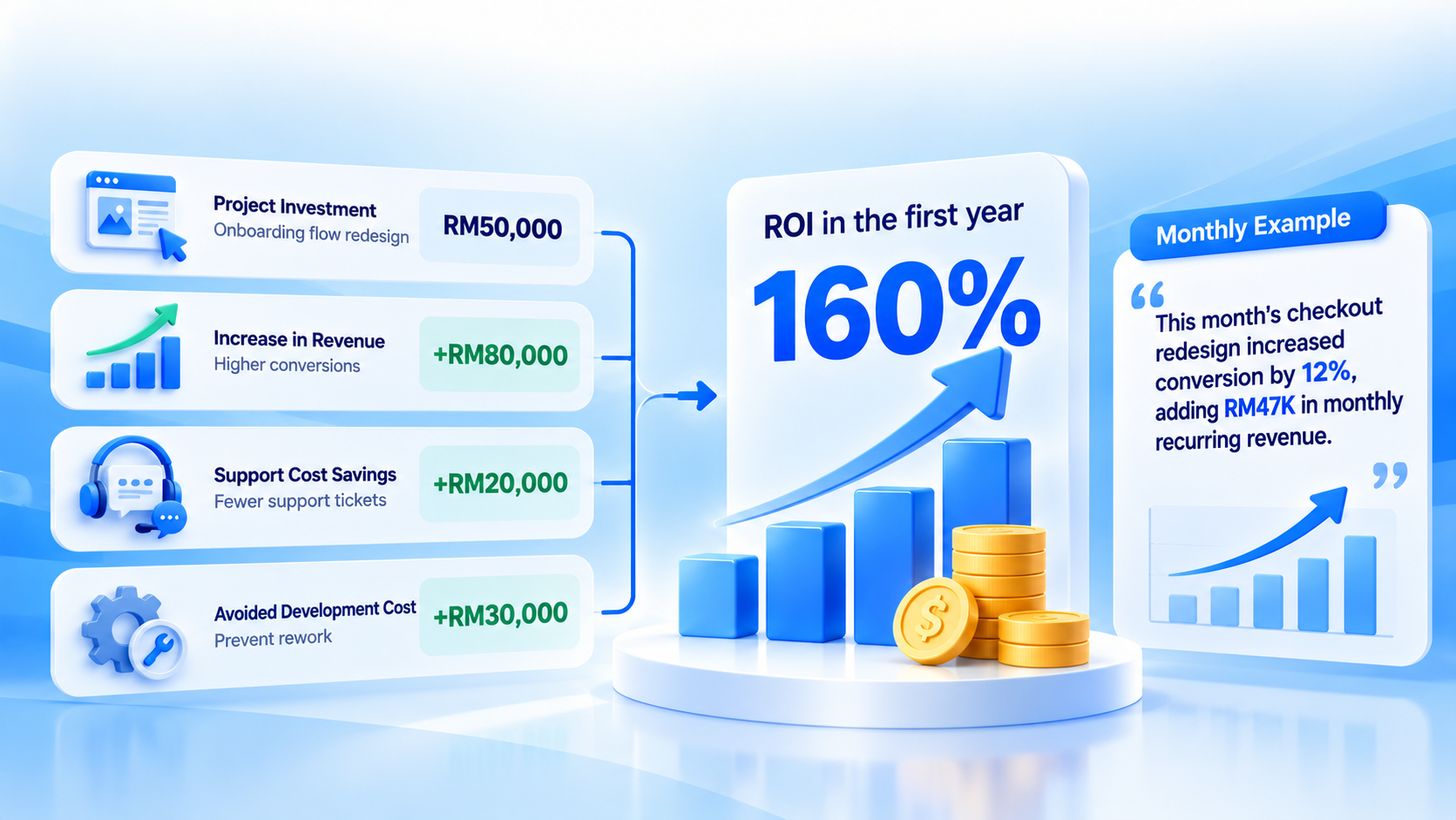
A business hires a firm for a RM50,000 project to redesign its onboarding flow. The new flow increases conversions, adding RM80,000 in revenue, reduces related support tickets, saving RM20,000, and prevents an estimated RM30,000 in development rework, for a 160% ROI in the first year.
A monthly version of this reporting can be just as effective. As one design leader put it,
"This month's checkout redesign increased conversion by 12%, adding RM47K in monthly recurring revenue."
Why Talent Acquisition Is the Real Multiplier

Here is the part most ROI conversations skip. The formula only works if the designer executes well the first time. A weak hire means more revision rounds, missed deadlines, and rework costs that quietly erase your projected gains. This is why portfolio first hiring matters more than a low quote. Before you post a job listing, decide what "good" looks like for your brand, then advertise jobs that specify it clearly.
Businesses that treat talent acquisition as a strategic step, not an afterthought, see the difference in their numbers. On Rtist, businesses can advertise jobs directly to a database of over 20,000 Malaysian designers, review completed work before hiring, and choose between freelance, contract, or full time arrangements depending on the scope. Over 8,000 clients already use this approach to fill job opportunities ranging from one off jobs with graphic design needs to ongoing retainer work.
Actionable Tips
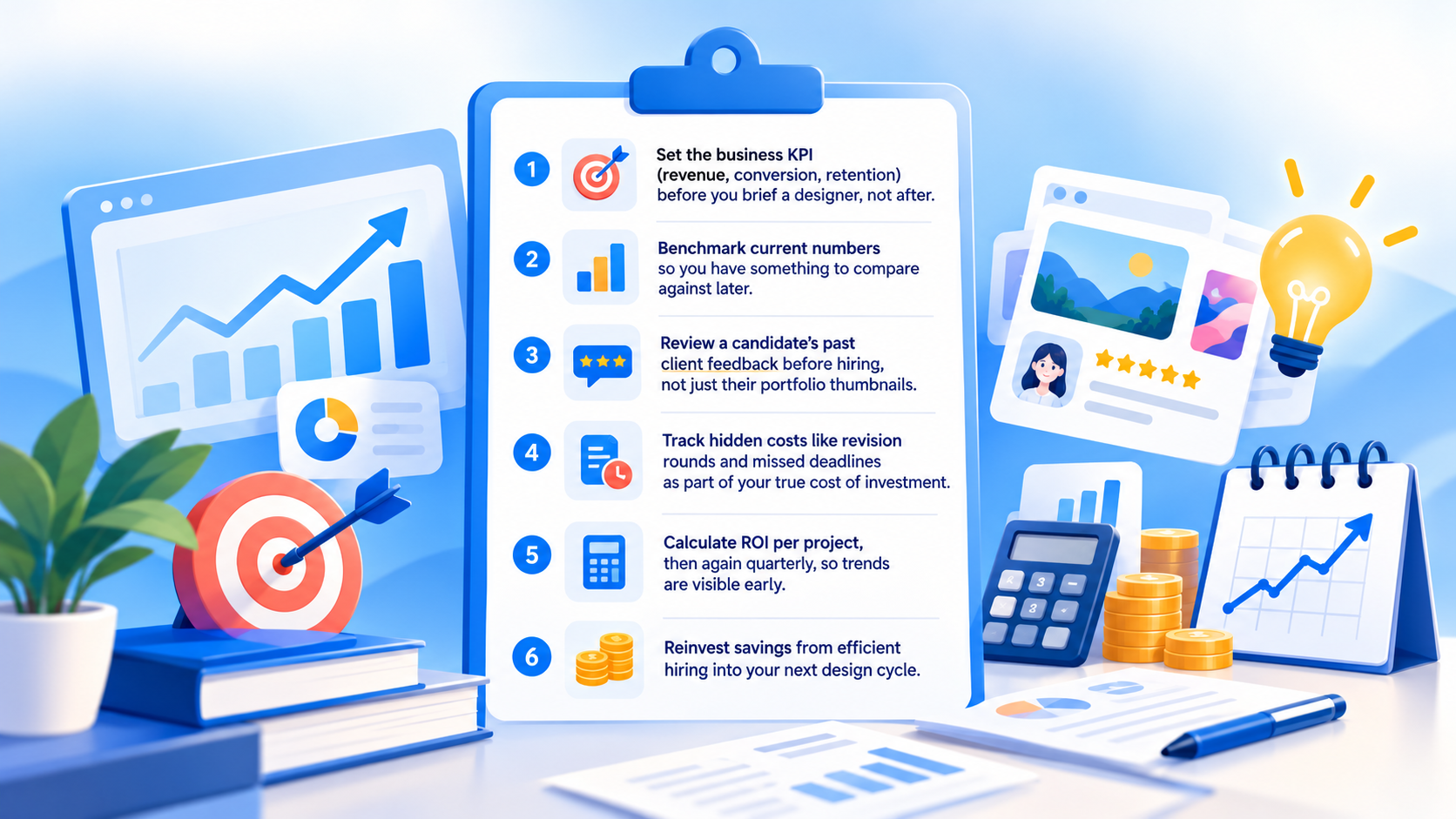
- Set the business KPI (revenue, conversion, retention) before you brief a designer, not after.
- Benchmark current numbers so you have something to compare against later.
- Review a candidate's past client feedback before hiring, not just their portfolio thumbnails.
- Track hidden costs like revision rounds and missed deadlines as part of your true cost of investment.
- Calculate ROI per project, then again quarterly, so trends are visible early.
- Reinvest savings from efficient hiring into your next design cycle.
Frequently Asked Questions
**How do I attract more applicants to my job listing?**
Attract more applicants by writing clear job descriptions, showcasing your company profile, offering competitive benefits, using relevant keywords, and keeping your post detailed and appealing to the right creative talents.
**How can I check a talent's reviews before hiring them?**
You can view a talent's past client feedback by opening their profile and clicking the Review tab, which shows all ratings and comments from clients on previously completed projects.
**What counts as a good ROI for a design project?**
Many companies see returns ranging from RM2 to RM100 for every RM1 invested in design and UX work, though the exact figure depends heavily on your industry and the KPI you choose to track.
**Does hiring freelance or full time designers change how I measure ROI?**
Not the formula itself, but it changes your cost base. Freelance and contract hires lower fixed costs, while full time hires often pay off on recurring, high volume design needs.
Conclusion
Measuring design ROI is not about reducing creativity to a spreadsheet. It is about proving, in numbers your finance team respects, that good design pays for itself. That proof starts with the hire, not the invoice. Get talent acquisition right, and the ROI conversation becomes much easier to win.
Ready to hire designers whose work you can actually measure? Browse verified portfolios and post your next job listing on www.rtist.co