A poorly designed checkout page once cost an ecommerce brand millions in lost sales, until a UX overhaul recovered a large share of it. That single project is a reminder of something many Malaysian business owners still underestimate. Design is not decoration, it is revenue. Before you advertise jobs for a designer, it helps to understand exactly what that hire is worth to your bottom line.
Businesses Treat Design as an Afterthought

Many companies still hire UI/UX designers the same way they hire any other role, posting a generic job listing on a broad platform and hoping the right person applies. The result is often a flood of unqualified applicants, a slow hiring process, and a designer who can push pixels but cannot connect design decisions to business goals. Meanwhile, the businesses that do invest properly in design are pulling ahead of competitors who do not.
The Measurable Value of Good UI/UX

The numbers here are not marketing fluff, they come from some of the most cited research in the design industry.
Every RM1 invested in UX design returns RM100, a 9,900% ROI, according to Forrester Research, and this figure has become the standard benchmark for justifying design budgets.
A well-designed user interface raises conversion rates by 200%, while a superior user experience increases them by up to 400%, per Forrester data.
It is not only about conversions. According to McKinsey's "The Business Value of Design," companies in the top quartile for design saw 32% higher revenue growth and 56% higher total returns to shareholders than their peers over a five-year period.
That is a direct link between design quality and shareholder outcomes, not just aesthetics.
Retention matters just as much as acquisition.

A 5% retention increase can lift profits by 25% or more, according to Bain & Company's customer loyalty research, and better UX is the primary driver of retention in digital products. Good design also lowers costs elsewhere in the business.
Good UX cuts support costs by 33% by resolving confusing interactions before users need to ask for help, according to Nielsen Norman Group's usability ROI research.
Real Examples of Design Paying Off

Case studies make this less abstract. Staples experienced a 500% revenue increase following a UX-focused site redesign, cited by the Baymard Institute as a leading case study in design ROI. On a smaller scale, redesigning the checkout experience can lift conversion rates by an average of 35.26% for large ecommerce sites, making checkout UX one of the highest-leverage design interventions available.
Learn how to calculate your ROI here: https://www.rtist.co/blog/how-to-measure-the-roi-of-your-design-investment-a-talent-acquisition-guide-for-malaysian-businesses
For a SaaS business, even modest improvements to onboarding can move the needle on trial-to-paid conversion, which compounds into significant annual revenue over time.
Why This Matters in the Malaysian Market

Demand for UI/UX talent in Malaysia is rising alongside the country's digital shift.
As companies shift toward apps, SaaS platforms, and digital-first experiences, the demand for skilled UI/UX designers continues to grow, especially in tech, fintech, ecommerce, and startup ecosystems.
Pay reflects this trajectory too, with entry-level roles starting at RM 36,000 to RM 66,000 MYR/yr, mid-level professionals earning RM 66,000 to RM 108,000 MYR/yr, and senior professionals earning RM 108,000 to RM 180,000 MYR/yr according to Jobstreet Malaysia's salary benchmarks.
Beyond salary, the biggest salary driver is not just experience, it is product impact and UX thinking ability, since designers who understand users, business goals, and product outcomes will always earn more than those focused only on visuals.
UI/UX Designer salaries here: https://www.rtist.co/blog/uiux-designer-salary-in-malaysia-2026-guide
Actionable Tips: How to Advertise Jobs That Attract the Right Designer
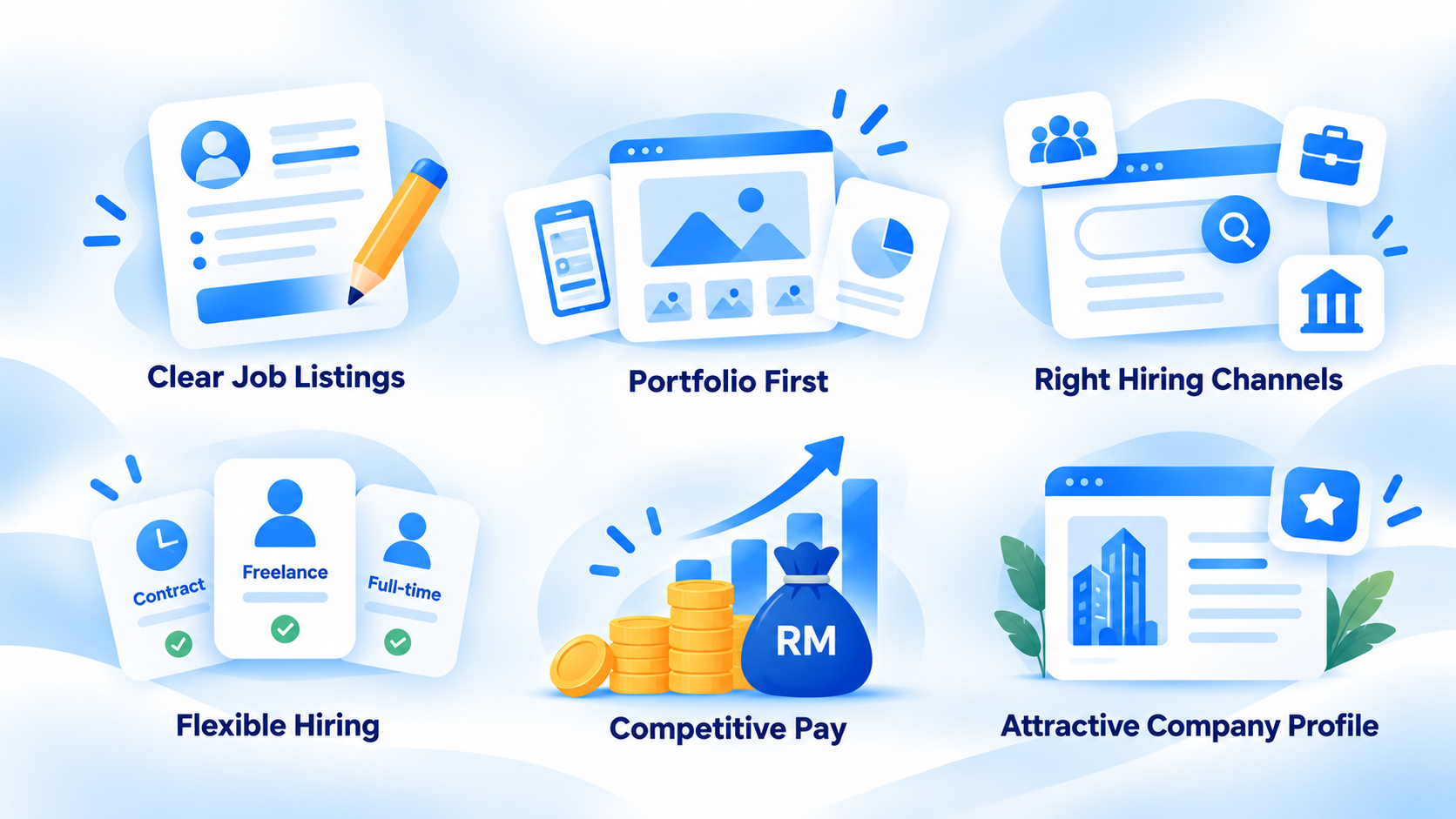
Write a clear, specific job listing. Vague postings attract vague candidates. Spell out the tools, industry context, and business problem the designer will solve.
Lead with portfolio requirements. UI/UX is a visual and reasoning skill. A resume alone tells you little; a portfolio shows how someone thinks through user problems.
Choose the right channel for the role. Creative job sites like www.rtist.co and government platforms like MYFutureJobs.
Compare freelance and full-time options. Not every business needs a full-time hire. Freelance designers, contract specialists, and retainers can cover project spikes without long-term overhead.
Benchmark pay realistically. Whether you check a jobstreet job vacancy listing locally or browse US jobs boards for remote comparisons, understanding market rates helps you write a competitive offer instead of losing candidates to slow negotiations.
Make your company profile appealing.As with any job listing, competitive benefits, a clear company profile, and relevant keywords help attract more qualified applicants to your post.
Conclusion
A UI/UX designer is not just a creative hire, they are a direct lever on conversion, retention, and cost savings. The research is consistent across Forrester, McKinsey, and independent case studies: businesses that invest in design outperform those that treat it as an afterthought. The harder part is finding a designer whose portfolio actually proves they can deliver those results, not just someone who applied to a generic job listing.
Ready to Hire?
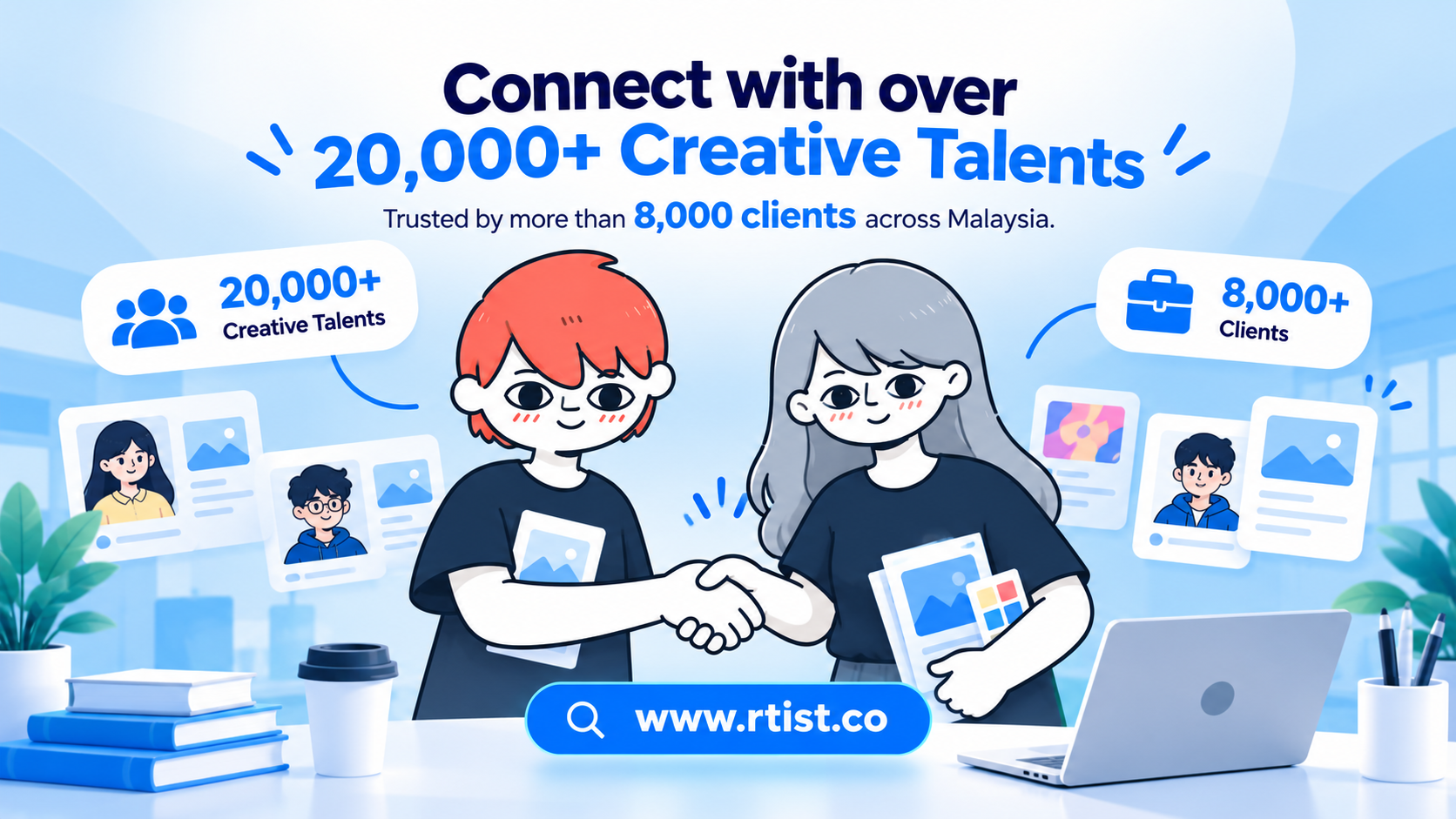
Rtist connects Malaysian businesses with over 20,000 designers and has already helped more than 8,000 clients hire with confidence, using a portfolio-first approach so you see real work before you interview anyone. Whether you need a freelancer for a single project or a full-time product designer, post your job on Rtist and start reviewing verified Malaysian creative talent today.