When Malaysian companies want to hire designers, job portals like JobStreet and Indeed are usually the default choice. They are familiar, widely used, and cover a broad range of roles. However, creative hiring works differently from general job hiring.
Platforms like Rtist are designed specifically for creative professionals, while job portals are built for general employment across all industries. This difference affects portfolio visibility, screening quality, and how fast you can actually hire a designer.
1. Core Model: Job Listings vs Portfolio-Based Hiring
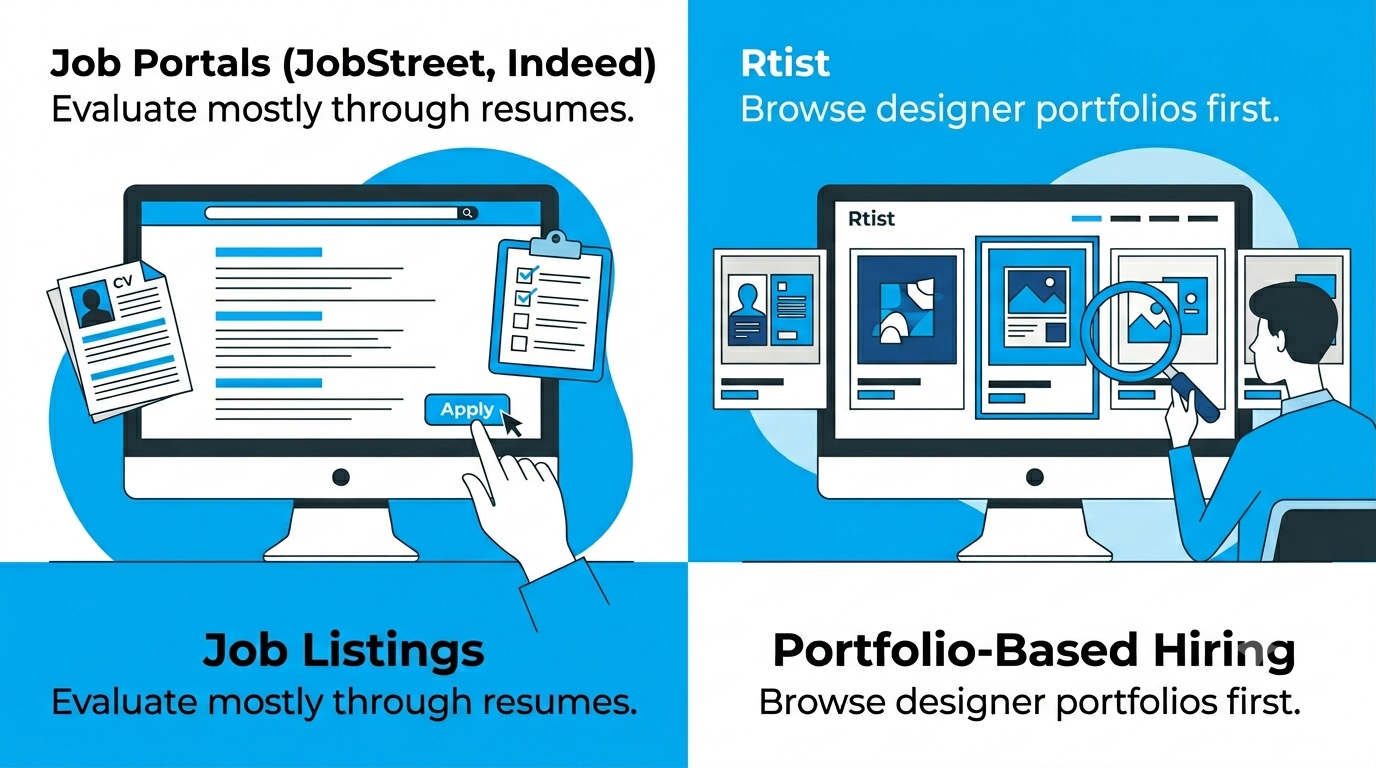
Job portals (JobStreet, Indeed)
Job portals are built around job advertisements.
The process typically looks like:
- Post a job description
- Receive applications from candidates
- Review CVs and cover letters
- Shortlist and interview candidates
- Hire based on job fit and experience
Designers are evaluated mostly through resumes and interview conversations.
Rtist
Rtist is built around visual portfolio-based hiring.
The process is:
- Browse designer portfolios
- Evaluate actual design work immediately
- Shortlist based on style and capability
- Engage talent directly for projects or freelance work
Instead of CV-first hiring, it is work-first evaluation.
2. Portfolio Visibility: Limited vs Centralised
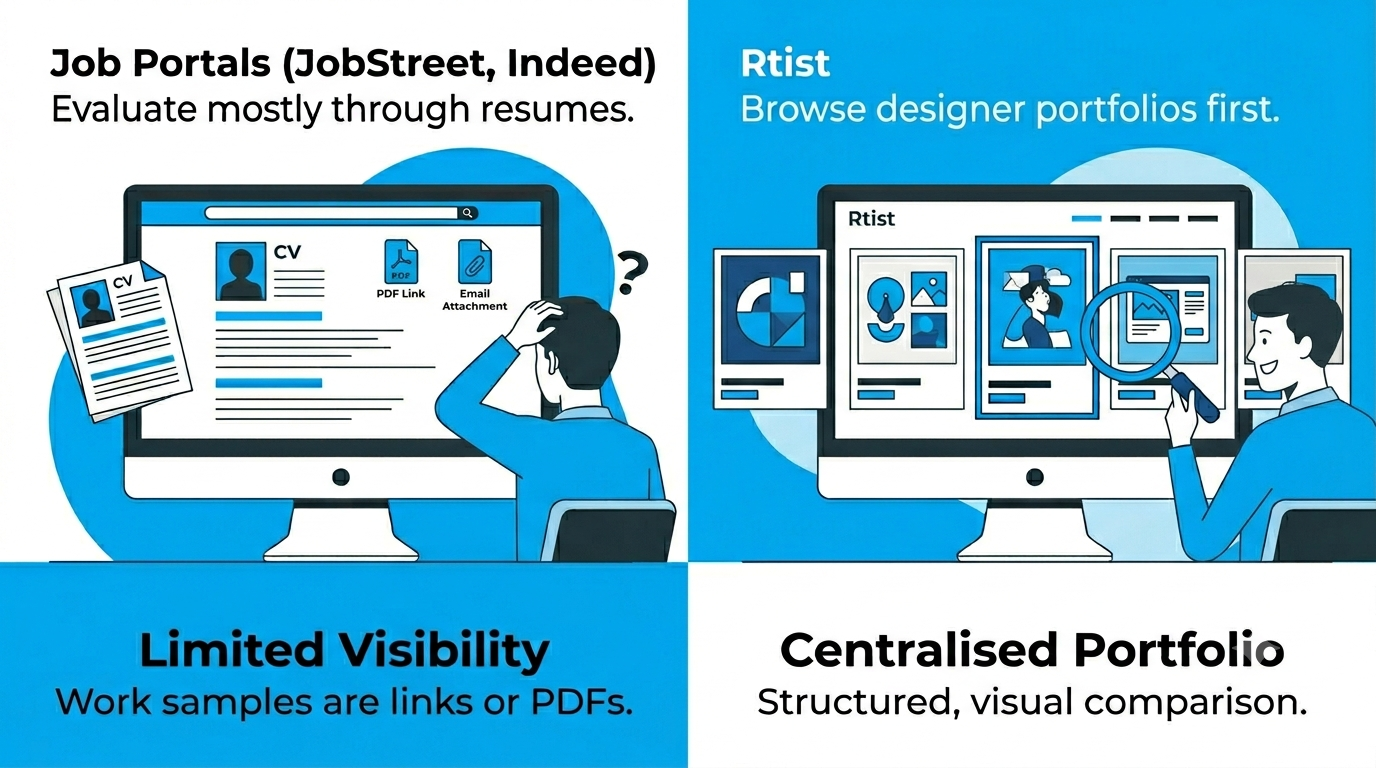
Job portals
Portfolio visibility is limited because:
- Designers usually submit resumes instead of full portfolios
- Work samples are often attached as links or PDFs
- Many candidates do not showcase full creative depth
- Visual quality is not the main filtering system
This makes it harder to assess design skill quickly.
Rtist
Portfolio visibility is the core feature:
- Designers showcase structured creative portfolios
- Work is presented visually and professionally
- Easier to compare styles side by side
- Better understanding of real design capability
For creative hiring, this reduces uncertainty significantly.
3. Screening Quality: CV-Based vs Creative-Focused Filtering
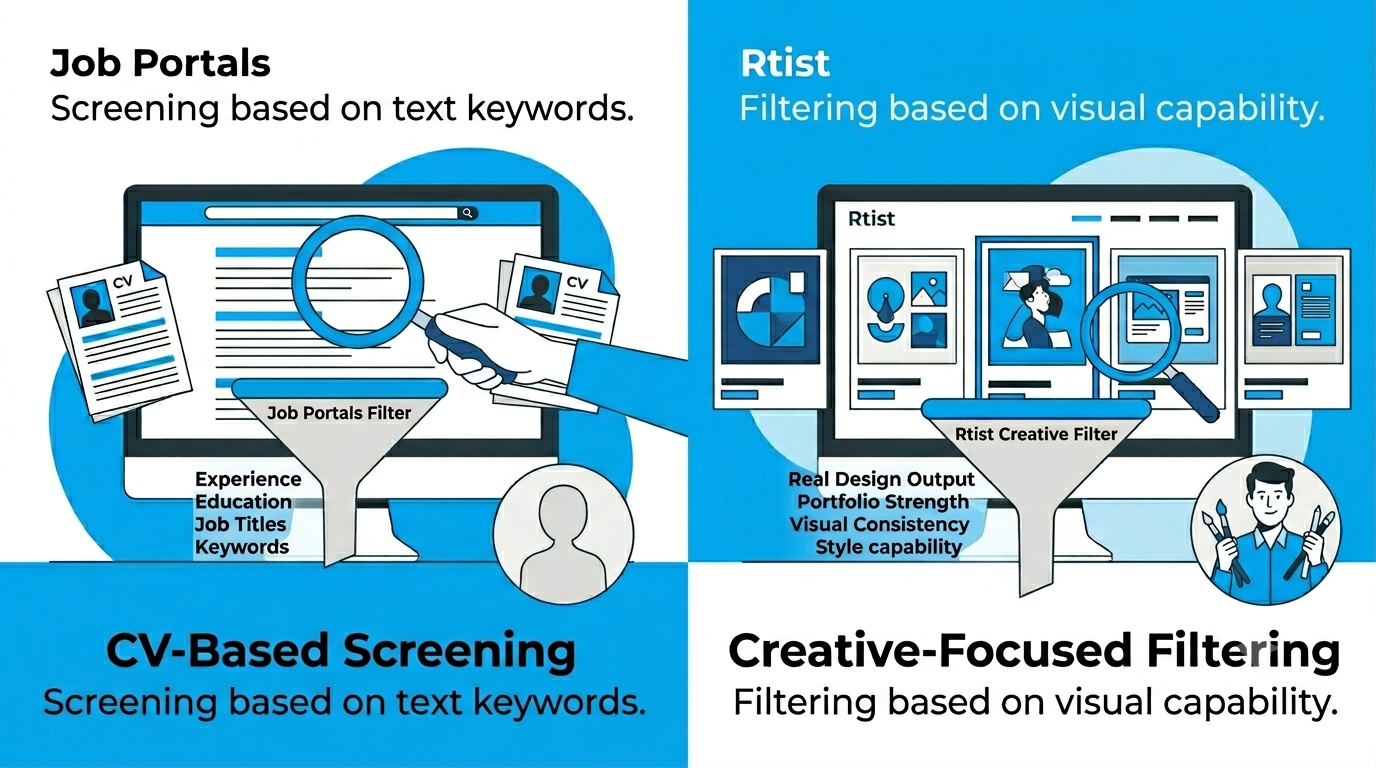
Job portals
Screening is based on:
- Work experience
- Education background
- Job titles
- Keywords in resumes
The system is not designed specifically for creative evaluation. This means strong designers can sometimes be overlooked if their CV is not optimised.
Rtist
Screening is based on:
- Real design output
- Portfolio strength
- Visual consistency
- Creative style and capability
This is more aligned with how design work is actually judged in real business environments.
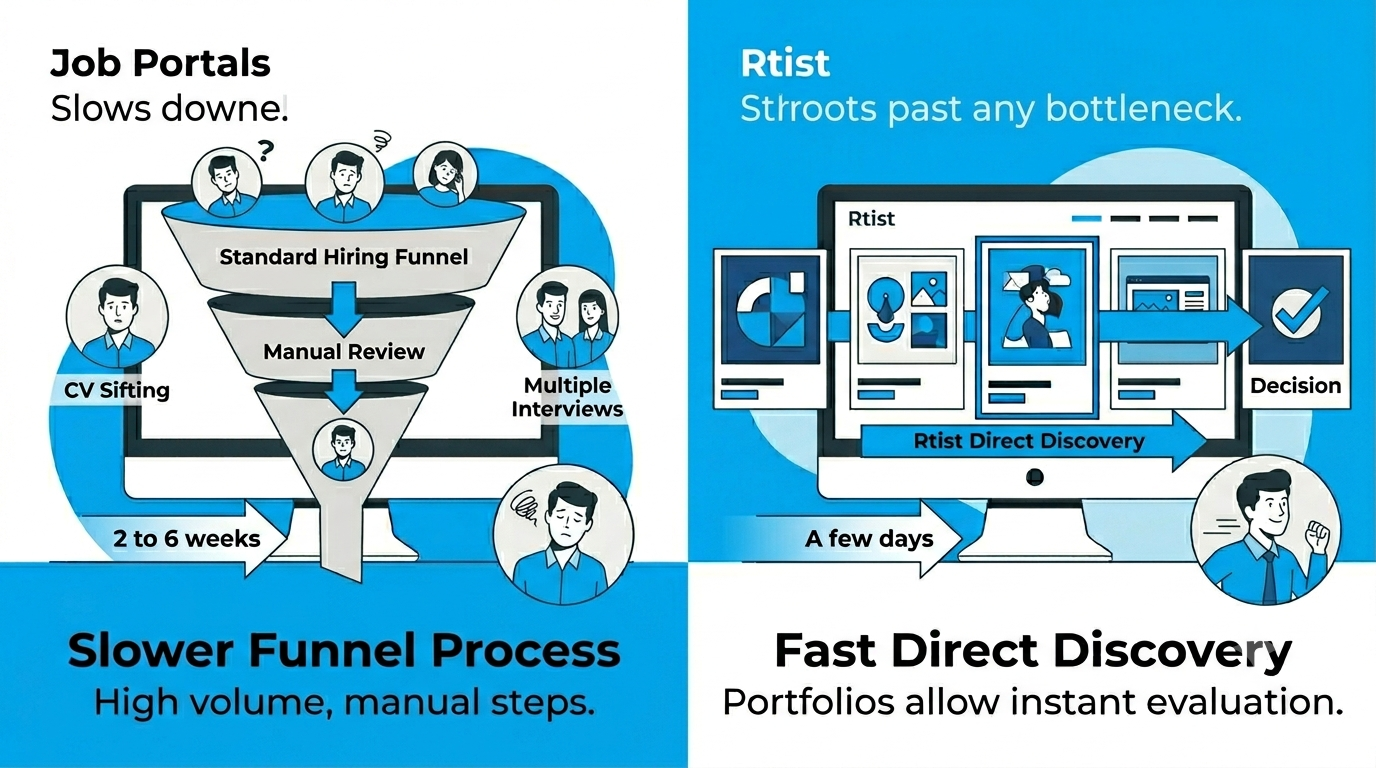
4. Hiring Speed: Slower Funnel vs Direct Discovery
Job portals
Hiring speed is usually slower because:
- High volume of applications
- Manual CV screening required
- Multiple interview rounds
- Longer decision cycles
Typical timeline:
- 2 to 6 weeks depending on role and company process
This works better for structured corporate hiring, not urgent creative needs.
Rtist
Hiring is faster because:
- No need to sift through CV-heavy applications
- Portfolios allow instant evaluation
- Shortlisting is visual and direct
- Faster decision-making for SMEs and startups
Typical timeline:
- A few days or even same-day shortlisting possible
This is better for marketing-driven or project-based work.
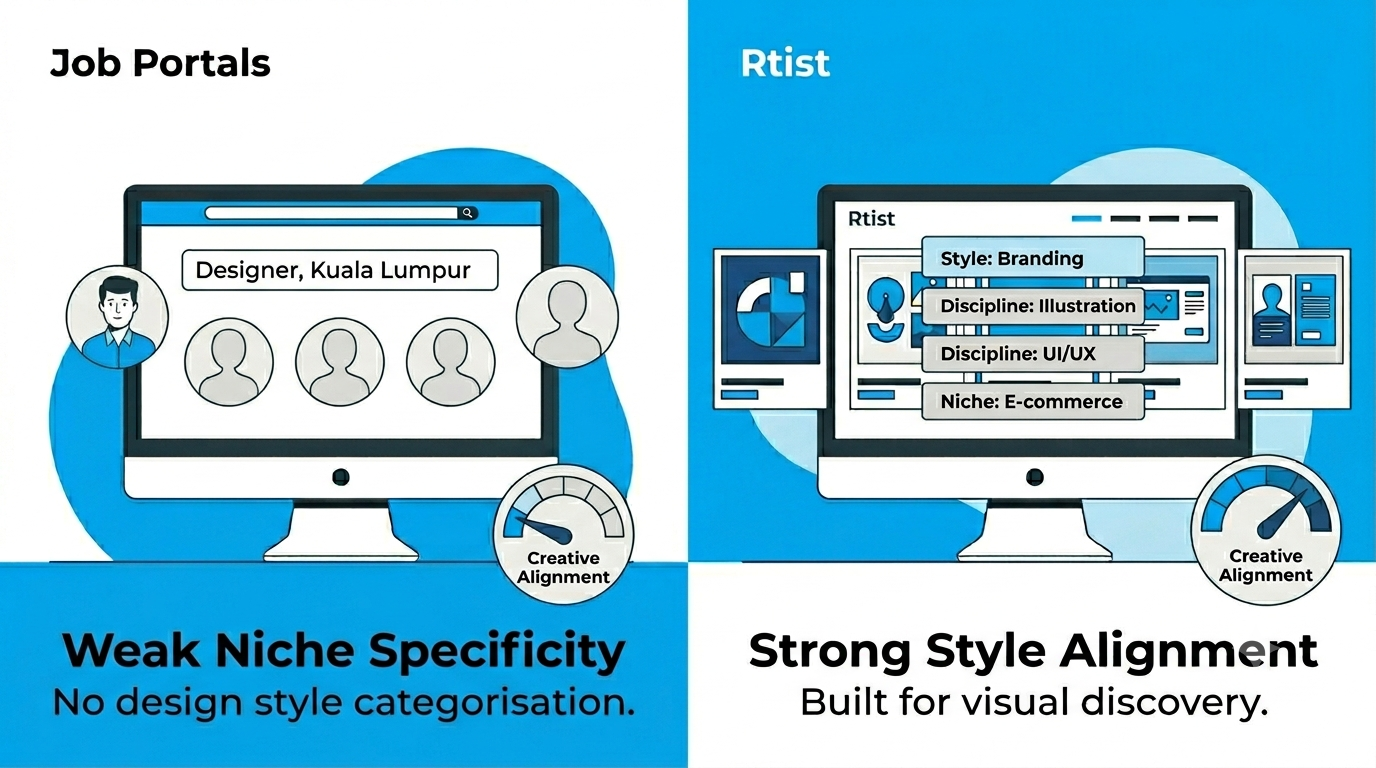
5. Creative-Specific Filtering: Weak vs Strong Alignment
Job portals
Job portals do not have strong creative filters:
- No design style categorisation
- No portfolio-first ranking system
- Limited visibility into actual design output
- Harder to filter by visual style or creative niche
As a result, hiring often depends heavily on interviews.
Rtist
Rtist is built for creative filtering:
- Designers can be viewed by style and discipline
- Easier to compare branding, illustration, UI/UX work
- Visual-first discovery system
- Better alignment between job needs and talent output
This makes it more efficient for creative roles.
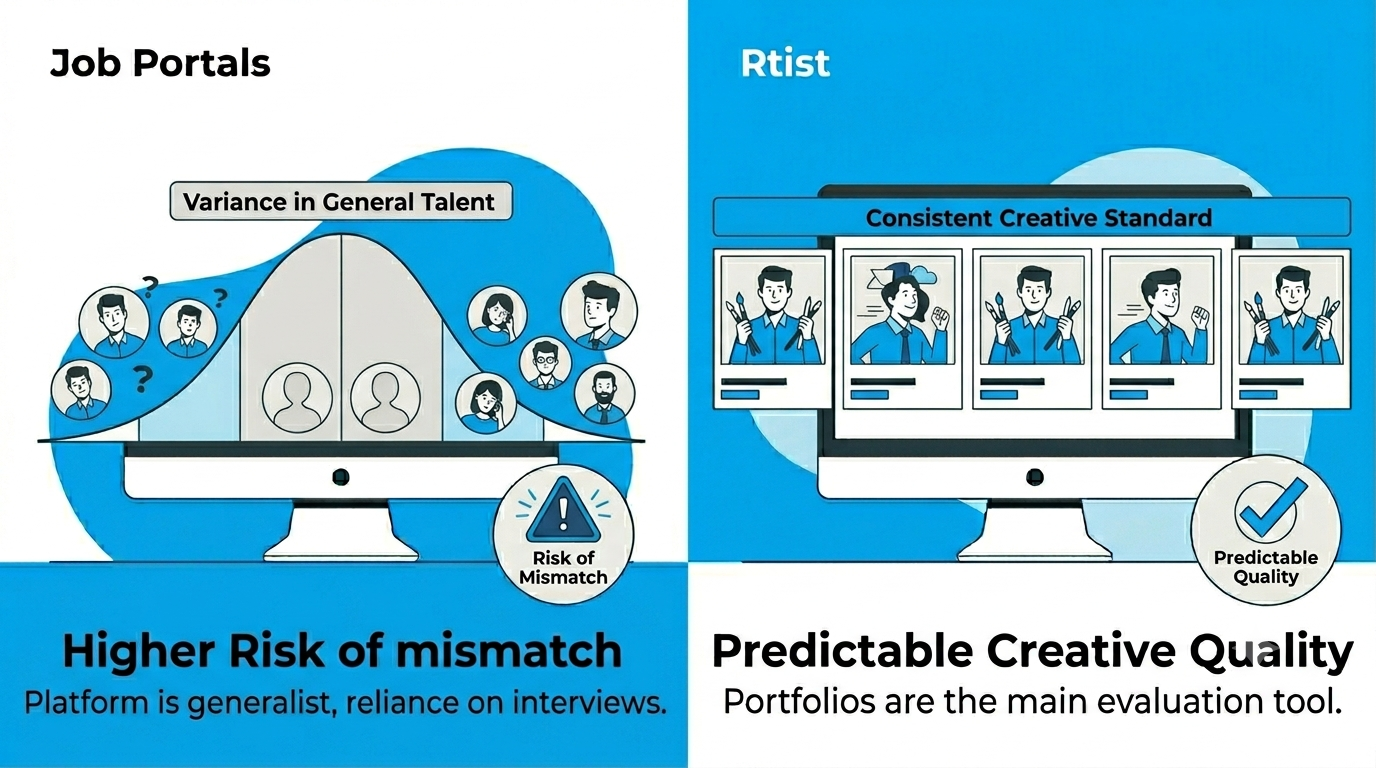
6. Talent Quality Consistency
Job portals
Quality varies widely because:
- Platform is generalist
- Candidates range from entry-level to senior across all industries
- Design skills are not always clearly represented
- Heavy reliance on interview assessment
This creates a higher risk of mismatch for creative roles.
Rtist
Quality is more consistent because:
- Focus is on creative professionals
- Portfolio is the main evaluation tool
- Better alignment with industry expectations
- Easier to identify skilled designers quickly
This reduces hiring uncertainty.
7. Best Use Cases
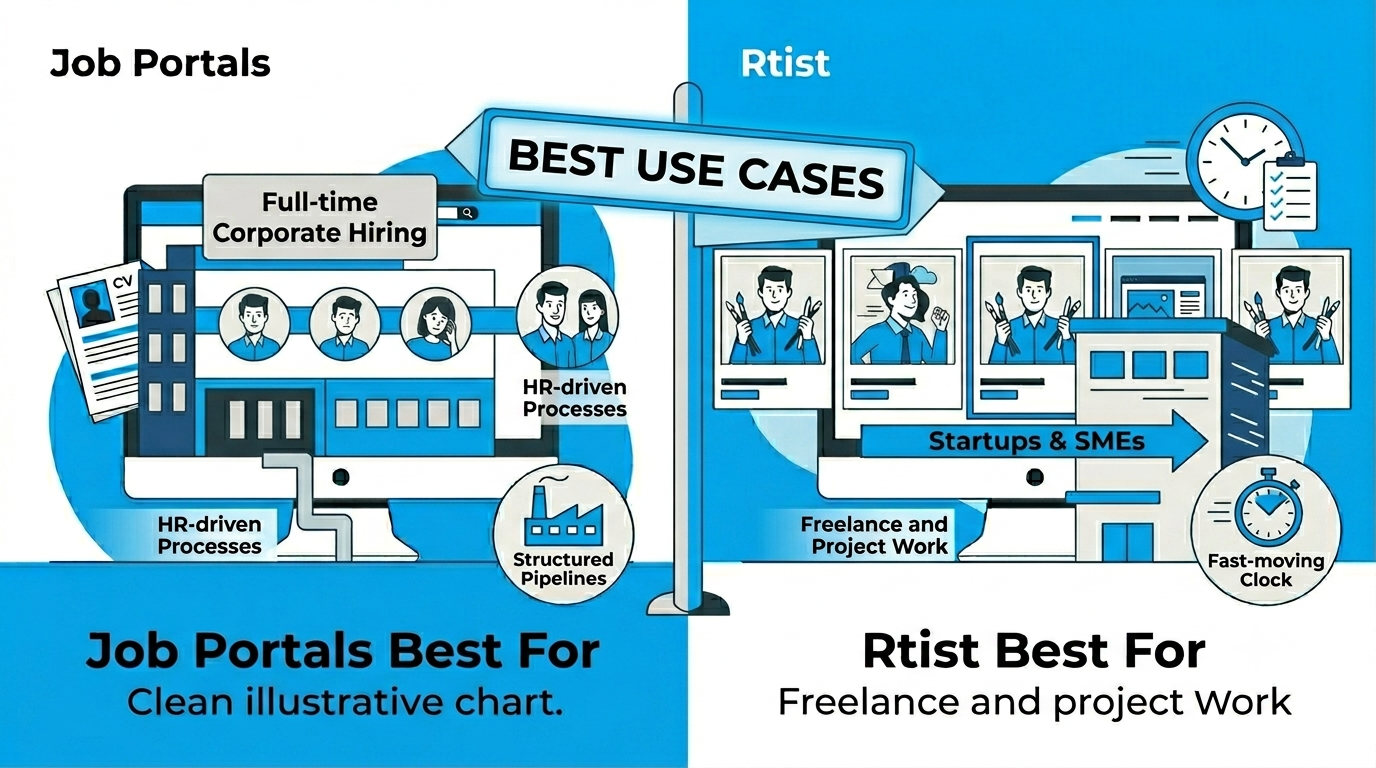
Job portals are best for:
- Full-time corporate hiring
- HR-driven recruitment processes
- Non-creative or general roles
- Structured employment pipelines
They are strong for scale hiring across departments.
Rtist is best for:
- Hiring graphic designers and creatives
- Freelance and project-based work
- Branding and marketing design needs
- Startups and SMEs needing fast output
- Visual-first decision making
It is purpose-built for creative work.
Final Verdict
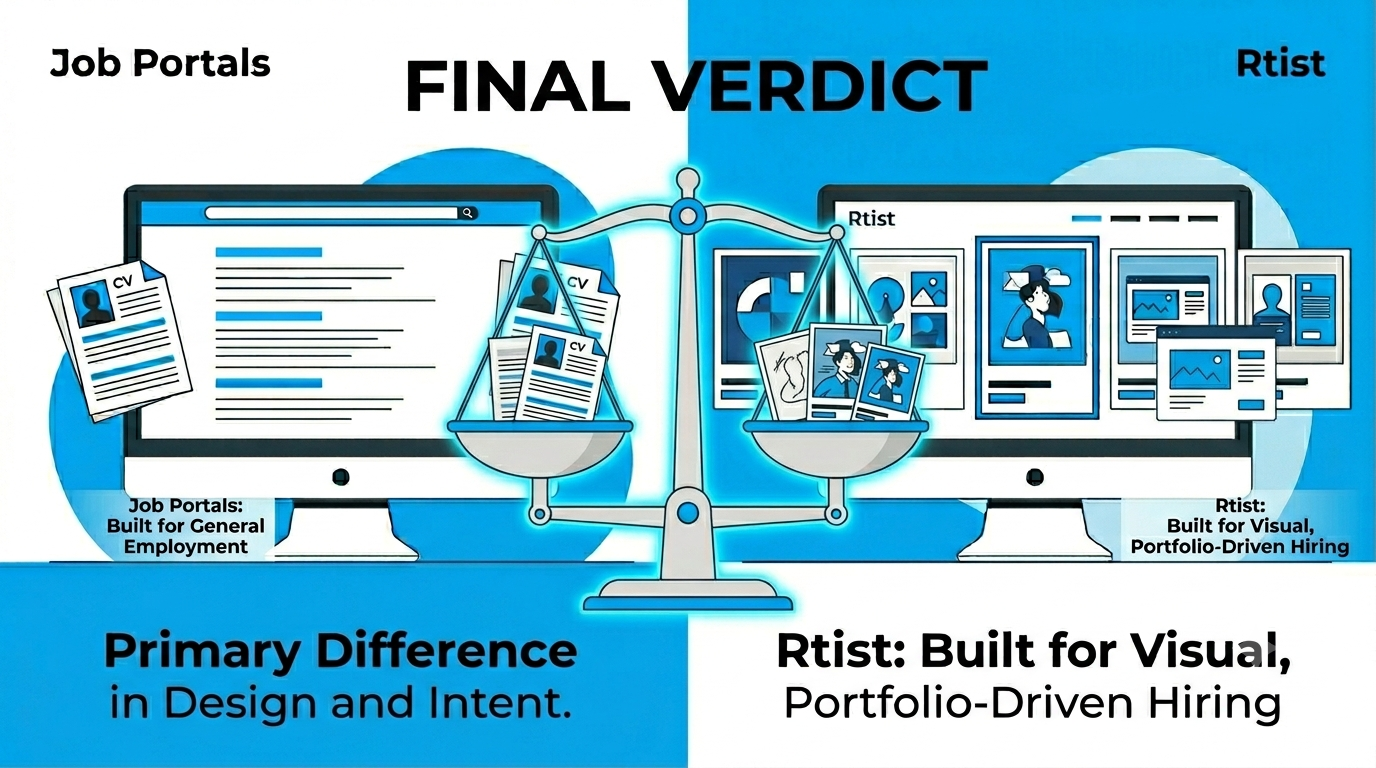
The key difference is intent and design:
- Job portals are built for general employment hiring across industries
- Rtist is built for visual, portfolio-driven creative hiring
For hiring designers specifically, the biggest limitation of job portals is the lack of visual evaluation upfront. This slows down decision-making and increases the risk of mismatch.
Rtist solves this by making portfolios the core hiring signal, which is exactly how creative talent should be evaluated.
Where Rtist Fits In
Platforms like www.rtist.co help businesses move beyond CV-based hiring by focusing on real creative work first.
This allows Malaysian SMEs and startups to hire designers faster, with better confidence in quality and style fit, especially when visual output is the main requirement.