When businesses in Malaysia look for designers, two platforms often come up: Behance and Rtist. At first glance, both show creative portfolios, so they may look similar. But in reality, they serve completely different purposes.
The key difference is simple but important:
- Behance is a discovery platform
- Rtist is a hiring platform
Understanding this distinction changes how effectively you can actually hire the right designer.
1. Core Purpose: Discovery vs Transaction
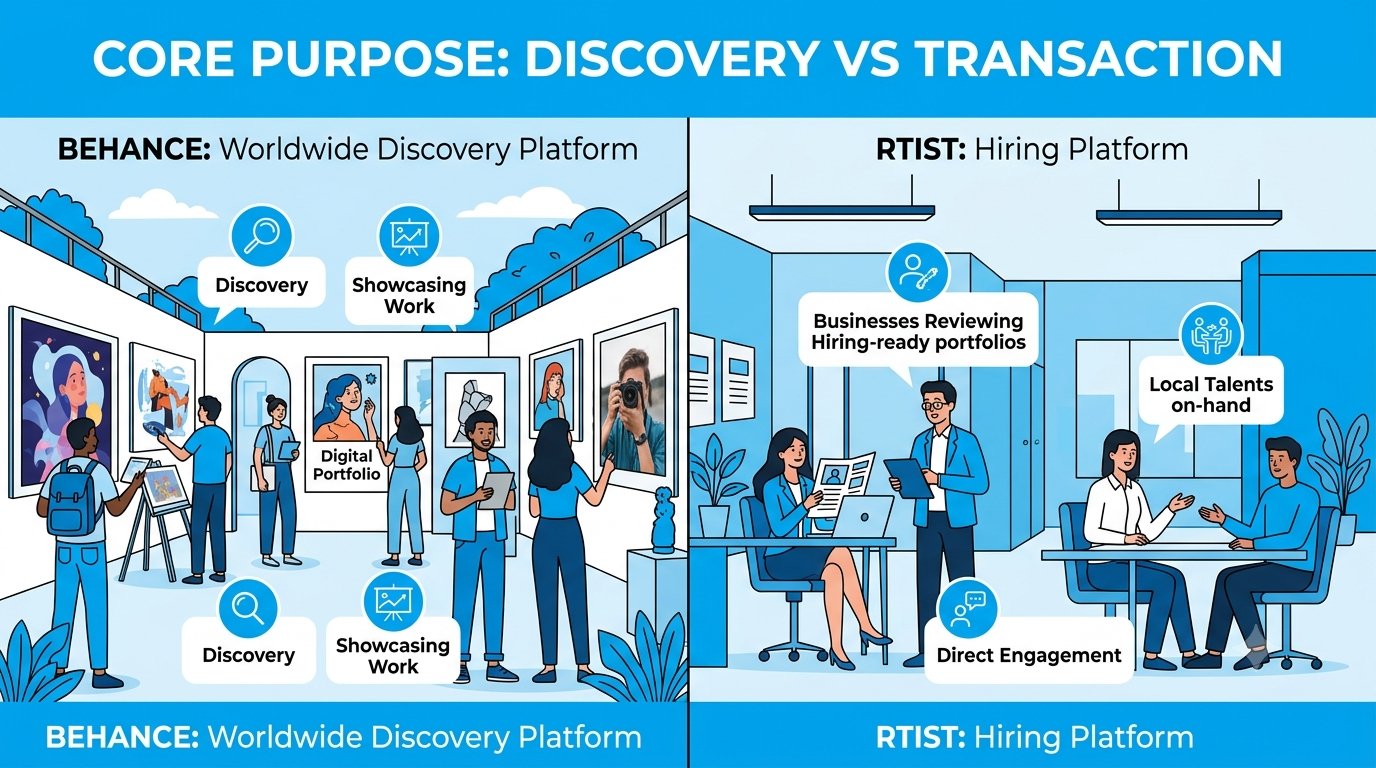
Behance: A worldwide discovery platform
Behance is built for showcasing creative work. Designers upload portfolios to:
- Display their skills
- Build personal branding
- Get visibility in the creative community
- Attract potential clients or employers
However, Behance is not designed for structured hiring. It is more like an open gallery of creative work from talents around the world.
You can connect and discover talents there, but it's not built for structured hiring.
Rtist: A hiring platform
Rtist is designed specifically for connecting businesses with local-designers for actual work.
It focuses on:
- Hiring-ready creative portfolios
- Structured talent discovery
- Direct engagement with designers
- Real project-based collaboration
- Local talents on-hand
Instead of just browsing inspiration, you are browsing people you can actually hire.
2. Hiring Experience: Manual Outreach vs Structured Process
Behance
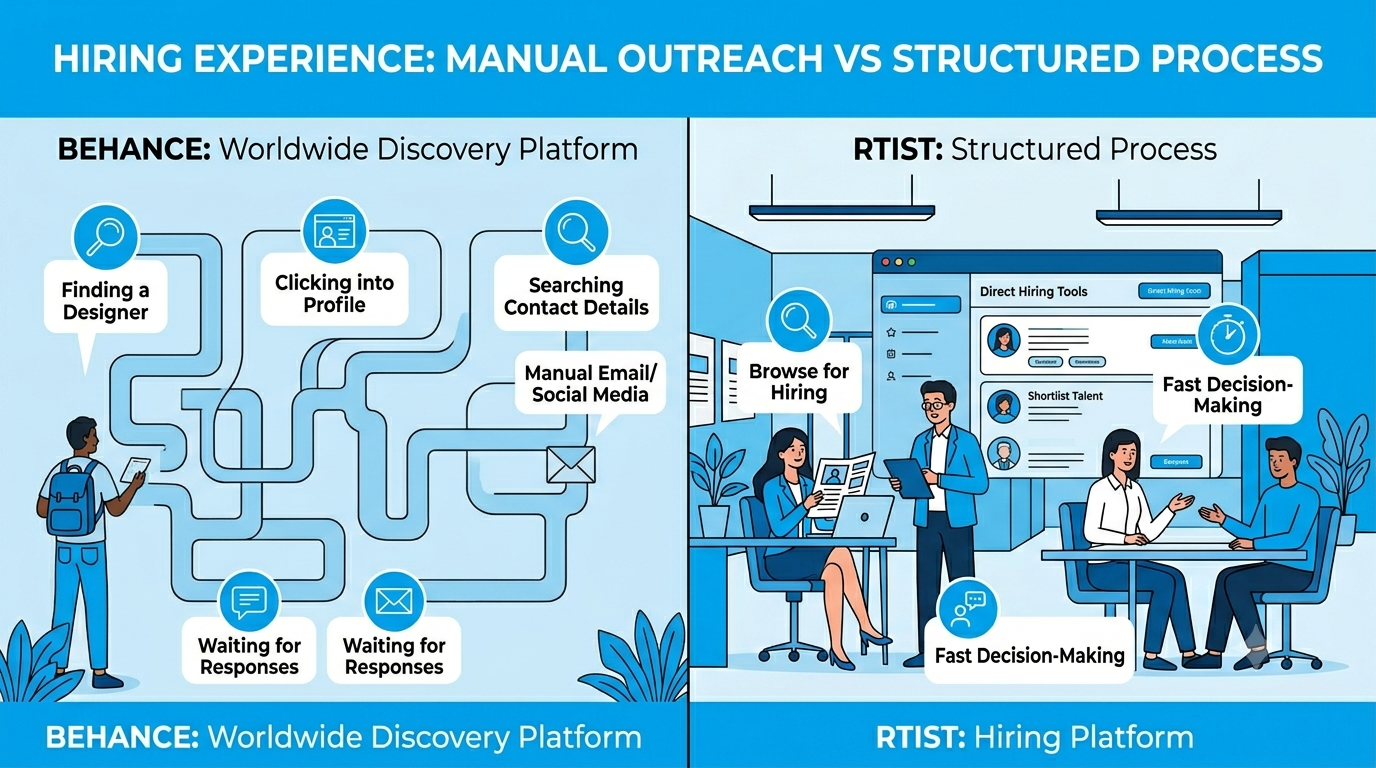
Hiring through Behance typically requires:
- Finding a designer you like
- Clicking into their profile
- Searching for contact details or external links
- Reaching out manually via email or social media
- Waiting for responses
This process is unstructured and depends heavily on whether the designer responds or is available.
It works, but it is not built for speed or efficiency.
Rtist
Rtist streamlines hiring by:
- Allowing direct portfolio browsing for hiring
- Making talent easier to shortlist
- Reducing steps between discovery and engagement
- Supporting faster decision-making
Instead of cold outreach, you are working within a hiring-focused ecosystem.
3. Talent Intent: Showcasing Work vs Actively Available for Hire
Behance
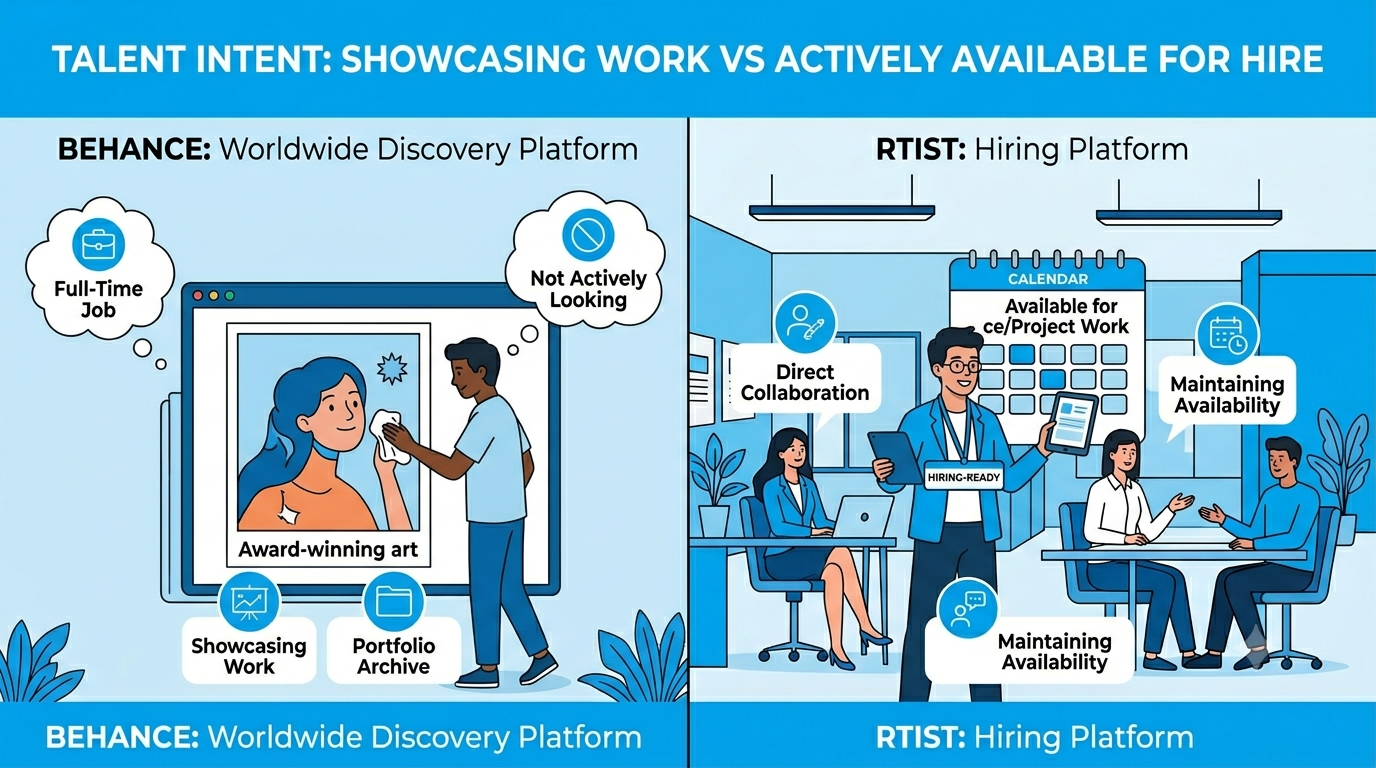
Many designers on Behance:
- Use it as a portfolio archive
- Are not actively looking for freelance work
- May be employed full-time
- May not respond to inquiries
So even if the work is impressive, availability is not guaranteed.
Rtist
On Rtist, designers are generally:
- More hiring-ready
- Open to freelance or project work
- Positioned for client collaboration
- Actively maintaining professional availability
This makes it more practical for businesses that need to hire quickly.
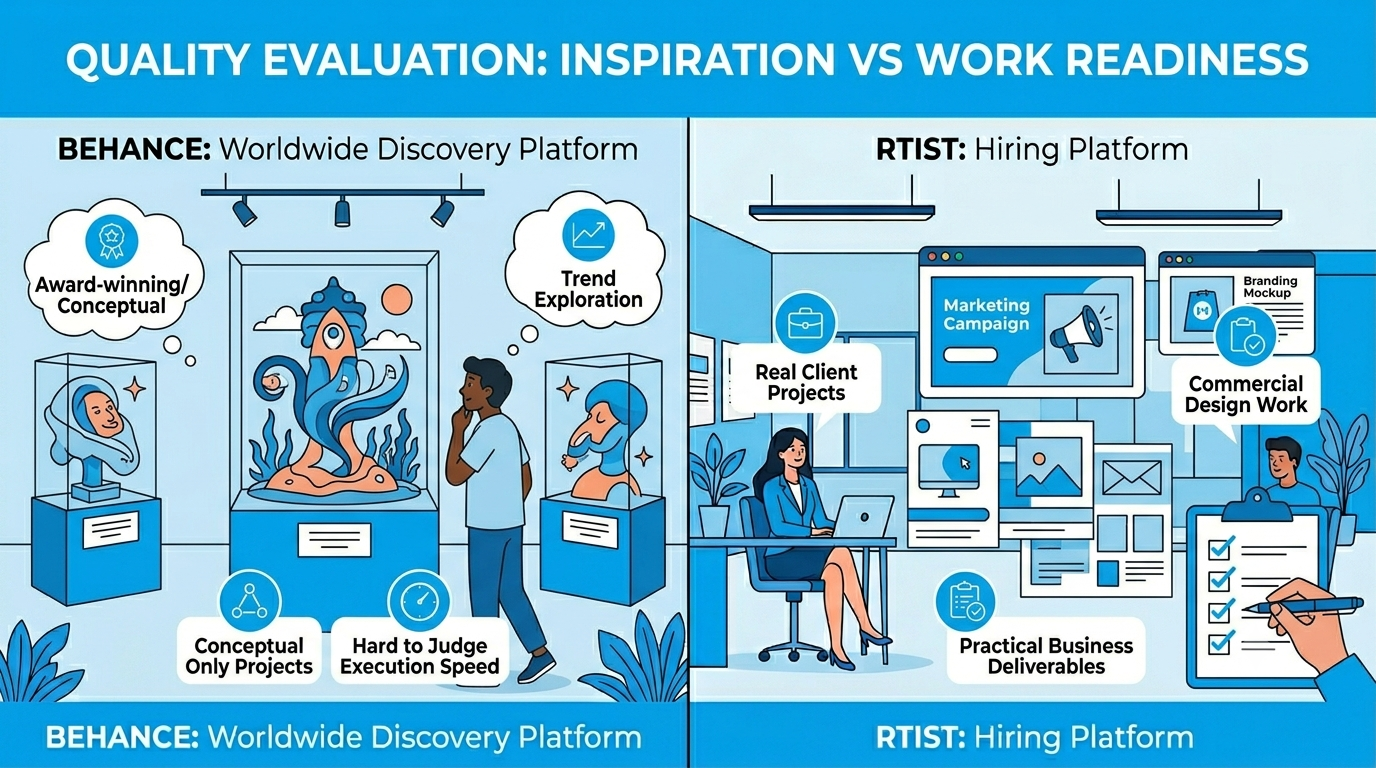
4. Quality Evaluation: Inspiration vs Work Readiness
Behance
Behance is excellent for:
- Creative inspiration
- High-end design showcases
- Award-winning or conceptual work
- Trend exploration
However:
- Some projects are conceptual only
- Not all work is client-based
- Hard to judge real-world execution speed or reliability
It is strong visually, but less practical for hiring decisions.
Rtist
Rtist portfolios are more focused on:
- Real client projects
- Commercial design work
- Marketing and branding deliverables
- Practical business use cases
This makes it easier to evaluate whether a designer can actually handle your project requirements.
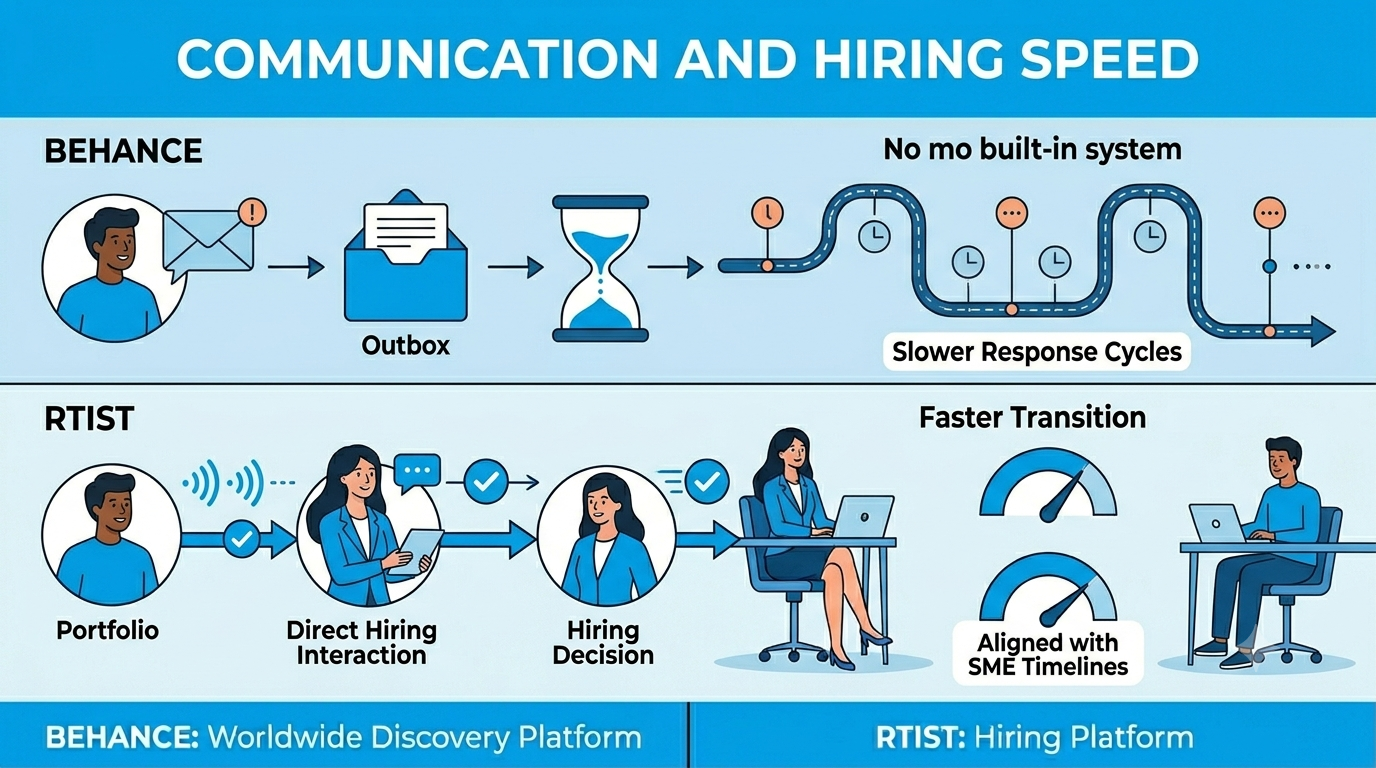
5. Communication and Hiring Speed
Behance
- No built-in hiring workflow
- Slower response cycles
- No structured project handling system
This adds friction to the hiring process.
Rtist
- Designed for direct hiring interaction
- Easier shortlisting and comparison
- Faster transition from viewing portfolio to hiring decision
- More aligned with SME hiring timelines
It reduces delays between interest and action.
6. Best Use Cases for Each Platform
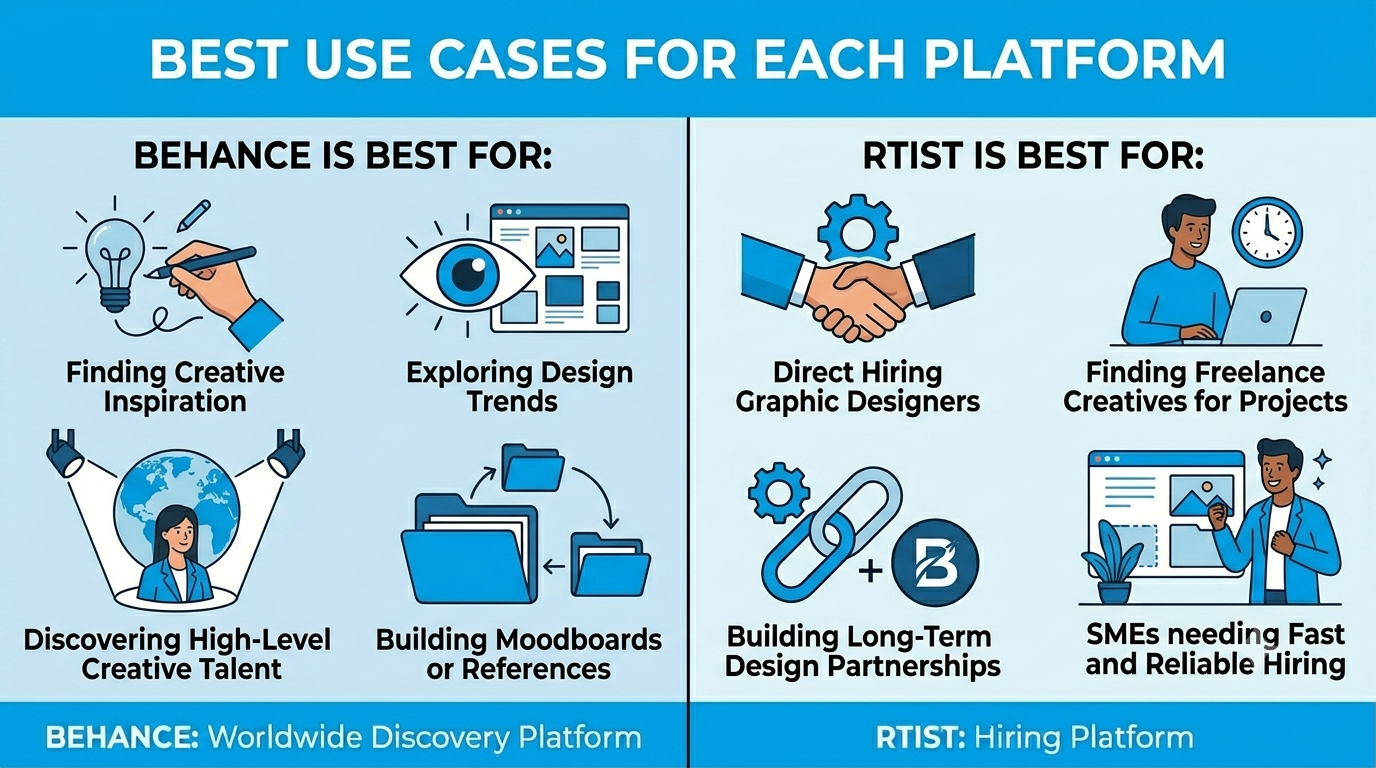
Behance is best for:
- Finding creative inspiration
- Exploring design trends
- Discovering high-level creative talent
- Building moodboards or references
It is ideal for the research and inspiration stage.
Rtist is best for:
- Direct Hiring graphic designers
- Finding freelance creatives for projects
- Building long-term design partnerships
- SMEs needing fast and reliable hiring
It is ideal for the actual hiring stage.
7. The Real Difference in One Line
- Behance helps you find designers you like
- Rtist helps you hire designers you can work with
Final Verdict
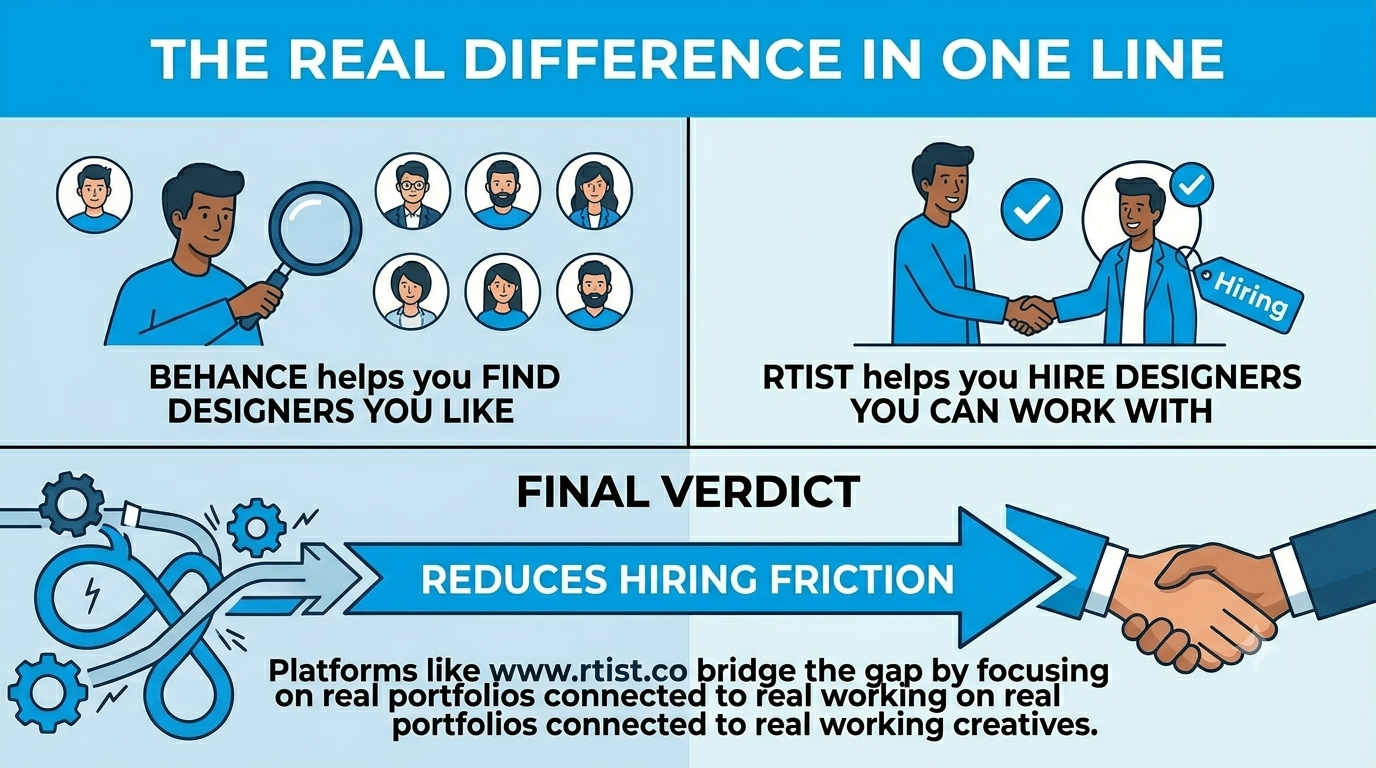
Behance and Rtist are not competitors in the same category. They serve different stages of the creative process.
If you are exploring ideas, styles, and inspiration, Behance is extremely useful. But if your goal is to actually hire a designer for a project, you will eventually need a platform that supports hiring, communication, and execution.
For Malaysian SMEs, the biggest gap with Behance is not talent quality, but hiring friction. Rtist reduces that friction by turning portfolio browsing into a practical hiring workflow.
Where Rtist Fits In
Platforms like www.rtist.co bridge the gap between discovery and hiring by focusing on real portfolios that are connected to real working creatives.
This allows businesses to move from “I like this designer’s work” to “I can actually hire this designer” much faster and more reliably.