Hiring a designer in Malaysia today is no longer limited to one channel. SMEs can choose global freelance platforms like Fiverr, Upwork, and Freelancer.com, or use a more focused creative platform like Rtist.
The better option depends on what you value most: cost, speed, quality, or hiring reliability. This final comparison brings everything together in a simple way so SME owners and startup teams can make a clear decision.
1. The Two Hiring Models
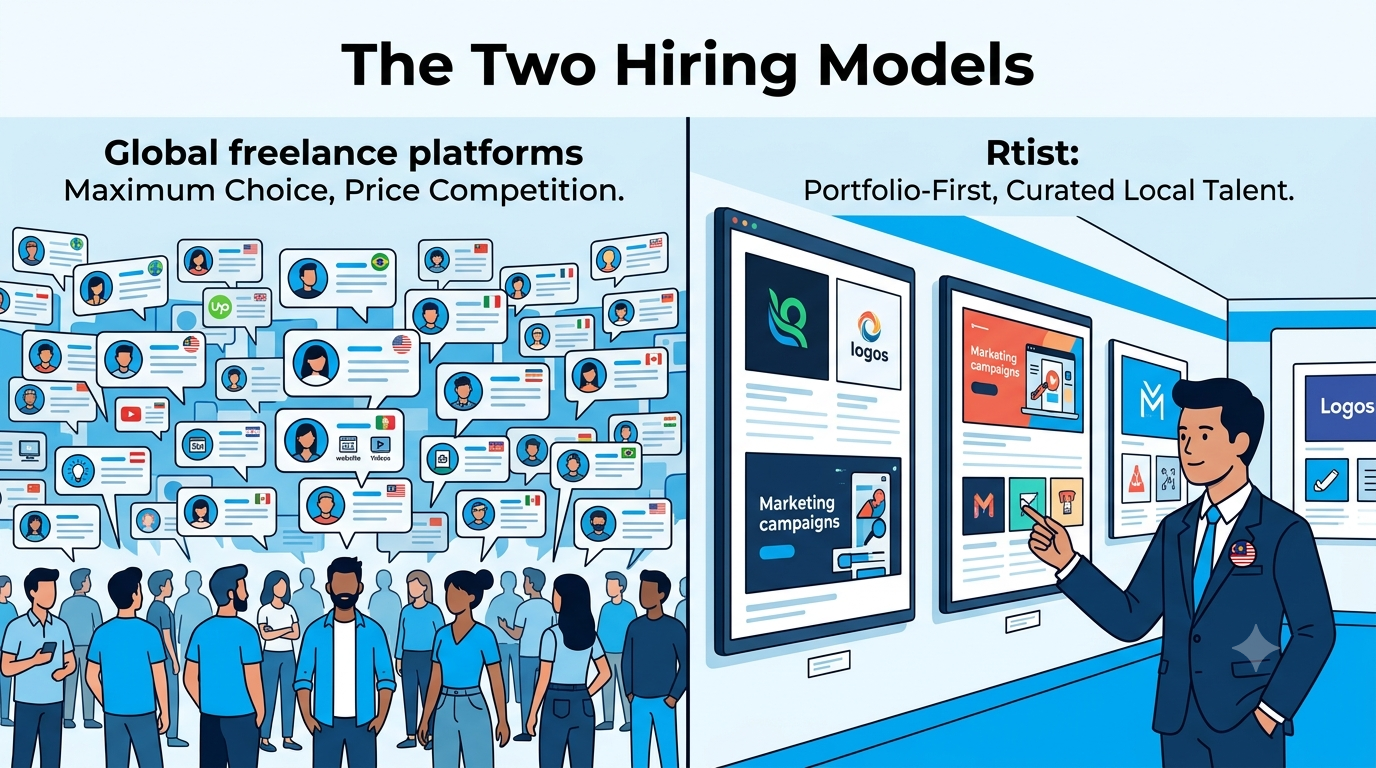
Global freelance platforms
Platforms like Fiverr, Upwork, and Freelancer.com operate as large open marketplaces. They give you access to thousands of freelancers worldwide across all price ranges and skill levels.
The core idea is:
- Maximum choice
- Maximum price competition
- Self-managed hiring process
However, this also means more effort is needed to filter talent and manage quality.
Rtist
Rtist is built specifically for creative hiring in Malaysia and the region. Instead of browsing random freelancers, you browse curated design portfolios.
The core idea is:
- Portfolio-first hiring
- Creative-focused talent pool
- Faster shortlisting
- Better local relevance
It is designed for SMEs that want reliable creative output without heavy filtering.
2. Key SME Decision Factors
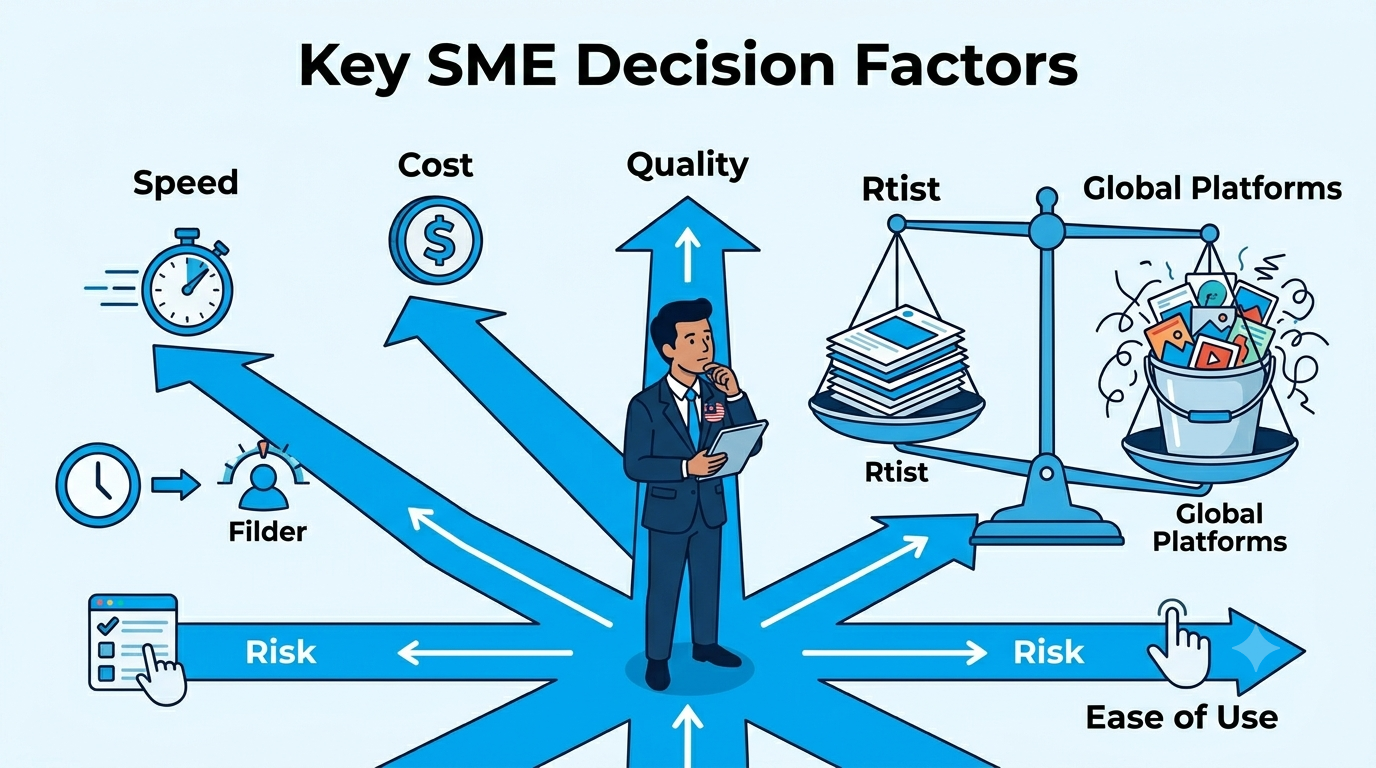
For most businesses, hiring decisions come down to five practical factors:
- Speed of hiring
- Cost efficiency
- Quality consistency
- Hiring risk
- Ease of use
Here is how both approaches compare.
3. Visual Comparison of Hiring Performance
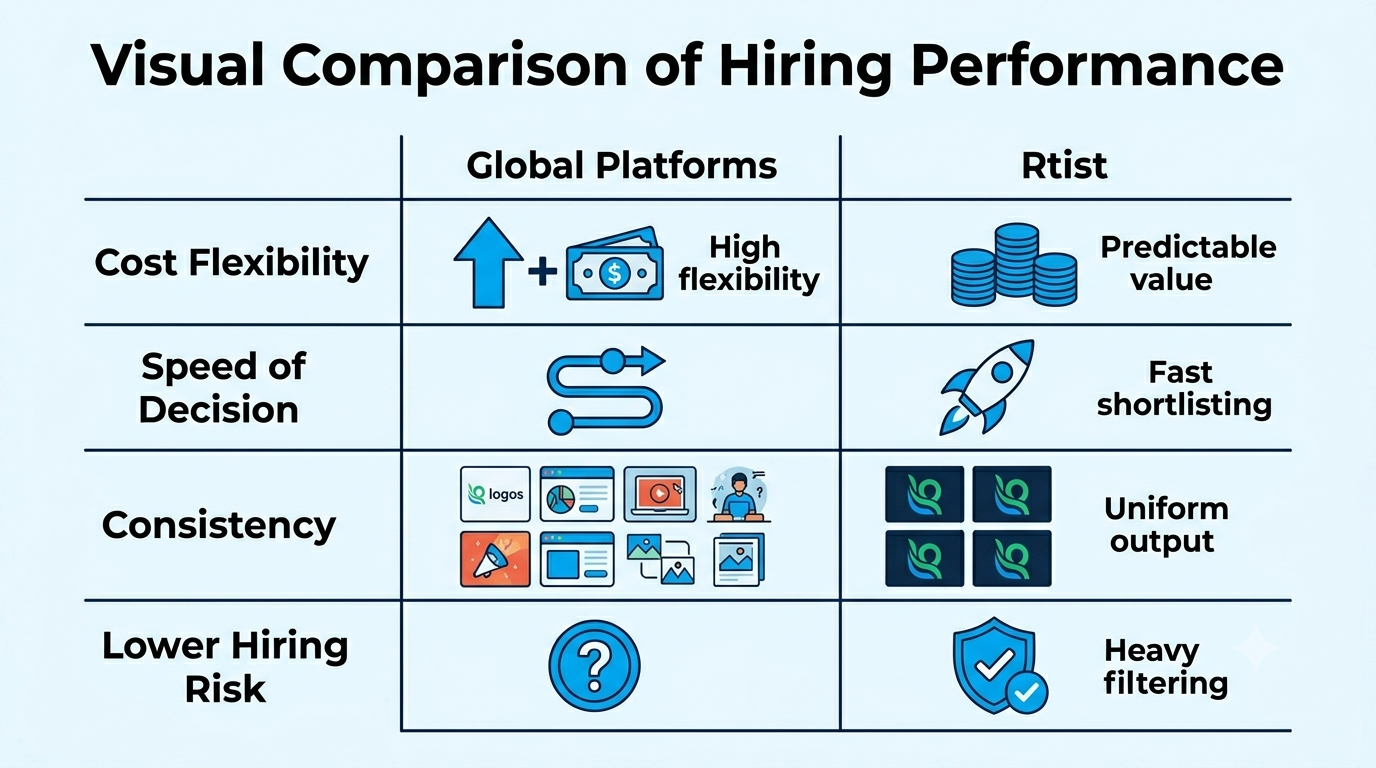
This comparison reflects a common reality for SMEs:
- Global platforms win on raw cost flexibility
- Rtist wins on speed of decision-making, consistency, and lower hiring risk
4. Cost: Lowest Price vs Predictable Value
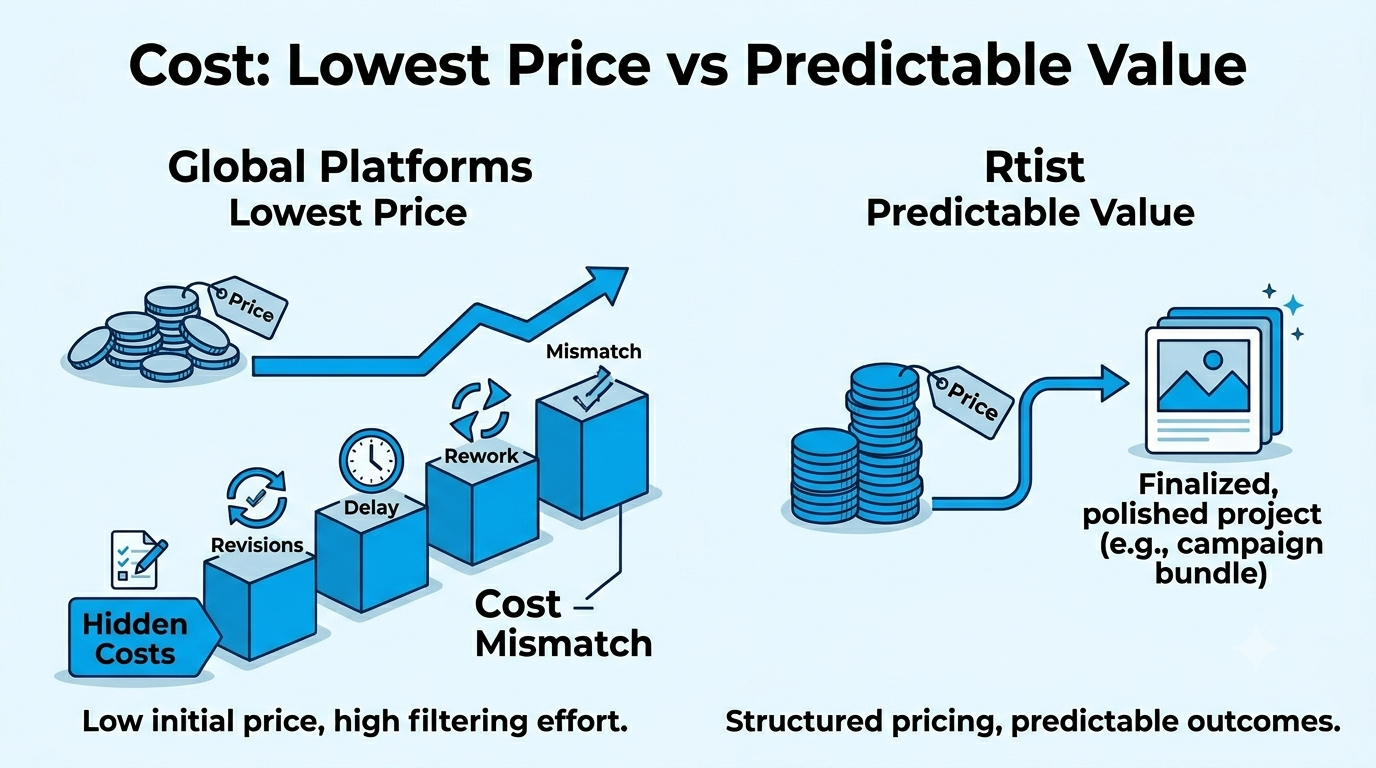
Global platforms often appear cheaper at first glance. You can find extremely low-cost designers, especially on gig-based marketplaces.
But lower price does not always mean lower total cost. SMEs often face:
- More revisions
- Communication delays
- Rework due to mismatched expectations
Rtist pricing is generally more structured and aligned with SME creative work. While not always the cheapest option, it tends to deliver more predictable outcomes and fewer hidden costs.
In practice, SMEs often spend less time fixing work when using curated talent platforms.
5. Speed: Choice Overload vs Fast Shortlisting
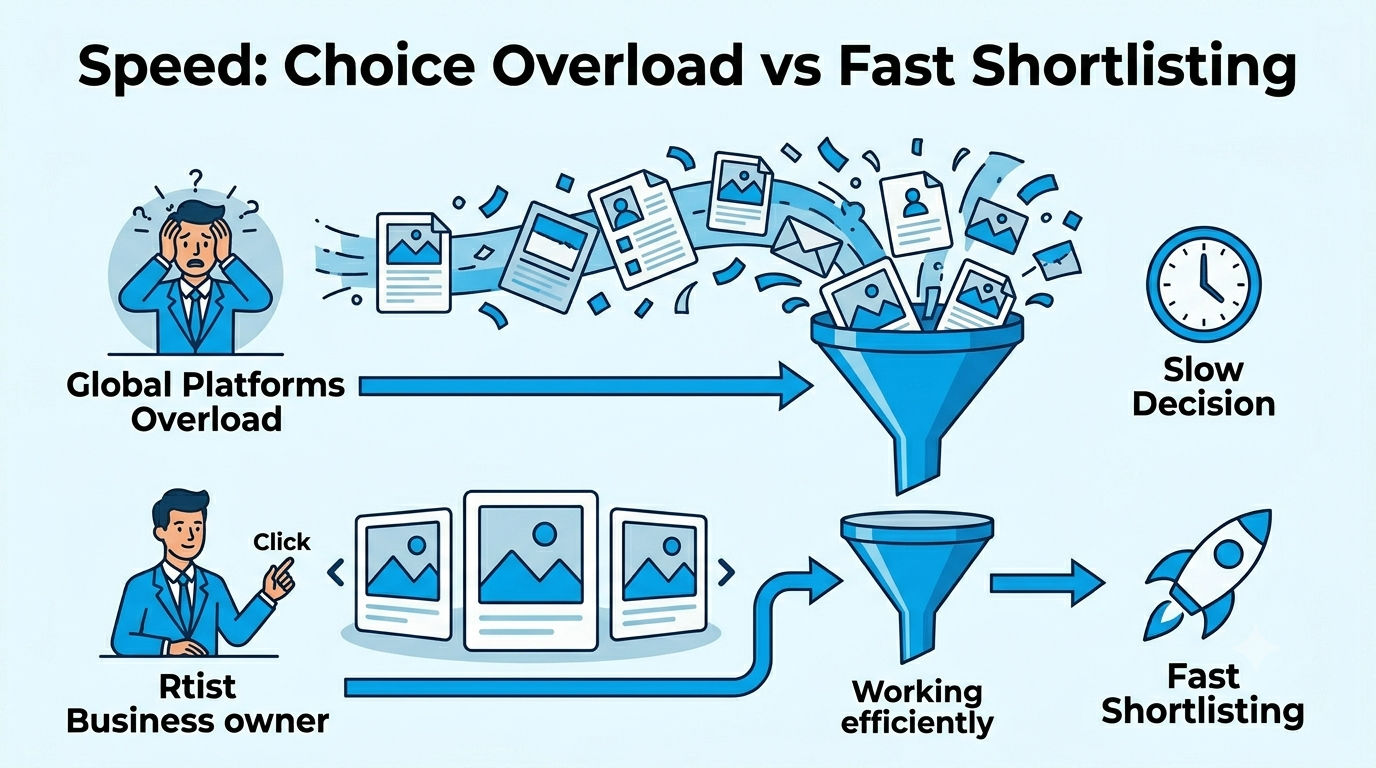
Global platforms give you instant access to thousands of freelancers. However, this often slows down decision-making because you must:
- Post jobs or search listings
- Compare proposals
- Evaluate mixed-quality profiles
Rtist reduces this friction by focusing on curated portfolios. Instead of sorting through hundreds of applications, you directly evaluate relevant designers.
This makes it faster for SMEs that need design work for campaigns, branding, or product launches.
6. Quality: Variability vs Consistency
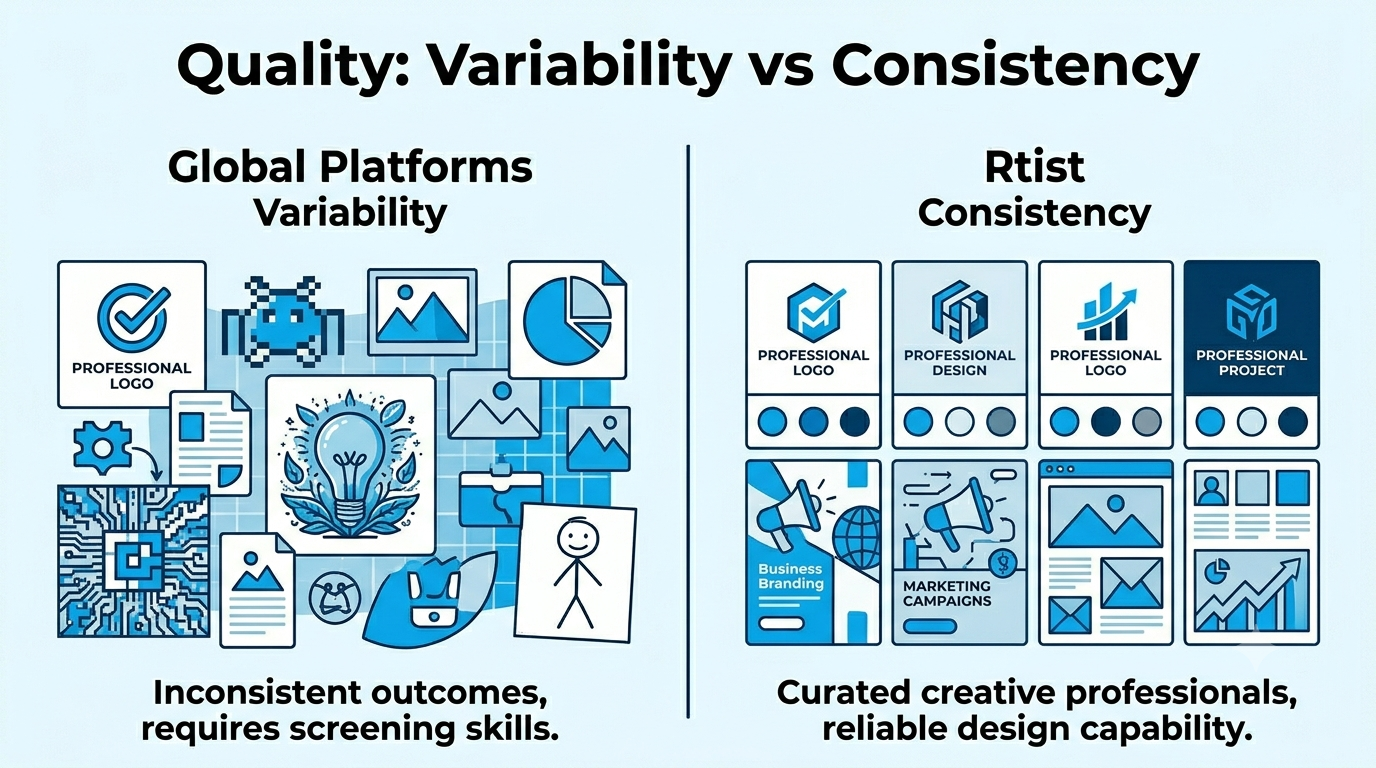
The biggest difference is consistency.
Global platforms offer:
- Very high-end designers
- Mid-level freelancers
- Beginners competing on price
This creates inconsistent outcomes unless the buyer is experienced in filtering talent.
Rtist focuses specifically on creative professionals, making it easier to evaluate real design capability. Portfolios are more aligned with branding, marketing, and business use cases, which improves predictability.
7. Hiring Risk: Buyer Responsibility vs Reduced Uncertainty
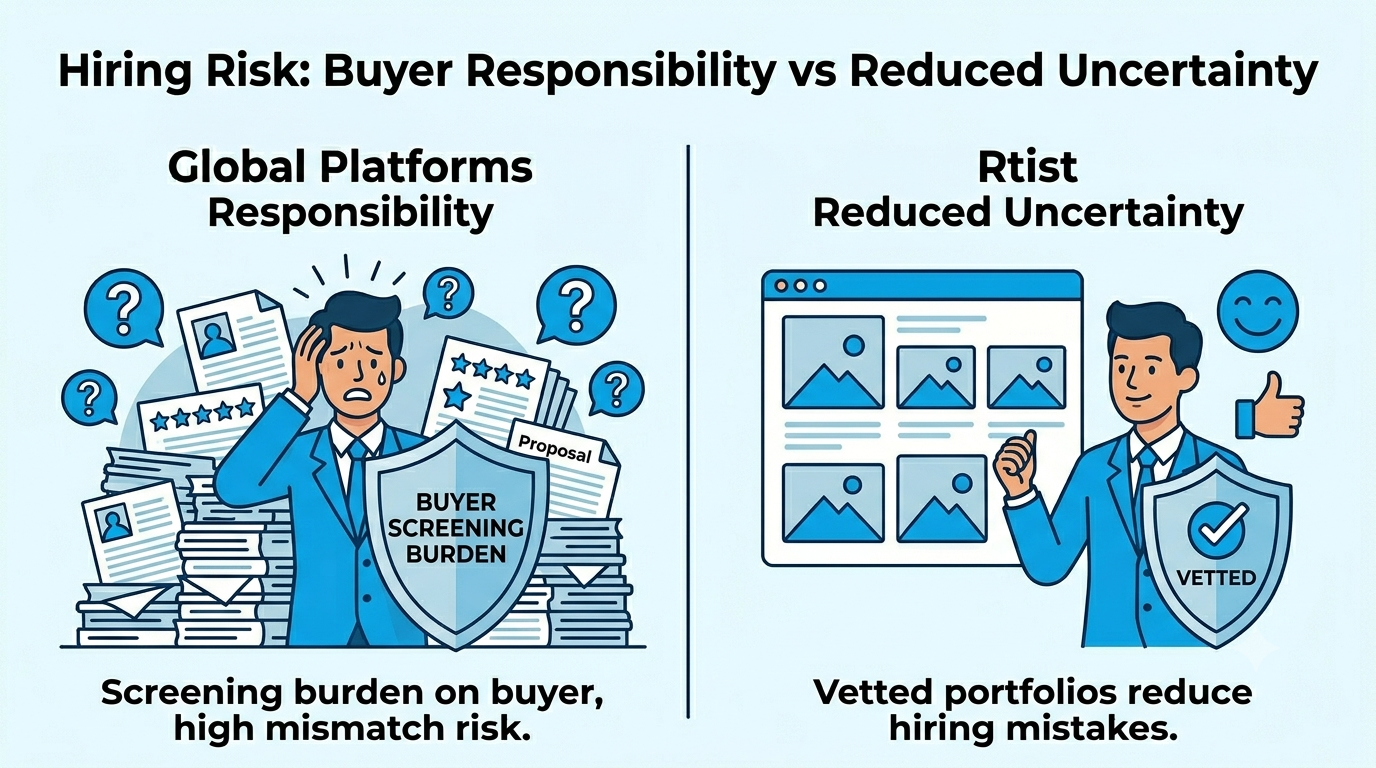
On global platforms, the responsibility to filter talent sits heavily on the buyer. You need to judge:
- Skill level from proposals
- Reliability from reviews
- Communication quality through messages
Mistakes are common if screening is not strong.
Rtist reduces this risk by making portfolios the primary decision tool. You are evaluating actual work first, not just promises or bids.
This reduces mismatches, especially for SMEs without dedicated creative leads.
8. Ease of Use: Complex Management vs Focused Hiring Flow
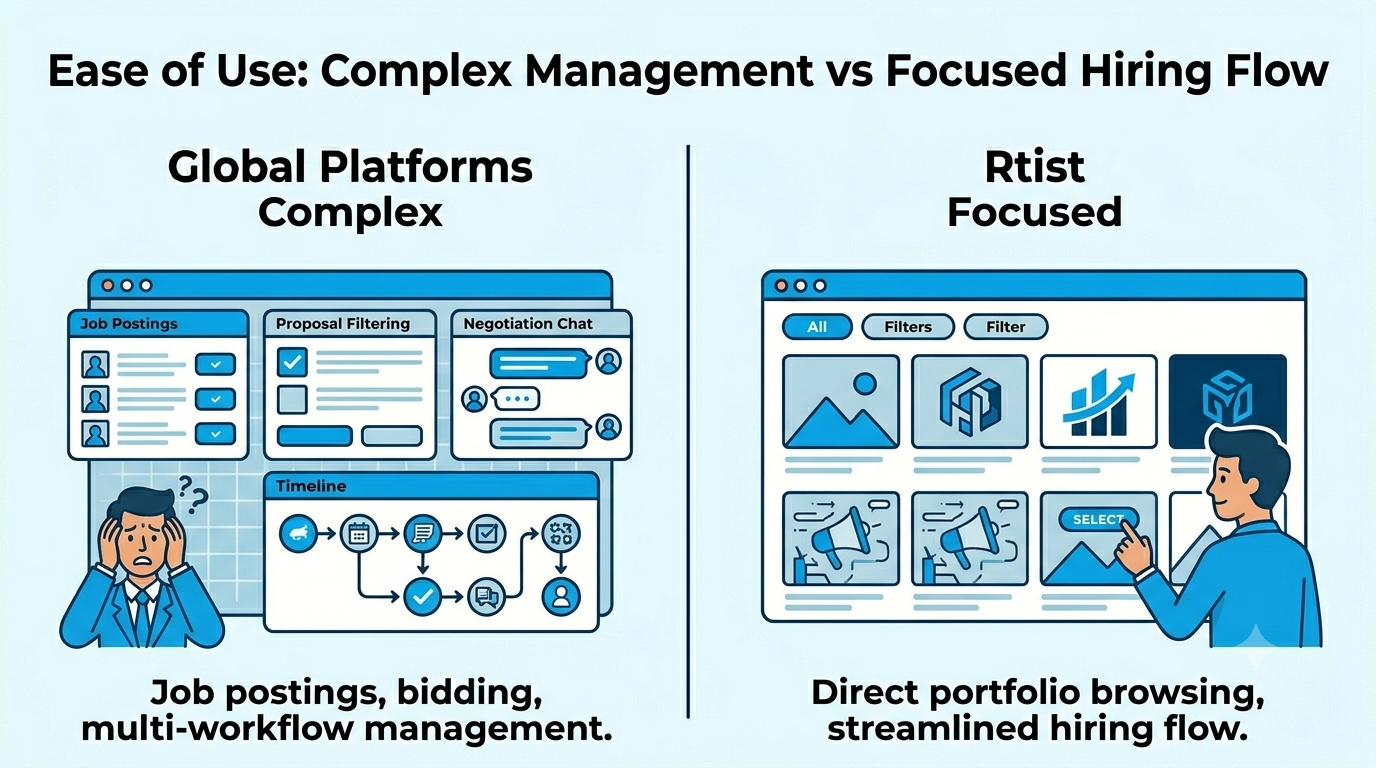
Global platforms require more management:
- Job postings
- Proposal filtering
- Negotiation
- Platform-specific workflows
Rtist simplifies this by focusing only on creative hiring. The experience is more direct and visually driven, which is easier for business owners and marketing teams.
9. Final Verdict: Is Rtist Better?
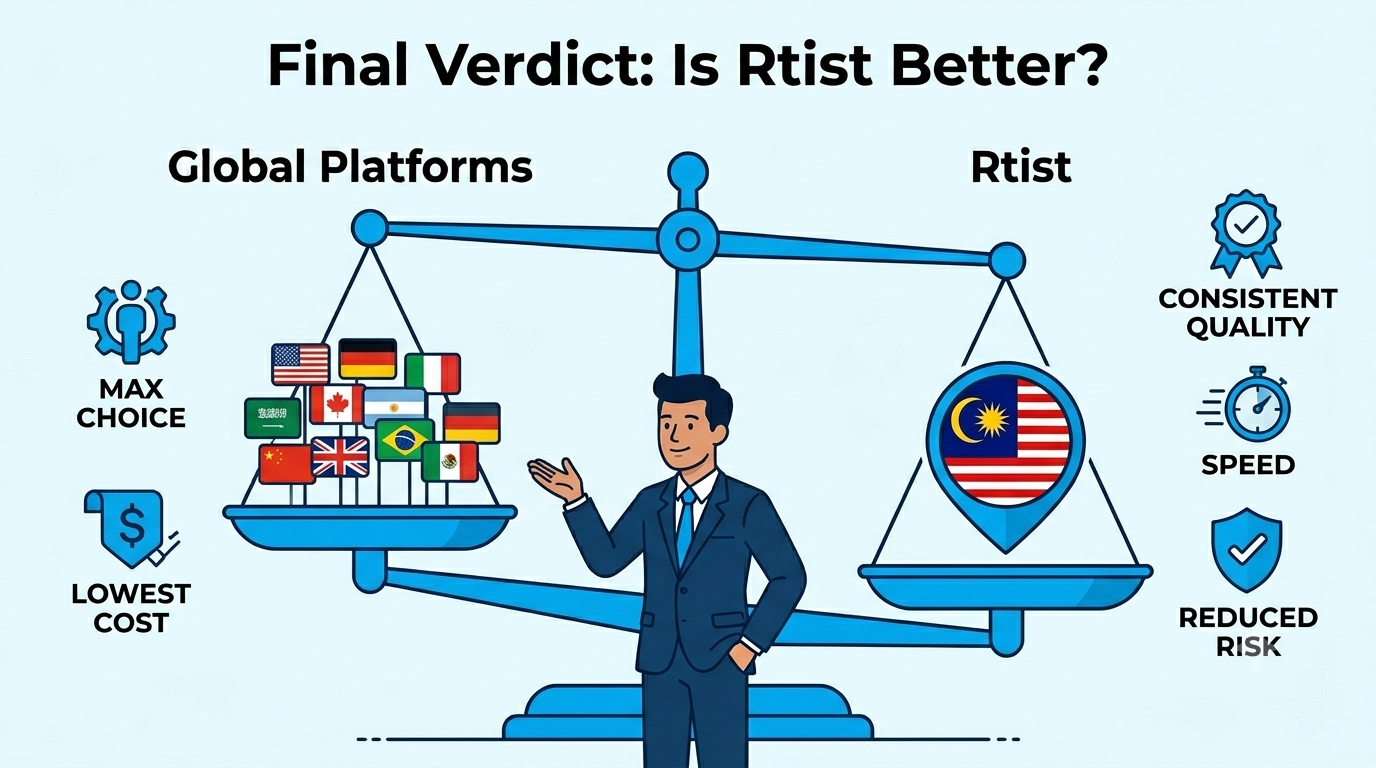
Rtist is not trying to replace global freelance platforms. It solves a different problem.
- Global platforms are better for maximum choice and lowest possible pricing
- Rtist is better for structured, reliable, and faster creative hiring
For Malaysian SMEs, the main challenge is rarely access to designers. It is finding the right designer quickly, with minimal risk and consistent quality.
This is where Rtist performs better for most creative hiring needs.
Conclusion
If your priority is:
- Lowest cost at all costs
- Global freelancer access
- Experimental or one-off tasks
Then global platforms still make sense.
But if your priority is:
- Faster hiring decisions
- More reliable design quality
- Better alignment with Malaysian market needs
- Lower hiring risk
Then Rtist becomes the more practical choice.
Where Rtist Fits In
Platforms like www.rtist.co are built to simplify creative hiring by focusing on real portfolios and curated talent instead of overwhelming marketplace competition.
For SMEs and startups, this often means less time searching, fewer hiring mistakes, and faster access to designers who can actually deliver consistent creative work.