When Malaysian businesses start hiring designers or creative talent online, Upwork is often the first global platform they encounter. But local platforms like Rtist offer a very different experience.
Both can help you hire freelancers, but they are built on fundamentally different systems. One is a curated, portfolio-first local hiring platform. The other is a global bidding marketplace with massive scale.
Understanding this difference is important because it directly affects quality, speed, pricing clarity, and hiring success.
1. Core Model Difference: Curated Portfolios vs Bidding Marketplace
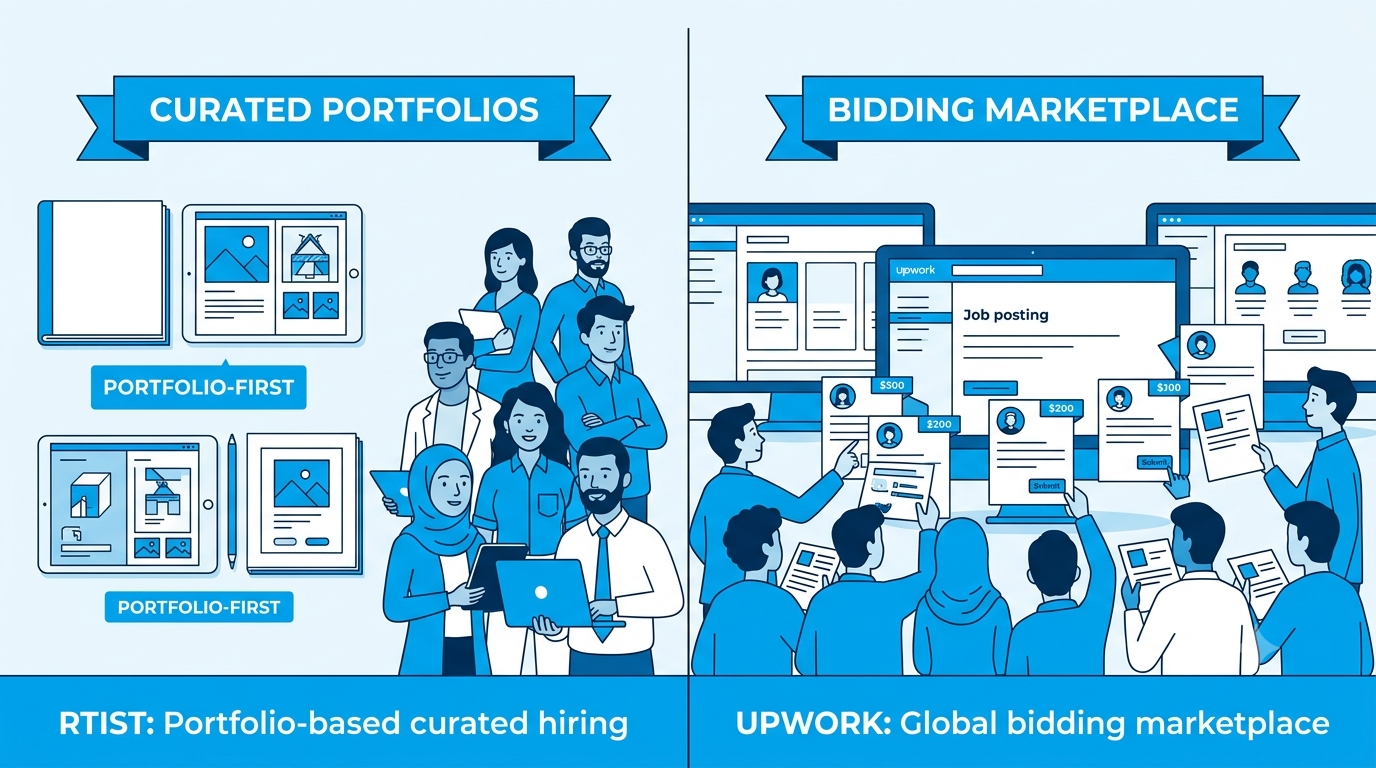
Rtist: Portfolio-based curated hiring
Rtist focuses on curated creative professionals, especially within Malaysia and the regional market.
The hiring flow is:
- Browse designer portfolios
- Review real work examples
- Shortlist based on style and experience
- Directly engage talent for projects
This is closer to hiring through a creative directory than a bidding system.
The key advantage is clarity. You evaluate talent based on actual work, not just proposals.
Upwork: Global bidding marketplace
Upwork operates on a proposal-based system.
The hiring flow is:
- Post a job
- Receive multiple freelancer proposals
- Compare bids and profiles
- Interview or message candidates
- Hire and manage through the platform
This creates competition among freelancers, often driving prices down, but also increasing filtering effort for employers.
2. Freelancer Quality: Curation vs Volume
Rtist
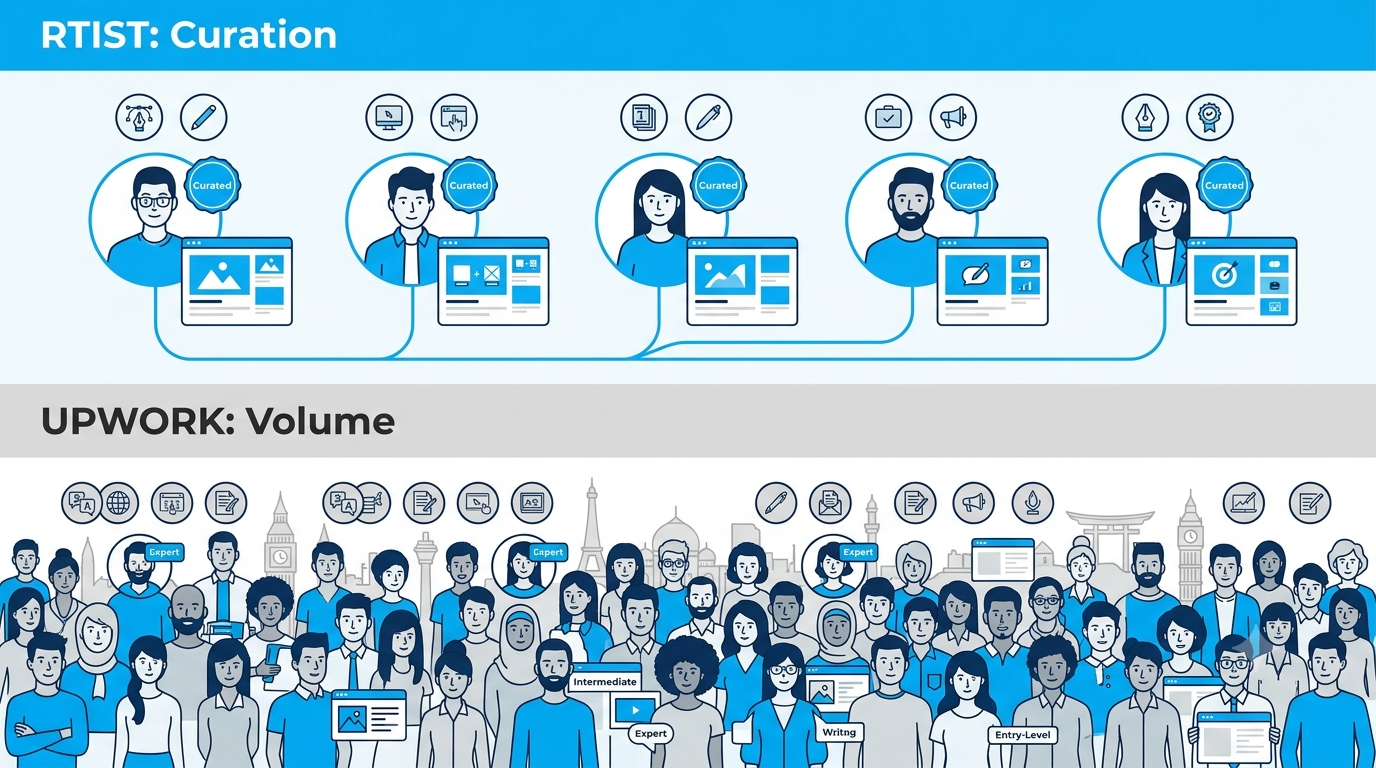
Quality is more consistent because:
- Talent is curated and portfolio-driven
- Focus is on creative professionals
- Stronger relevance to branding, marketing, and design work
- More predictable output quality for SMEs
You are generally dealing with freelancers who already position themselves as creative specialists.
Upwork
Quality varies significantly because:
- Extremely large global talent pool
- Entry-level freelancers compete in the same pool with experts
- Some profiles are highly professional, others are inconsistent
- Requires strong filtering skills from the employer
Upwork can produce excellent results, but only if you are experienced in screening freelancers properly.
3. Pricing Transparency: Fixed Expectations vs Bid Competition
Rtist
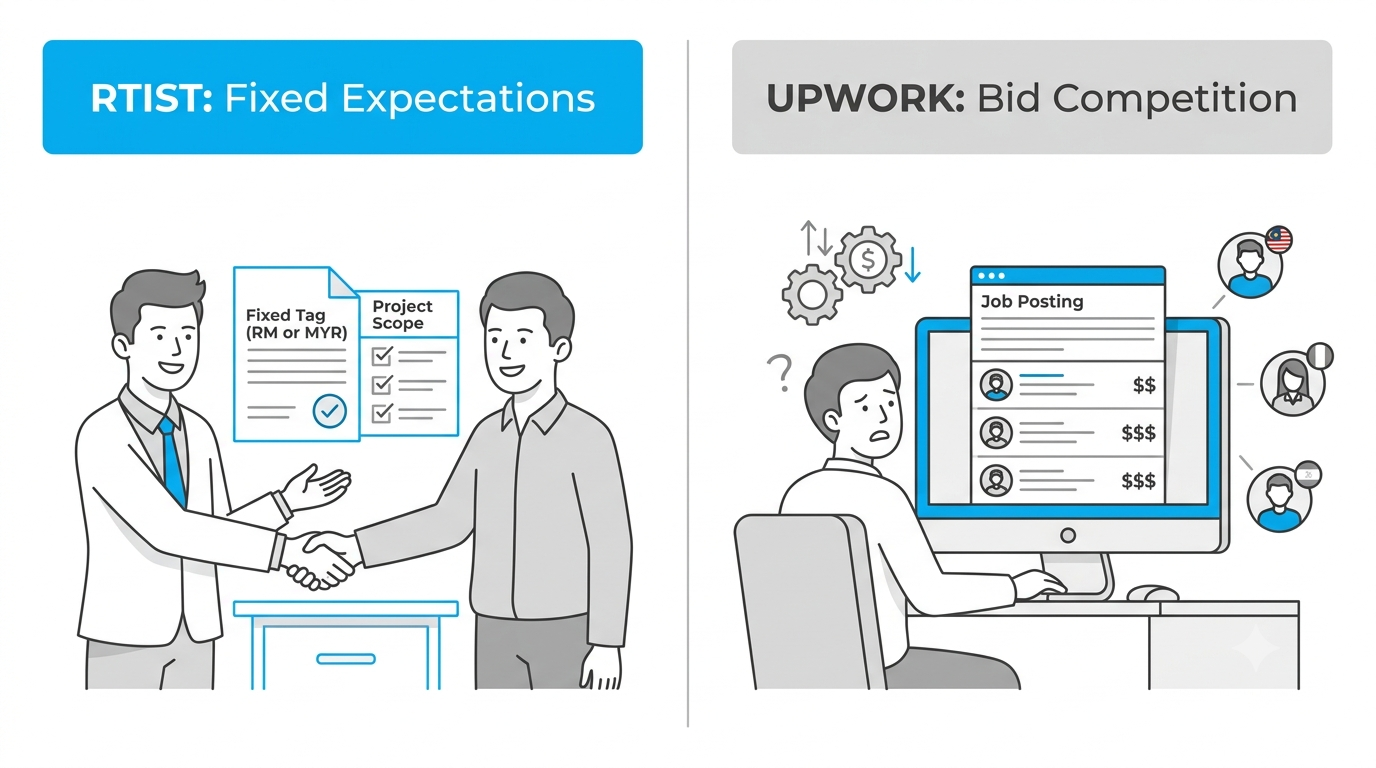
Pricing tends to be:
- More structured and expectation-based
- Aligned with local SME budgets
- Easier to understand before engagement
- Less aggressive price undercutting
This reduces surprises and helps businesses budget more accurately.
Upwork
Pricing is:
- Highly variable depending on freelancer location and experience
- Often determined through bidding
- Can range from extremely cheap to premium agency-level rates
- Sometimes unclear until negotiation starts
While flexible, it can make budgeting harder for SMEs.
4. Hiring Experience: Simplicity vs Complexity
Rtist
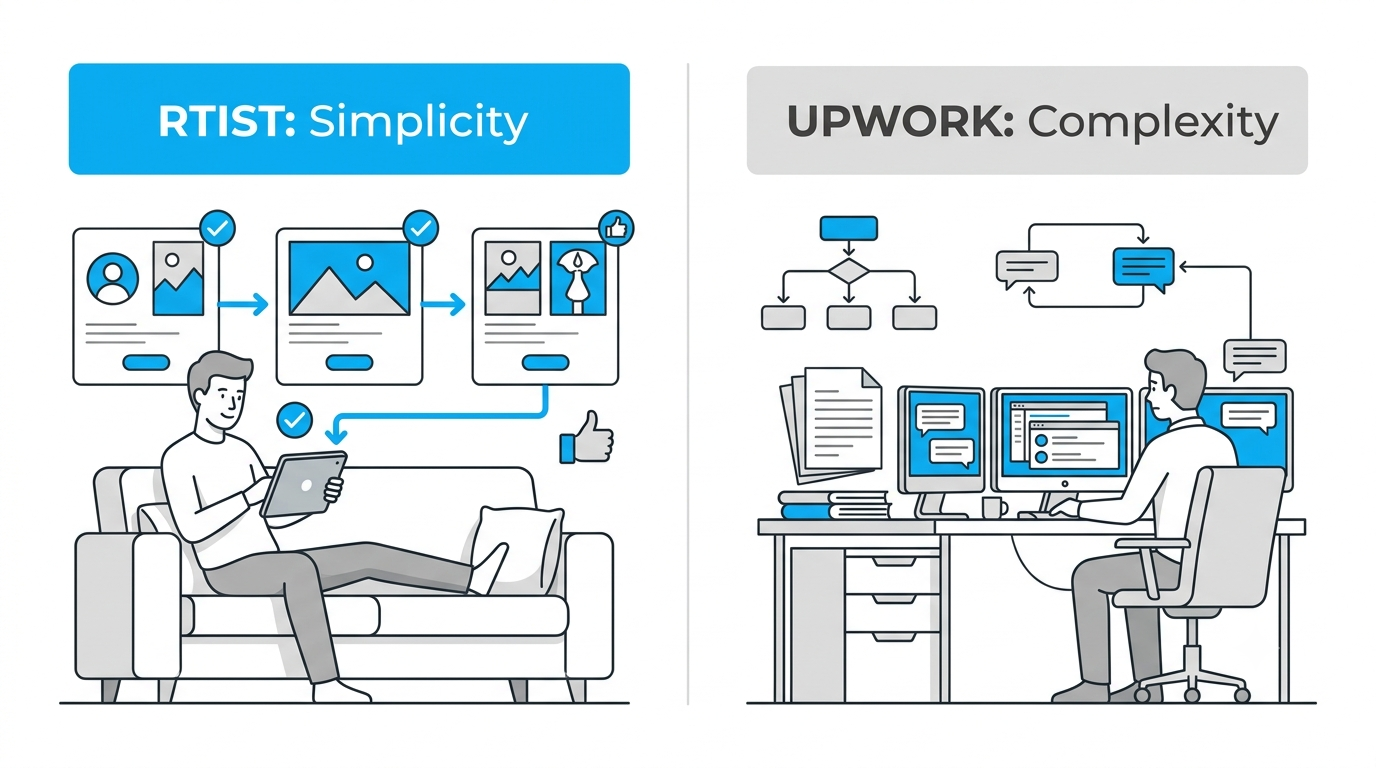
The experience is:
- Fast and visual
- Portfolio-first decision making
- Less negotiation overhead
- Designed for creative hiring specifically
It is simpler for non-technical hiring managers or SME owners.
Upwork
The experience is:
- More structured but more complex
- Requires job posting and proposal review
- Involves more communication cycles
- Better suited for users comfortable managing freelancers remotely
It offers more control, but also more workload.
5. Communication and Workflow
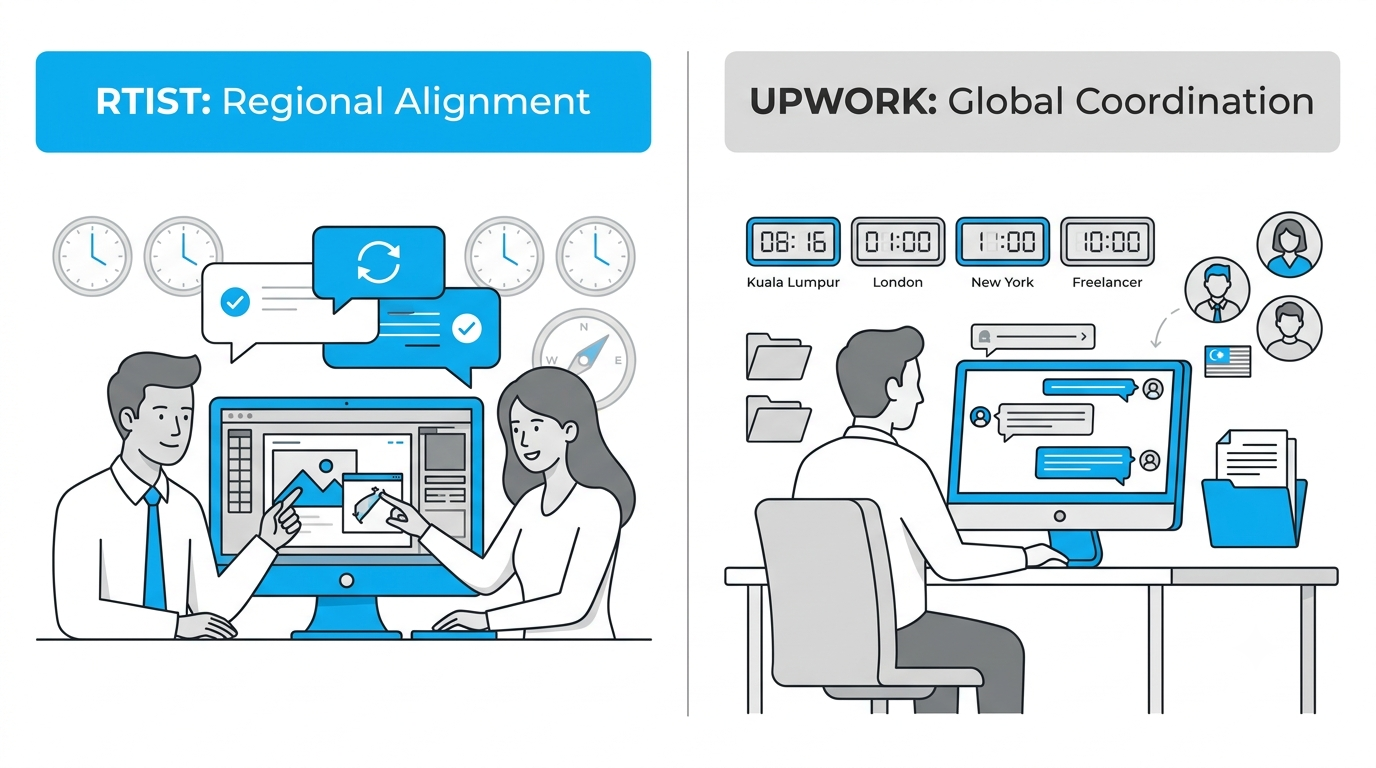
Rtist
- Easier communication within regional time zones
- More aligned expectations for design revisions and delivery
- Better cultural understanding for Malaysian brands
- Faster back-and-forth for creative work
This is especially useful for branding and marketing projects.
Upwork
- Communication depends on freelancer location
- Time zone differences can slow feedback cycles
- Quality of communication varies widely
- Requires clear documentation and structured briefs
Upwork works well when processes are well defined.
6. Best Use Cases for Each Platform
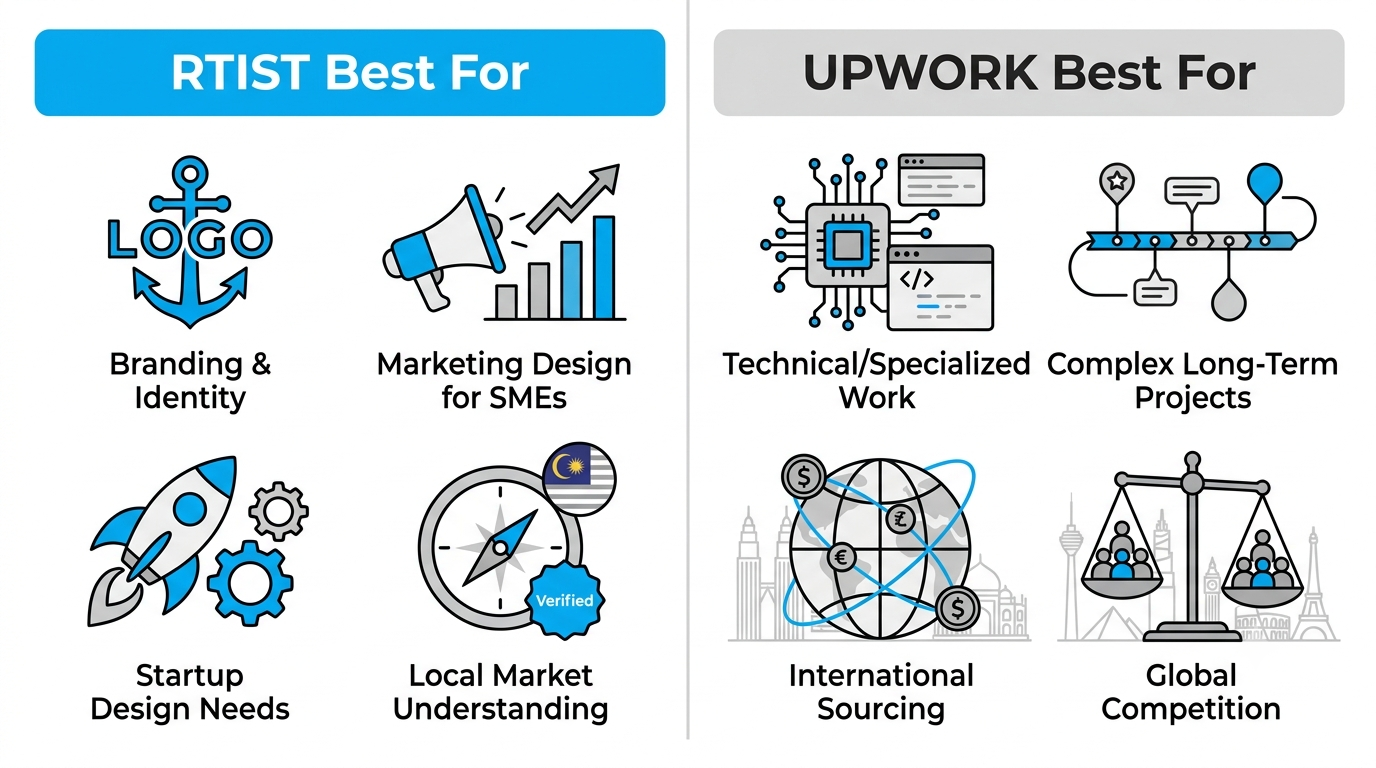
Rtist is better for:
- Branding and identity design
- Marketing creatives for SMEs
- Social media content design
- Startup design needs
- Businesses wanting local market understanding
- Faster, simpler hiring decisions
It works best when you want reliable creative output without heavy management overhead.
Upwork is better for:
- Technical or specialised freelance work
- Complex long-term projects
- International talent sourcing
- Budget-optimised hiring through global competition
- Businesses with strong internal project management
It is more suitable when you need scale and global reach.
7. Risk and Control
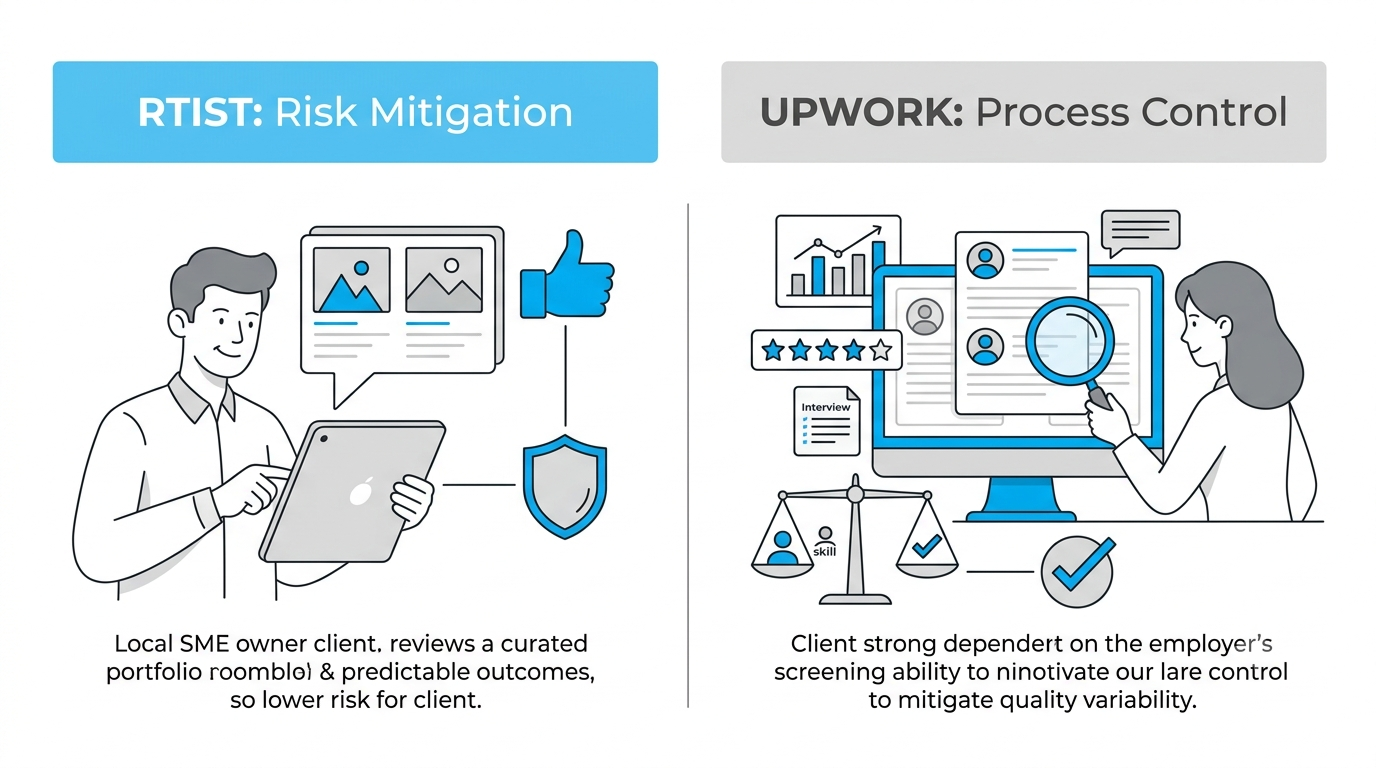
Rtist
- Lower risk for SMEs due to curated talent
- Easier to evaluate real portfolios
- More predictable hiring outcomes
- Less dependency on filtering skills
Upwork
- Higher variability in quality
- Strong dependence on employer’s ability to screen talent
- Greater risk of mismatched expectations
- More control over selection if used correctly
Final Verdict
The choice between Rtist and Upwork comes down to hiring style:
- Rtist is better if you want curated, portfolio-based creative hiring with simpler decision-making and local market alignment
- Upwork is better if you want global reach, price competition, and are comfortable managing a more complex hiring process
For most Malaysian SMEs hiring designers and creative professionals, Rtist offers a more focused and efficient experience, especially when speed and consistency matter.
Where Rtist Fits In
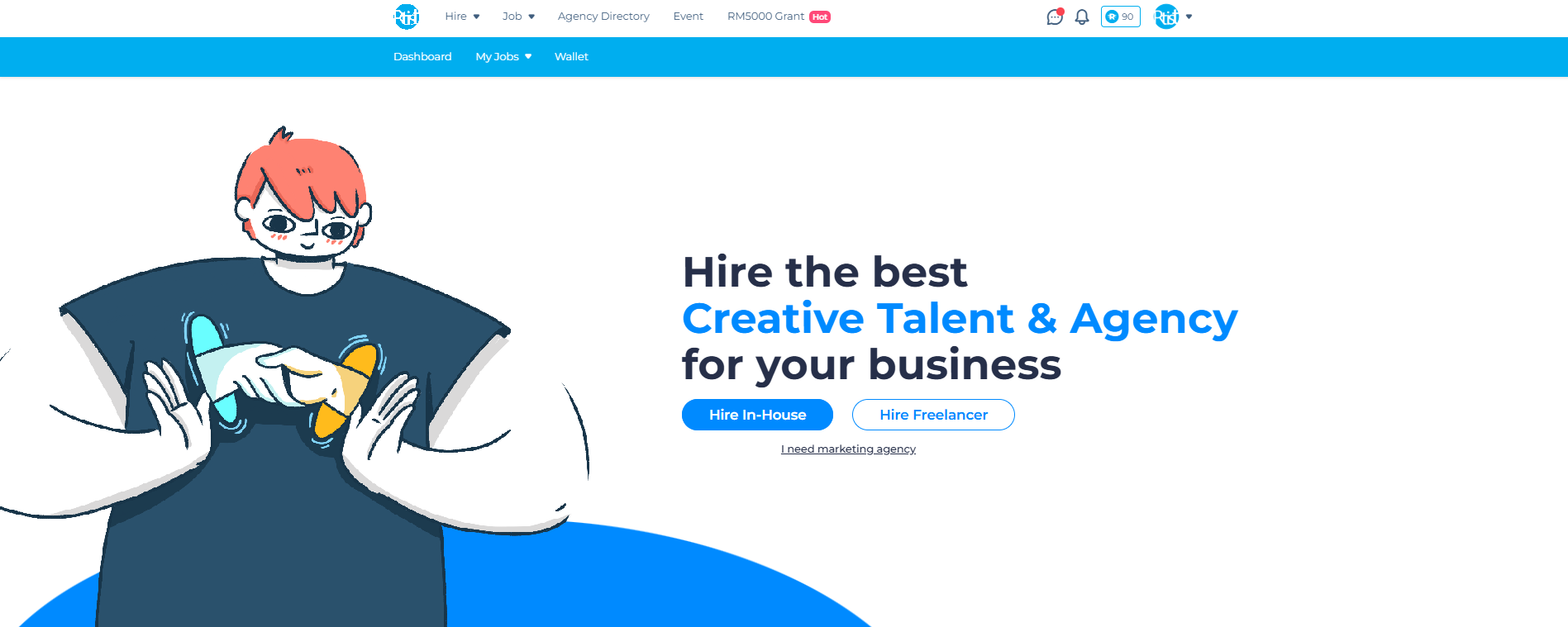
Platforms like www.rtist.co are designed specifically for businesses that want to hire creative talent through real portfolios instead of bidding systems.
This makes it easier for SMEs to focus on what matters most: evaluating actual creative work, not sorting through hundreds of proposals.