When Malaysian SMEs want to hire a graphic designer, two common options often come up: local curated platforms like Rtist and global gig marketplaces like Fiverr. On the surface, both let you “hire a designer online,” but the experience, quality, and outcomes can be very different.
The real question is not which platform is cheaper. It is which one helps you get the right design outcome faster, with less risk and better communication.
1. Talent Quality: Curated Local Talent vs Global Marketplace

Rtist (Curated Malaysian creative talent)
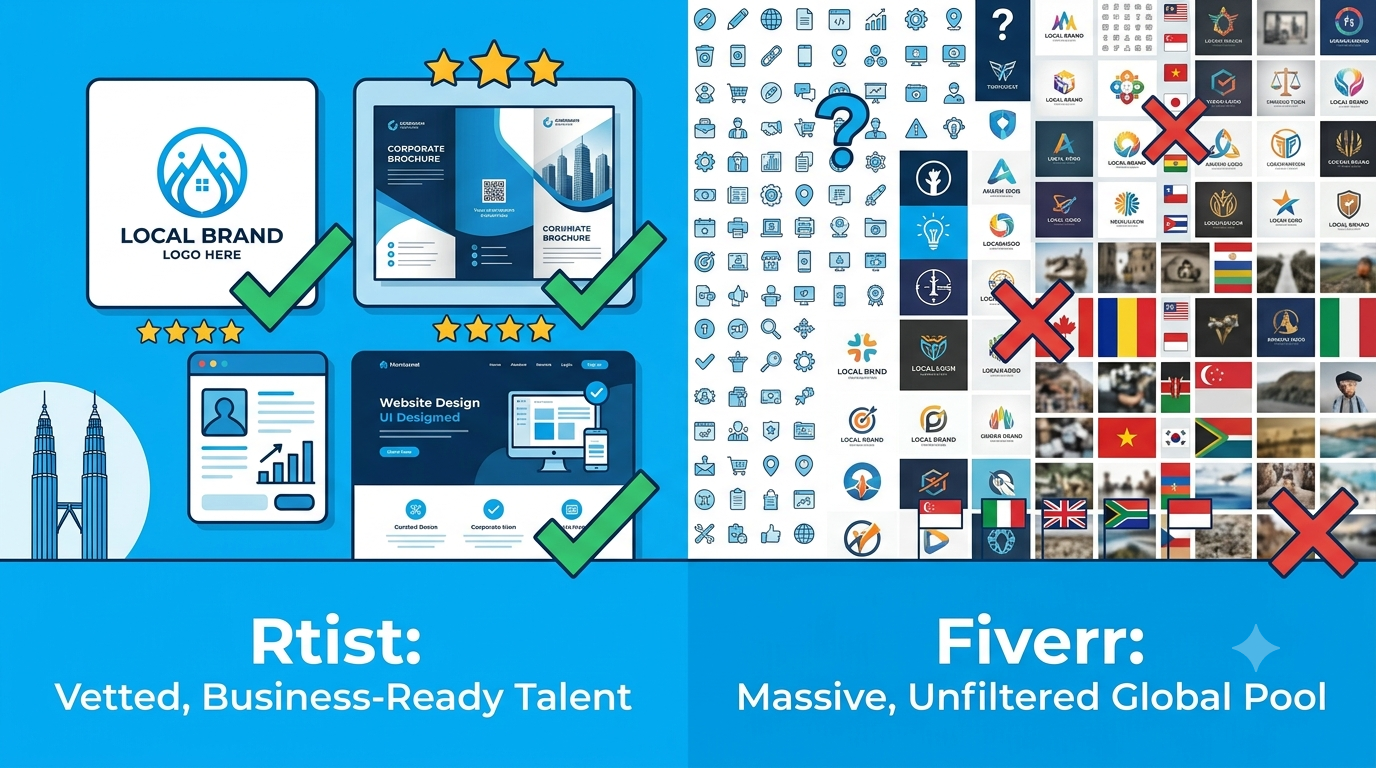
Rtist focuses on connecting businesses with Malaysia-based and regionally relevant creative professionals. The talent pool is more curated and aligned with local market needs.
What this means:
- Designers understand Malaysian audiences and culture
- Easier to find talent familiar with SME budgets and expectations
- Stronger alignment with local branding styles and industries
- More consistent professional portfolios tailored for business use
- For SMEs, this reduces mismatch risk because the designers are already operating in a similar business environment.
Fiverr (Global freelance marketplace)
Fiverr offers a massive global pool of freelancers at every price level. You can find designers from almost any country.
What this means:
- Extremely wide range of skill levels
- Quality varies heavily from excellent to very poor
- Many listings are template-based or mass-produced
- Strong competition drives down pricing at entry level
The upside is variety. The downside is inconsistency. You often need to spend more time filtering and testing before finding reliable talent.
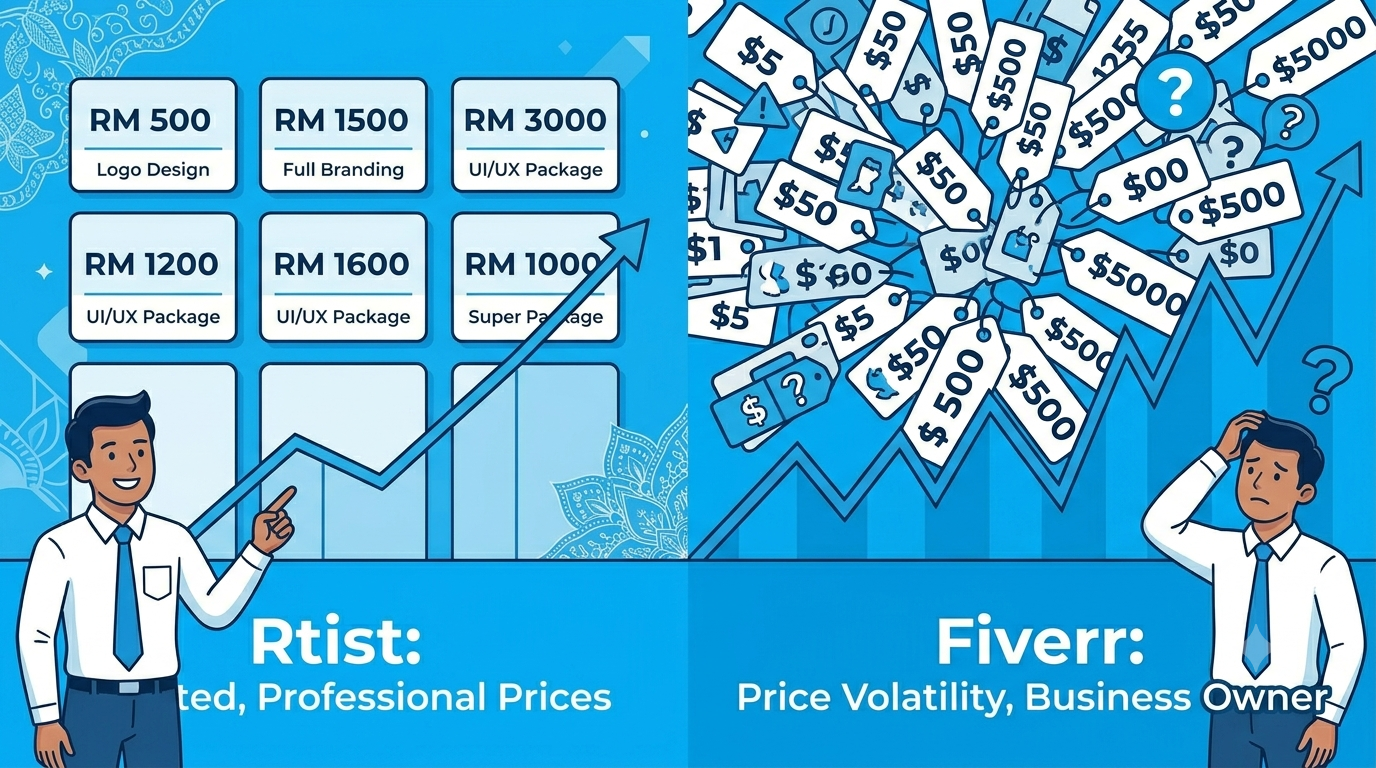
2. Pricing Structure: Predictable vs Highly Variable
Rtist pricing
On platforms like Rtist, pricing is generally more aligned with local market expectations and professional creative work.
Typical structure:
- Clear project-based pricing or quotations
- More realistic SME-friendly budgets
- Less extreme underpricing or overpricing
This helps businesses avoid “too cheap to be true” risks that often lead to poor quality output.
Fiverr pricing
Fiverr pricing is highly fragmented.
You will see:
- Very low-cost gigs (RM20–RM100 equivalents)
- Mid-range professional services
- High-end agency-level offerings
While this flexibility looks attractive, it often leads to confusion. Many SMEs end up choosing based on price rather than capability, which increases revision cycles and rework costs.
3. Hiring Experience: Structured vs Self-Directed Search
Rtist experience
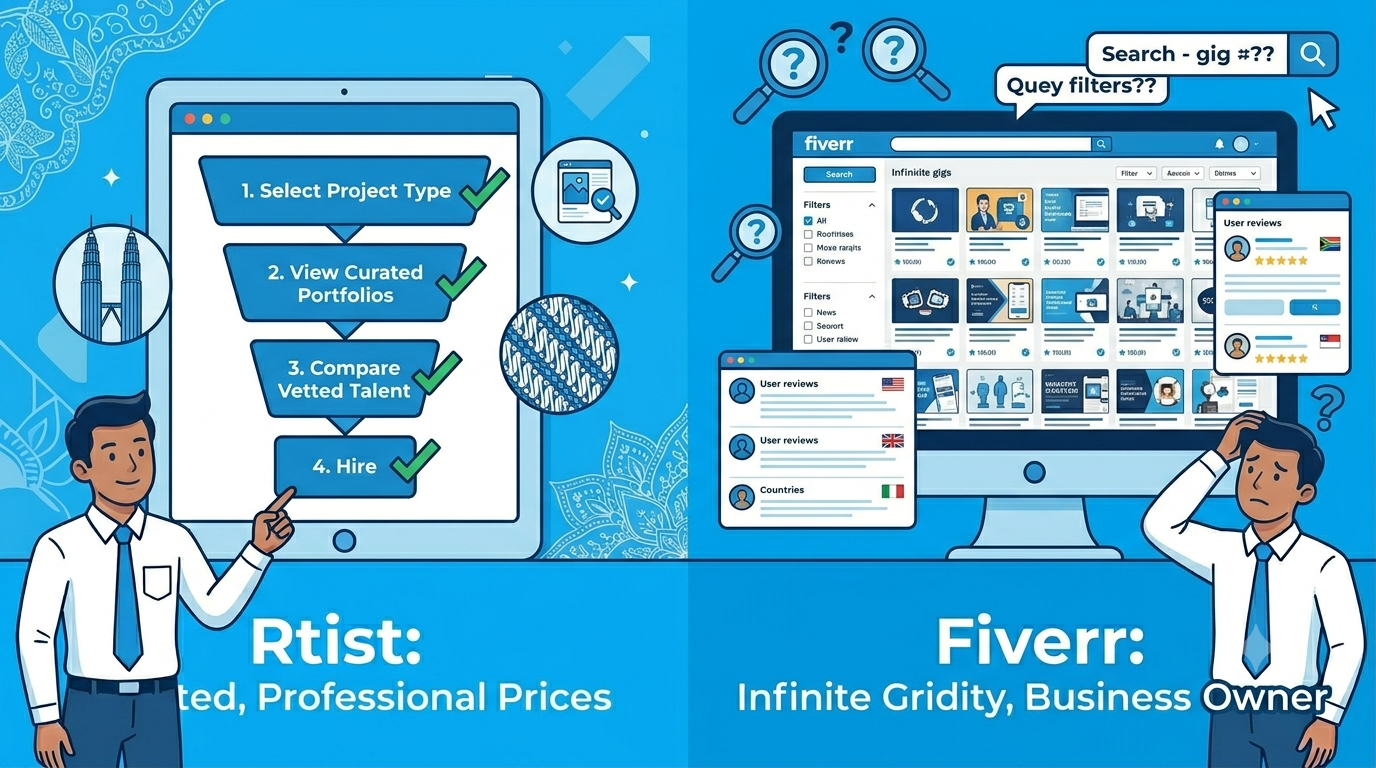
Rtist provides a more structured hiring flow designed for business use.
Typical experience:
- Browse curated designer portfolios
- Evaluate relevant creative work directly
- Compare professionals with local context
- Engage with talent who understand SME needs
The process is more guided, which reduces decision fatigue for business owners who are not design experts.
Fiverr experience
Fiverr is more of a self-service marketplace.
Typical experience:
- Search keywords and scroll through listings
- Compare thousands of freelancers manually
- Evaluate based on ratings, samples, and pricing
- Place an order or request a custom quote
While powerful, it requires more effort and experience to filter quality talent effectively.
4. Communication and Collaboration
Rtist
Communication tends to be:
- More direct and aligned with business expectations
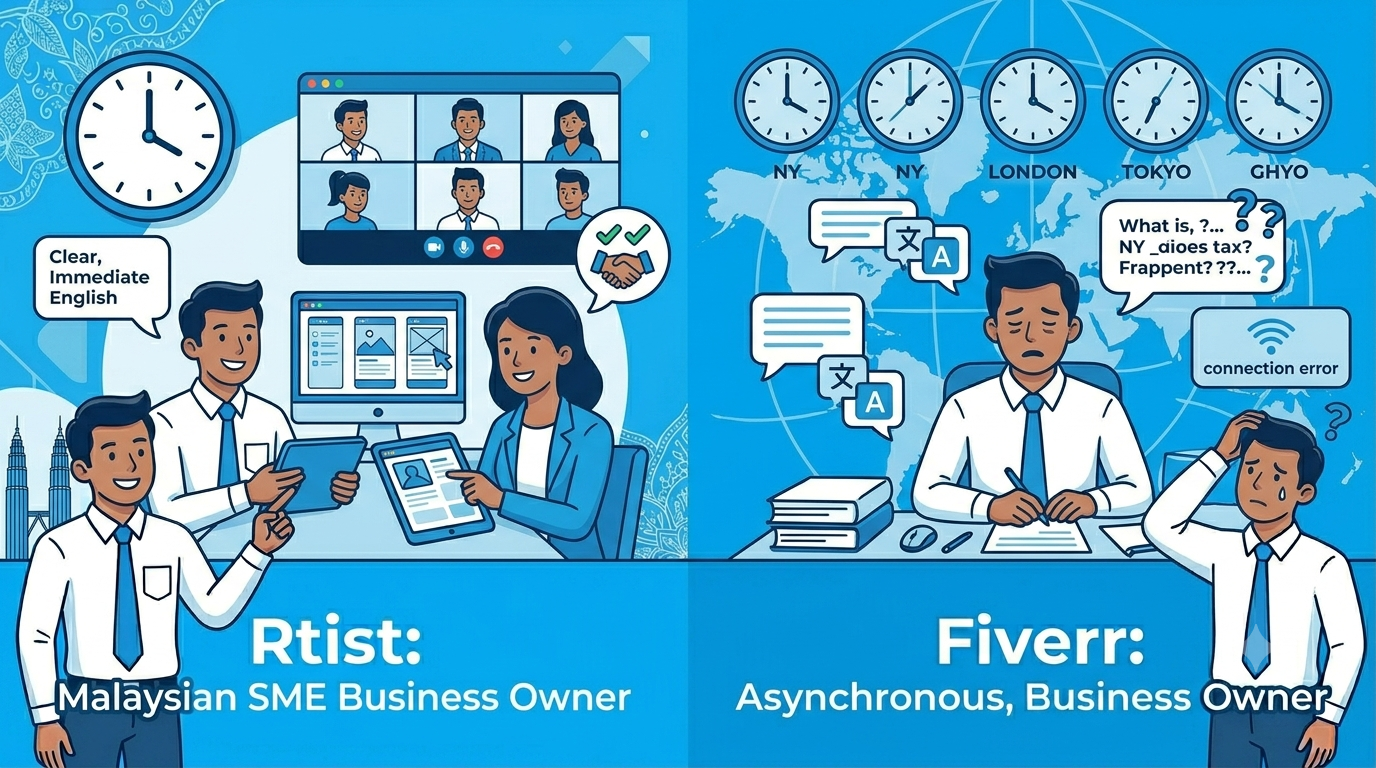
- Easier due to regional/timezone alignment
- More familiar with Malaysian SME communication styles
- Better suited for iterative feedback cycles
This is especially useful for branding work where back-and-forth refinement is important.
Fiverr
Communication depends heavily on the freelancer.
You may experience:
- Time zone delays
- Language barriers depending on region
- Different expectations around revisions
- Varying responsiveness
Some freelancers are excellent communicators, but it is not consistent across the platform.
5. Suitability for Malaysian SMEs
Rtist is better suited for:
- SMEs hiring for branding and marketing materials
- Companies that need consistent design support
- Startups looking for long-term creative partners
- Businesses that value local market understanding
- Teams that prefer structured, guided hiring
Rtist works best when the goal is business-focused design outcomes, not just one-off gigs.
Fiverr is better suited for:
- One-off, low-budget design tasks
- Simple assets like logos, banners, or templates
- Experimental or personal projects
- Businesses comfortable managing freelancers independently
It is more suitable when cost is the primary priority and risk is acceptable.
6. Risk and Reliability
Rtist
Lower risk due to:
- Curated talent pool
- Professional portfolio screening
- Local accountability and relevance
- Better alignment with SME expectations
Fiverr
Higher variability in risk:
- Quality inconsistency
- Overpromised gig descriptions
- Revisions sometimes not properly communicated.
- Harder to verify long-term reliability
7. The Real Difference in One Line
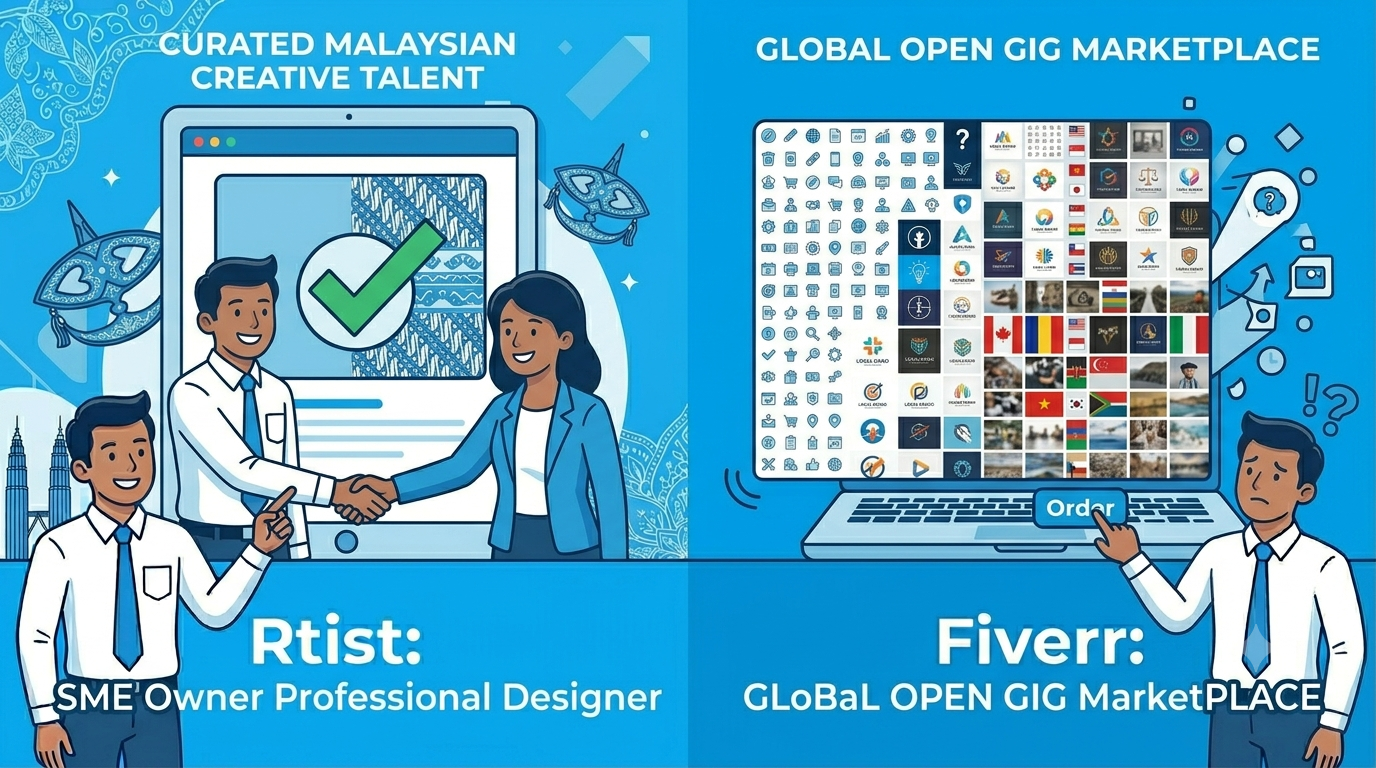
- Rtist focuses on curated, business-ready creative talent in Malaysia
- Fiverr focuses on a global open marketplace with wide pricing and quality range
Final Verdict
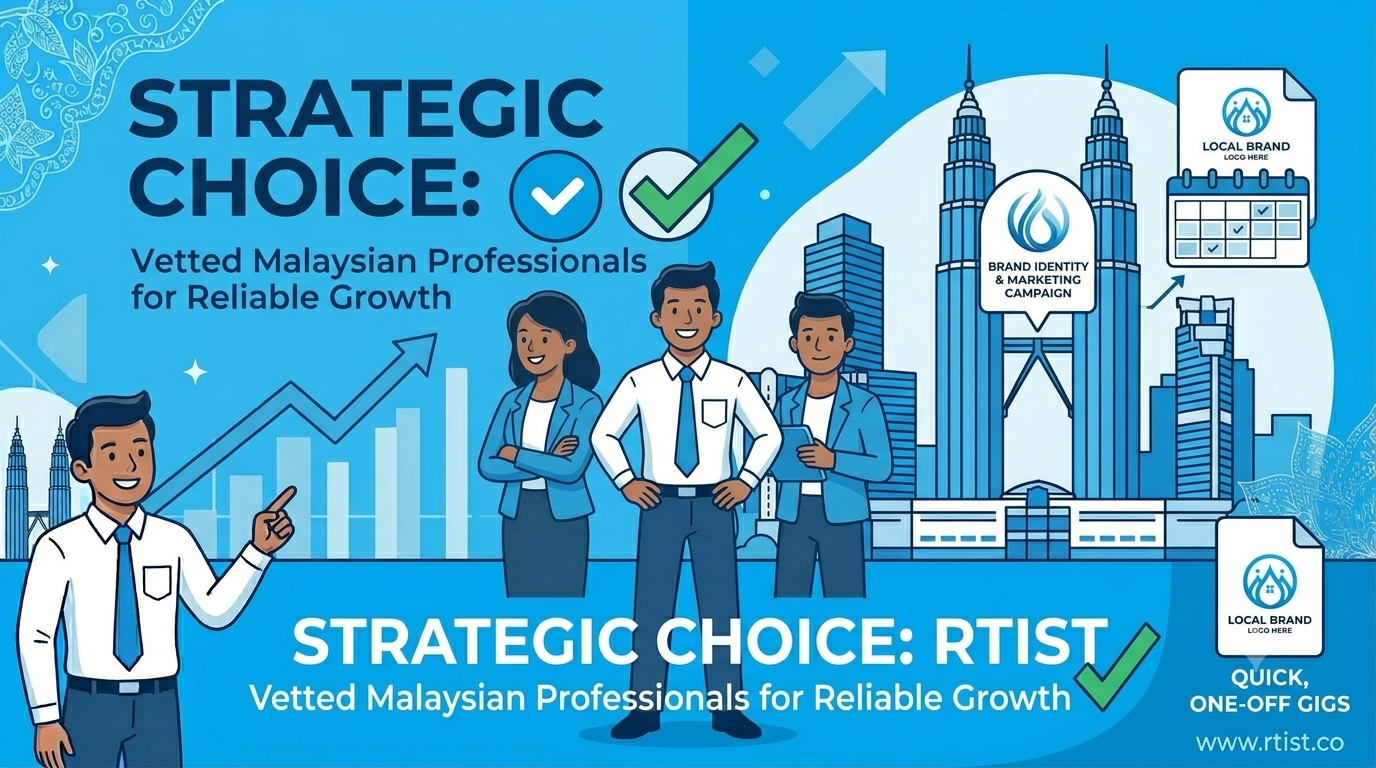
If you are a Malaysian SME or startup looking for reliable, brand-aligned design work, Rtist is generally the safer and more strategic choice. It reduces hiring friction, improves communication, and gives you access to talent that understands your market.
Fiverr can still be useful for quick, low-cost tasks, but it requires more time to filter quality and manage risk.
Ultimately, the right choice depends on your goal: speed and cost savings, or consistency and business-aligned creative output.
Where Rtist Fits In
For businesses that want a more structured way to hire designers, writers, and creative talent locally, platforms like www.rtist.co help streamline the process by connecting SMEs with vetted creative professionals who are already working in the Malaysian market.
This makes it easier to move from “finding freelancers” to actually building reliable creative partnerships.