Remote work has transformed the way businesses hire creative talent. Today, Malaysian SMEs, startups, and growing companies are no longer limited to hiring designers within their immediate location. Instead, they can access skilled creative professionals from across Malaysia, or even globally.
For businesses, this opens up access to a larger talent pool, greater flexibility, and often faster hiring. However, hiring remote designers comes with its own challenges. Without proper workflows, communication processes, and onboarding systems, remote collaborations can quickly become inefficient.
The good news is that companies that establish clear remote working practices often find that remote designers can be just as productive, and sometimes more productive, than in-house teams.
This guide explains how to hire remote designers successfully, from sourcing talent to managing communication, collaboration, and long-term performance.
How to Hire Remote Designers
1. Why Businesses Are Hiring Remote Designers
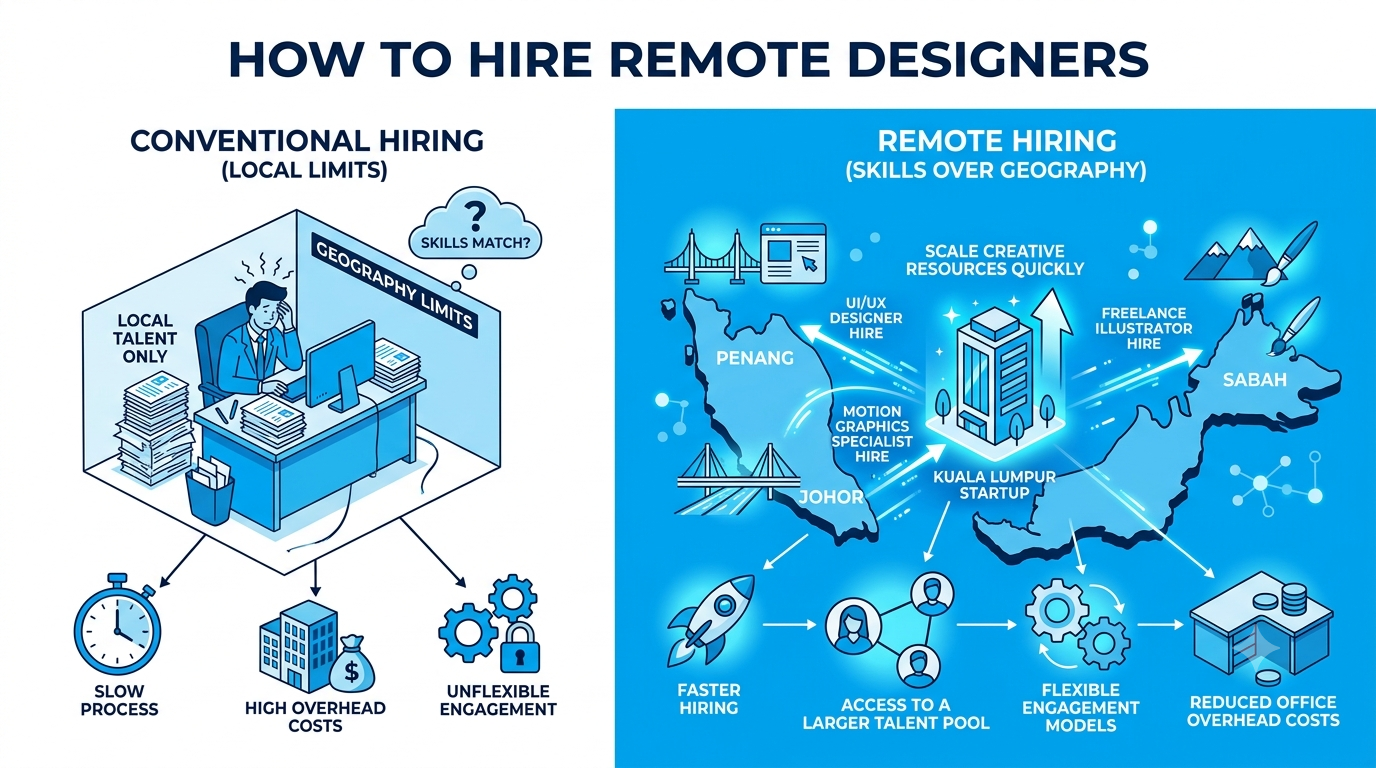
Remote hiring has become increasingly common because it allows companies to focus on skills rather than geography.
Benefits of hiring remote designers
- Access to a larger talent pool
- Faster hiring process
- Flexible engagement models
- Reduced office overhead costs
- Ability to scale creative resources quickly
For example, a startup in Kuala Lumpur can hire a UI/UX designer from Penang, a motion graphics specialist from Johor, and a freelance illustrator from Sabah without requiring relocation.
This flexibility is particularly valuable for startups and SMEs that need specialized creative skills without building a large internal team.
2. Define Your Remote Design Needs
Before hiring, determine exactly what type of support you need.
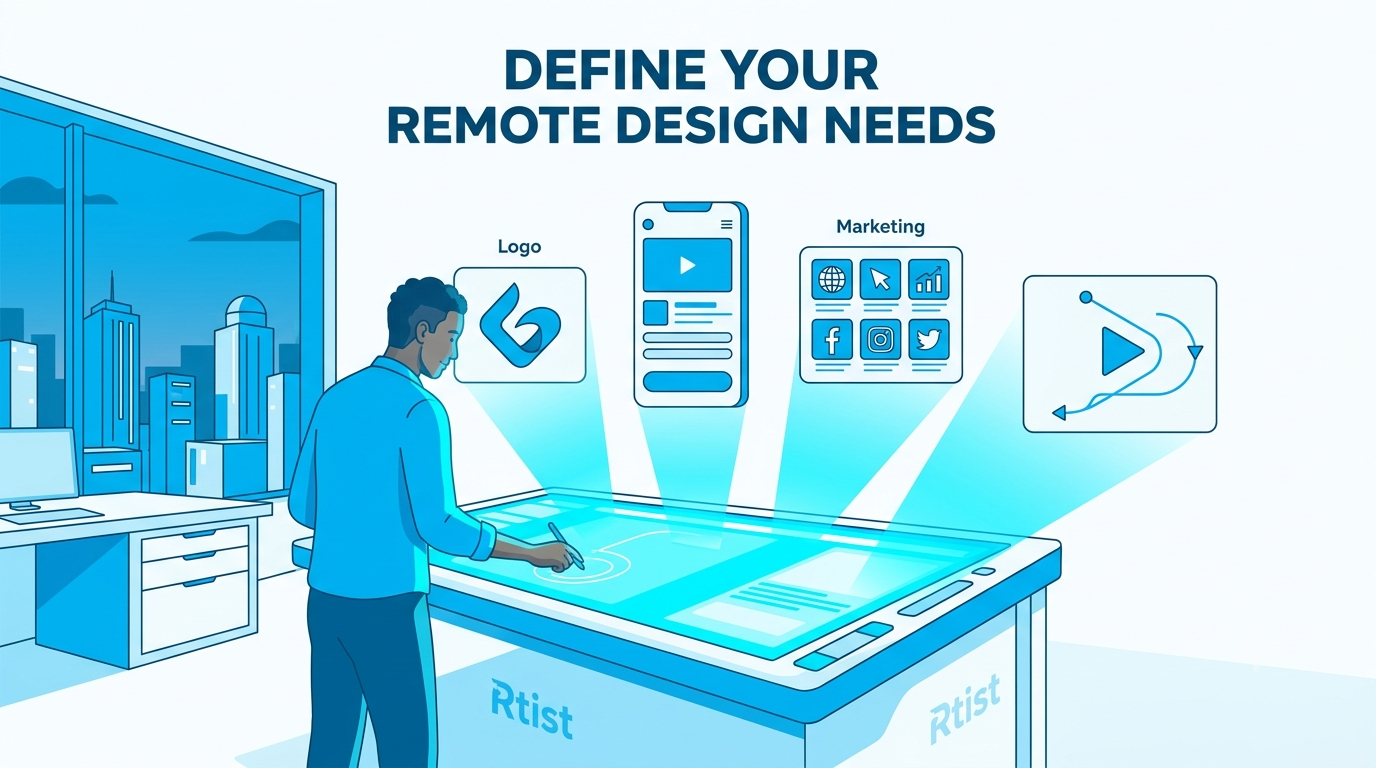
Common remote design roles
- Graphic designers
- UI/UX designers
- Brand designers
- Illustrators
- Video editors
- Motion graphics designers
- Marketing designers
Clarify project scope
Ask questions such as:
- Is this a one-time project?
- Do you need ongoing support?
- Will the designer work independently or with a team?
- Are there fixed deadlines?
A clear scope helps attract candidates who are the right fit for remote work.
3. Look for Remote-Friendly Designers
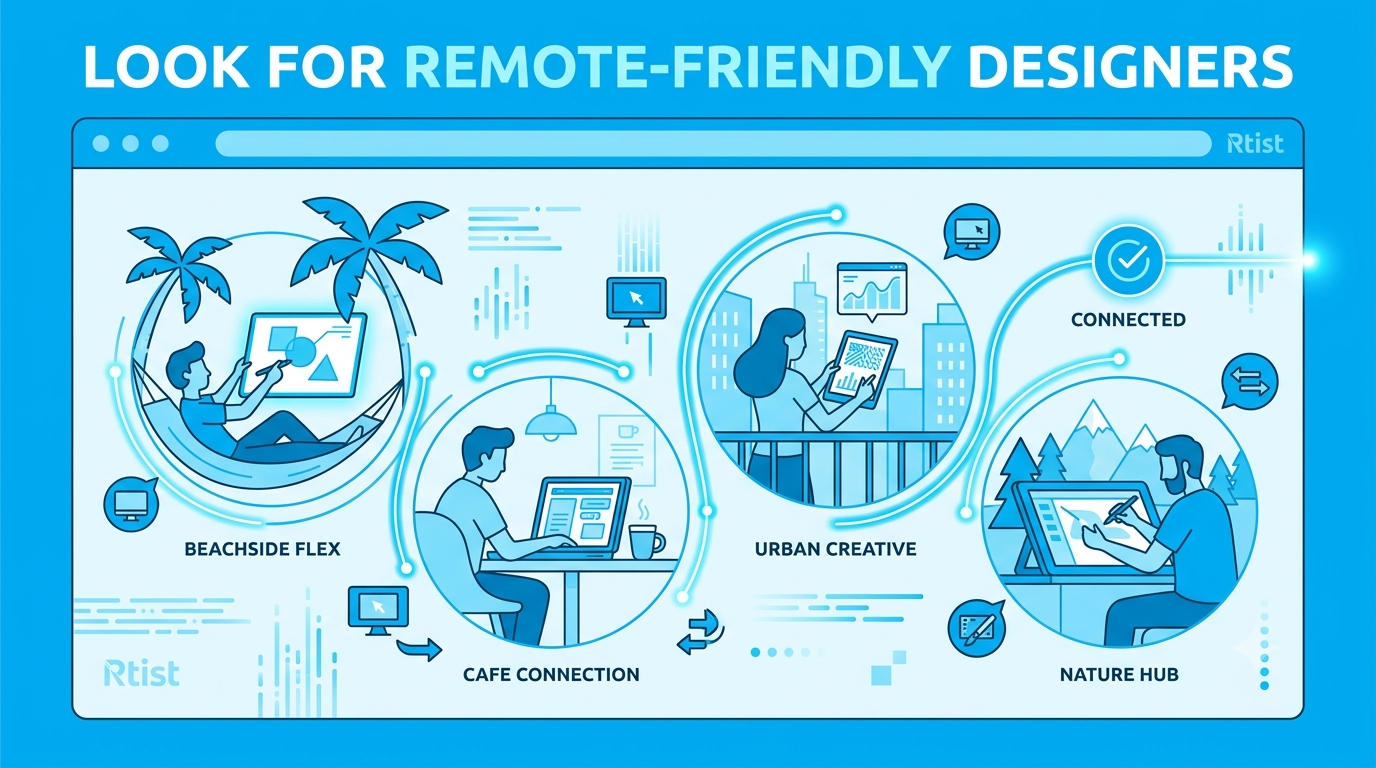
Not every talented designer is effective in a remote environment.
Traits of successful remote designers
- Strong communication skills
- Self-management capabilities
- Ability to work independently
- Reliability with deadlines
- Familiarity with digital collaboration tools
A designer may have an impressive portfolio but still struggle in a remote setup if they require constant supervision.
When reviewing candidates, look for previous remote work experience and examples of managing projects independently.
4. Evaluate Communication Skills Early
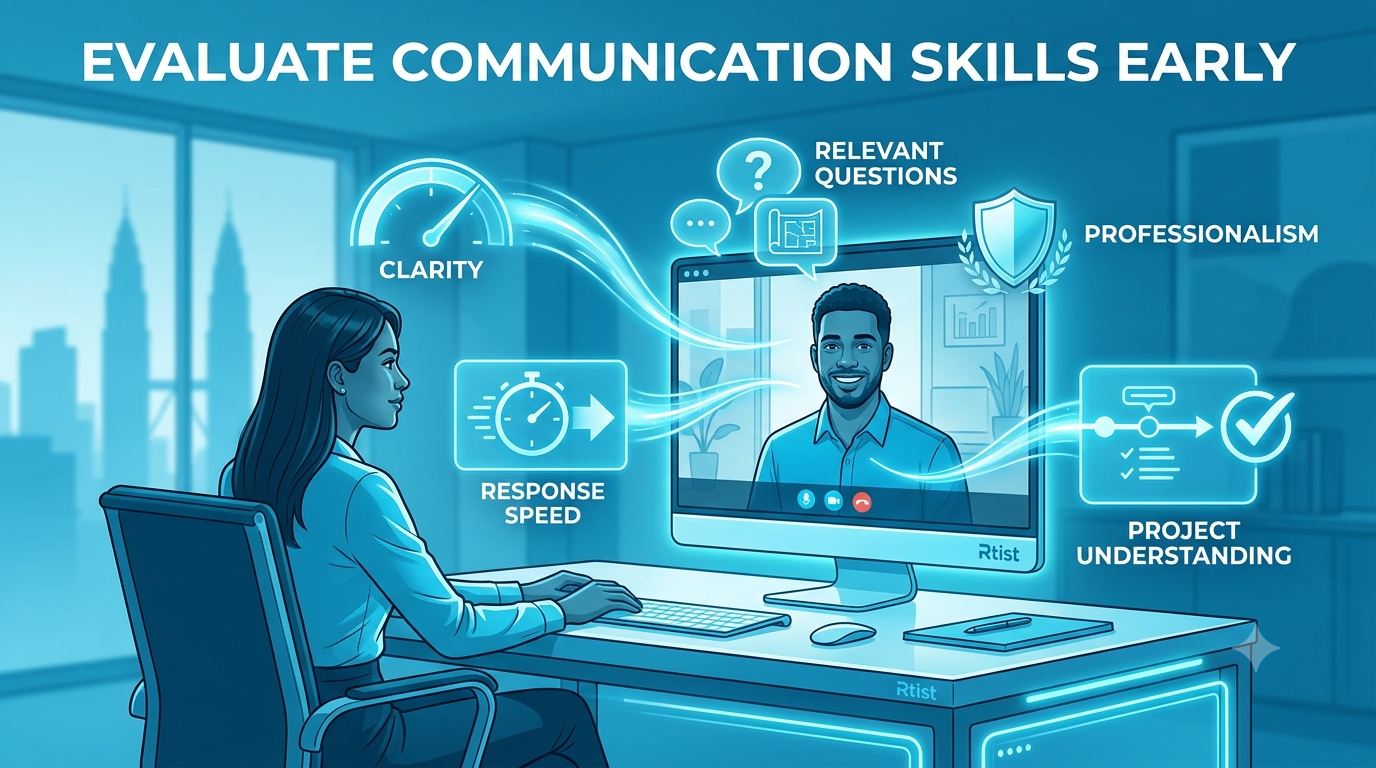
Communication is often the biggest factor in successful remote collaborations.
What to assess during interviews
- Response speed
- Clarity of communication
- Ability to ask relevant questions
- Professionalism in discussions
- Understanding of project requirements
For example, if a designer immediately asks about target audiences, project goals, and brand guidelines, it usually indicates a proactive and collaborative mindset.
Strong communication often predicts successful remote working relationships better than technical skills alone.
5. Set Expectations Before Work Begins

Many remote project issues occur because expectations were never clearly defined.
Discuss the following upfront
- Working hours
- Response times
- Deadlines
- Revision process
- Approval workflows
- Preferred communication channels
For example, a marketing manager running weekly campaigns should establish expected turnaround times before assigning tasks.
Clear expectations reduce misunderstandings and project delays.
One of the biggest challenges in remote hiring is finding designers who are not only talented but also experienced in remote collaboration. Platforms like Rtist.co help businesses connect with creative professionals who are accustomed to working with distributed teams and digital workflows.
6. Use the Right Collaboration Tools
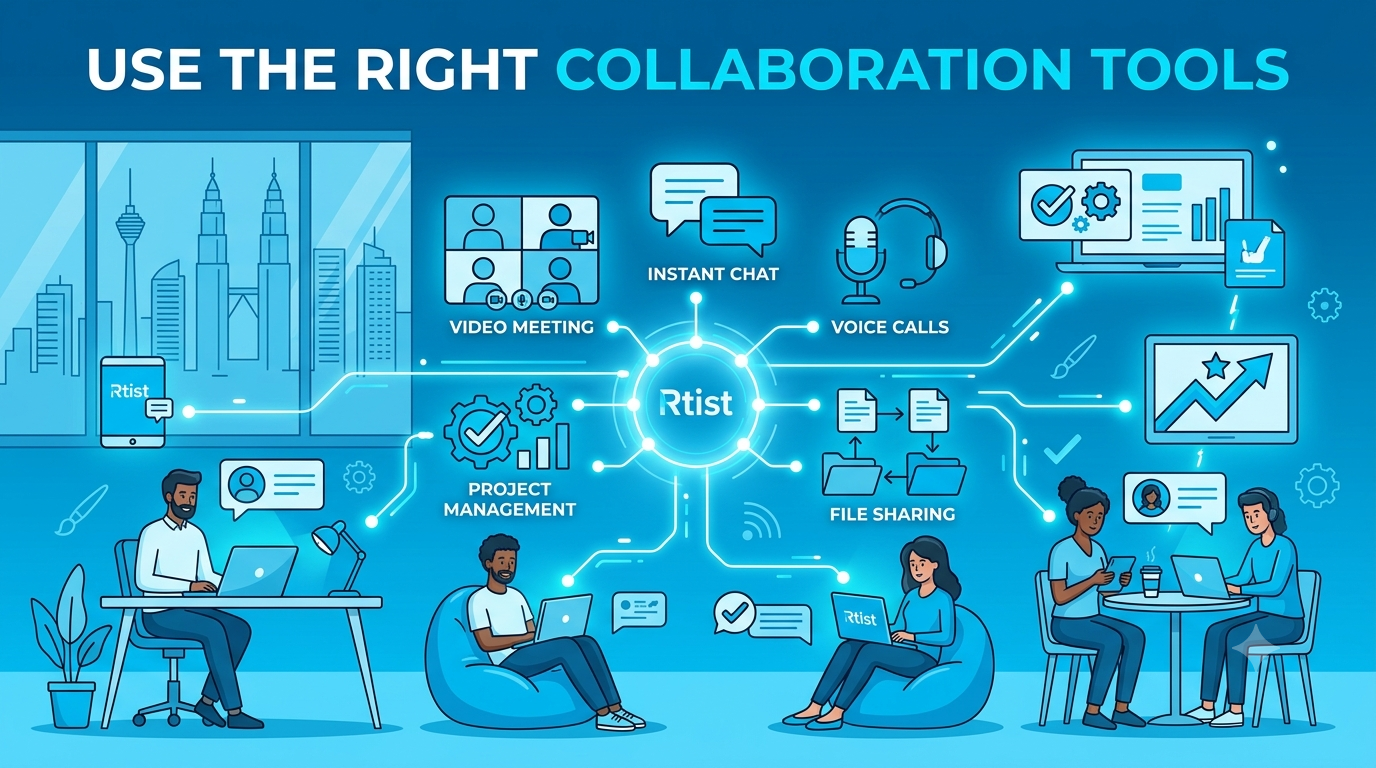
Technology plays a major role in remote productivity.
Communication tools
Common options include:
- Slack
- Microsoft Teams
- Google Meet
- Zoom
Project management tools
Many businesses use:
- Trello
- Asana
- ClickUp
- Notion
- Monday.com
Design collaboration tools
Popular choices include:
- Figma
- Adobe Creative Cloud
- Google Drive
- Dropbox
The goal is to create a system where communication, feedback, and file management are centralized and easy to access.
8. Create Clear Feedback Processes
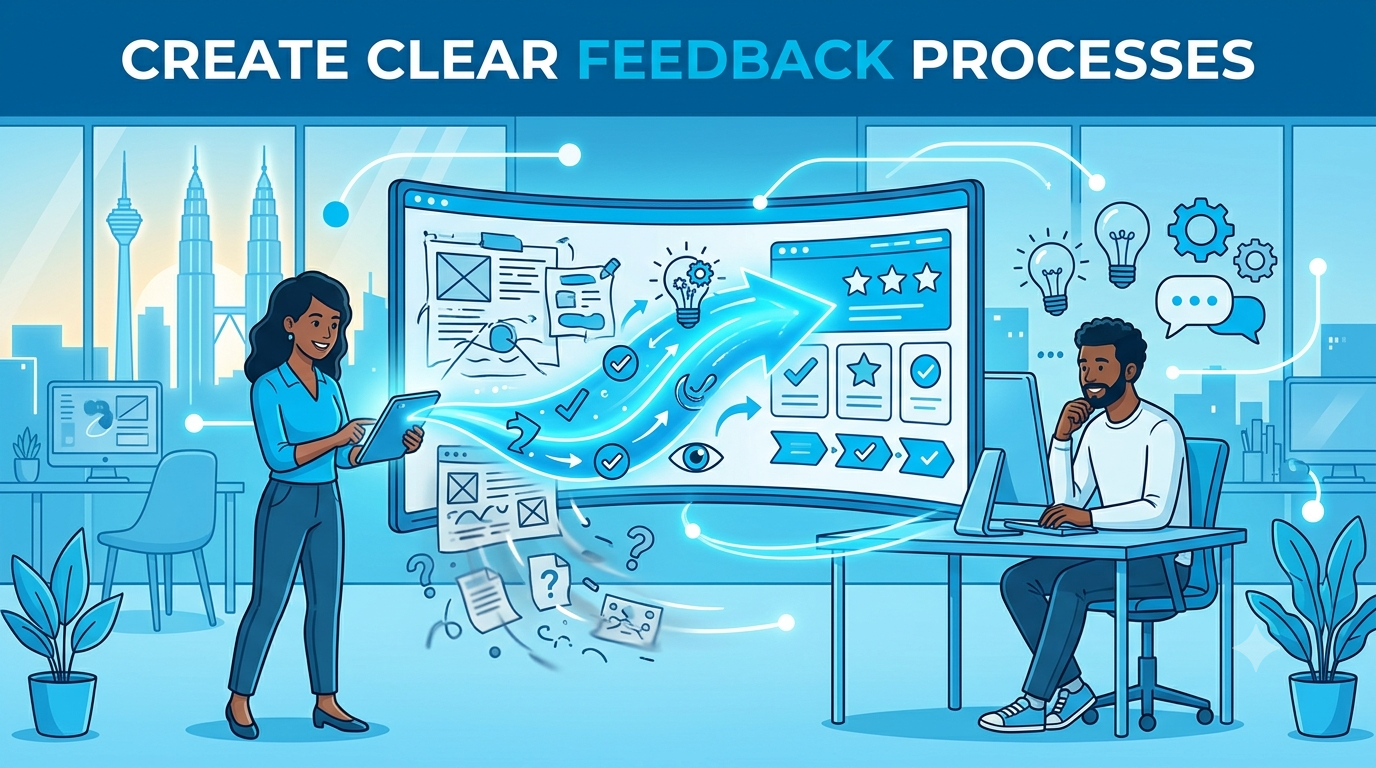
Remote designers cannot rely on hallway conversations or in-person meetings.
Best practices for feedback
- Be specific
- Consolidate feedback from stakeholders
- Prioritize revisions
- Avoid conflicting instructions
Instead of saying:
"Make it look better."
Try:
"The headline needs stronger emphasis because it's the primary message."
Specific feedback improves efficiency and reduces revision cycles.
9. Measure Productivity by Outcomes
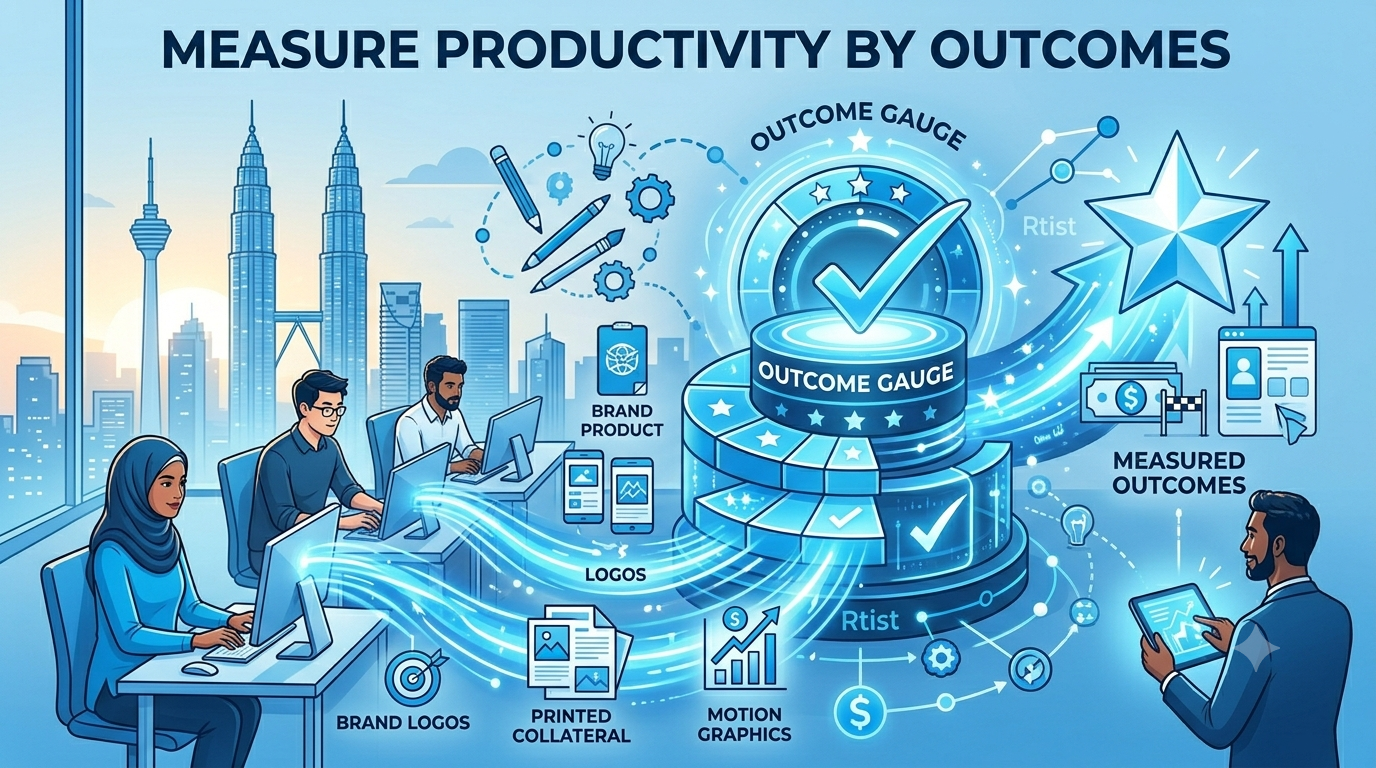
One common mistake is focusing on hours worked rather than results delivered.
Evaluate based on
- Project completion
- Design quality
- Deadline adherence
- Communication consistency
- Contribution to business goals
For example, a designer who consistently delivers effective campaign assets on time may be more valuable than someone who appears constantly available but produces lower-quality work.
Remote productivity should be measured by output, not online status.
10. Build Long-Term Relationships with High Performers

Finding a great remote designer is valuable.
Benefits of long-term collaboration
- Faster project execution
- Better brand understanding
- Less onboarding effort
- More consistent creative output
Many successful Malaysian businesses maintain ongoing relationships with trusted remote designers even as their internal teams grow.
These relationships often become a competitive advantage over time.
Common Mistakes When Hiring Remote Designers
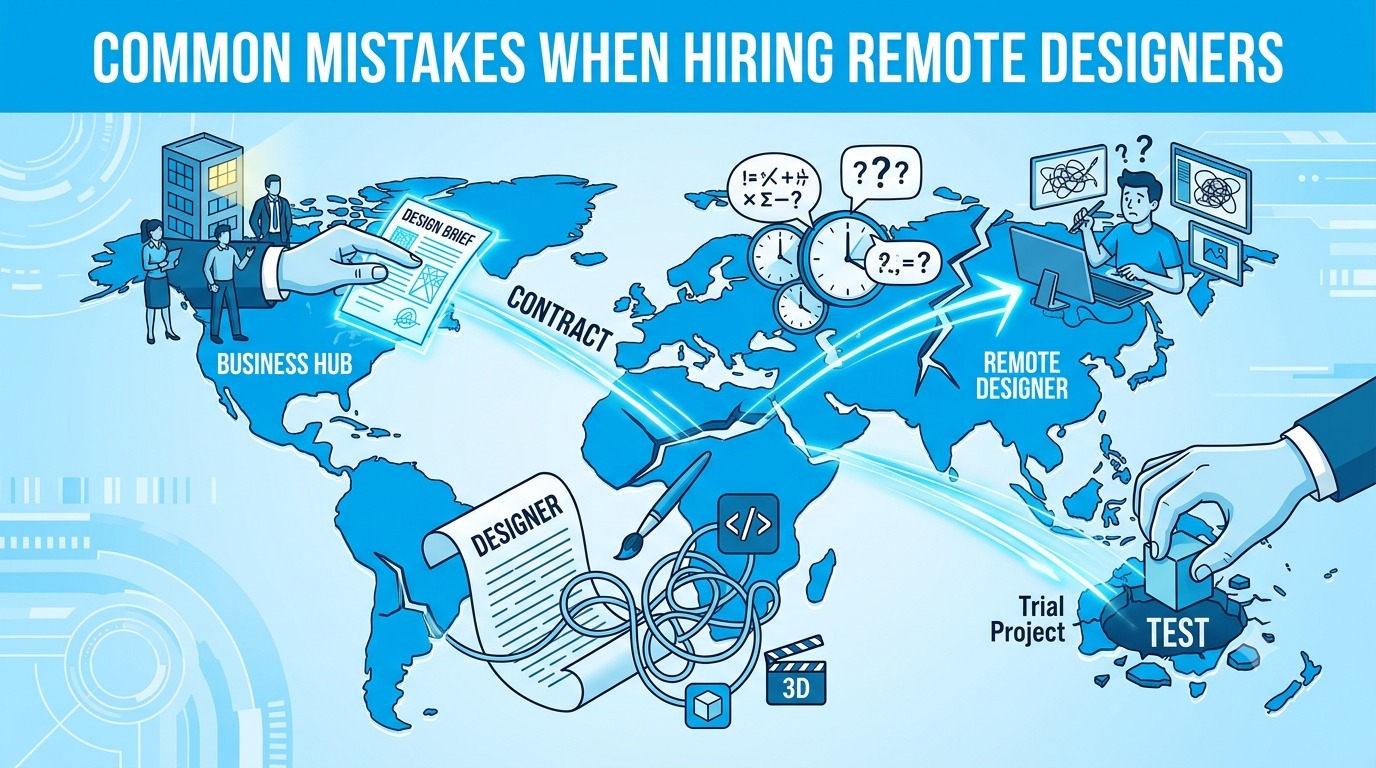
Hiring based only on portfolio quality
Strong creative work does not always mean strong remote collaboration skills.
Providing insufficient onboarding
Designers cannot support your business effectively without context.
Using too many communication channels
Scattered conversations create confusion and missed feedback.
Micromanaging remote talent
Excessive oversight often reduces productivity and trust.
Failing to establish clear processes
Remote work succeeds when expectations and workflows are documented.
Conclusion
Hiring remote designers gives businesses access to a wider pool of creative talent while providing flexibility and scalability. However, success depends on much more than simply finding a skilled designer.
Companies that invest in strong onboarding, structured communication, effective collaboration tools, and outcome-based management are far more likely to build productive remote creative teams.
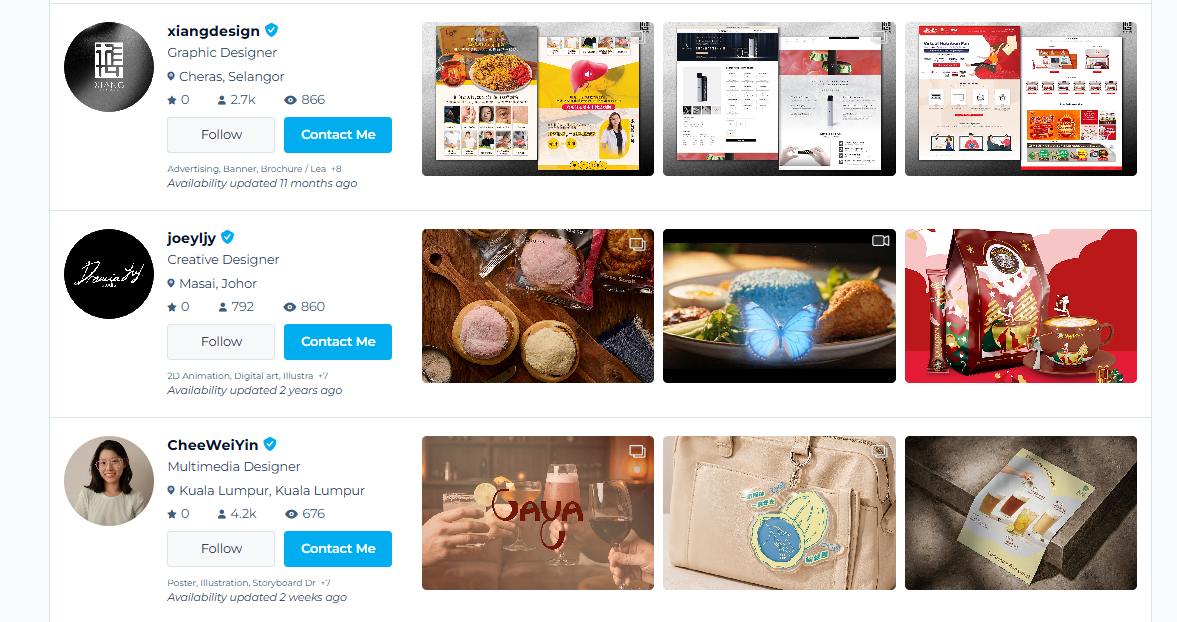
If you're looking to hire remote creative professionals, platforms like Rtist.co can help you connect with designers, illustrators, UI/UX specialists, and other creative talent who are experienced in remote collaboration, making it easier to build productive creative workflows regardless of location.