Hiring a social media manager is one of the most important marketing decisions for SMEs and startups in Malaysia. This role is often misunderstood as simple posting, but in reality it combines content strategy, platform management, community building, and performance tracking.
A strong social media manager can grow your brand visibility, improve engagement, and support lead generation. A weak hire results in inconsistent content, poor engagement, and wasted marketing effort.
This guide explains what the role actually involves, how to evaluate candidates, and what SMEs should prioritise when hiring.
1. Understand the Role of a Social Media Manager

A social media manager is responsible for planning, executing, and optimising a brand’s presence across platforms such as TikTok, Instagram, Facebook, and LinkedIn.
Core responsibilities include:
- Developing content strategy and monthly plans
- Managing posting schedules across platforms
- Writing captions and messaging direction
- Coordinating with designers and content creators
- Managing community engagement (comments, DMs)
- Tracking performance metrics and reporting results
- Adapting content based on platform trends
In stronger roles, they also contribute to campaign planning and brand positioning.
2. Strategy vs Execution Roles
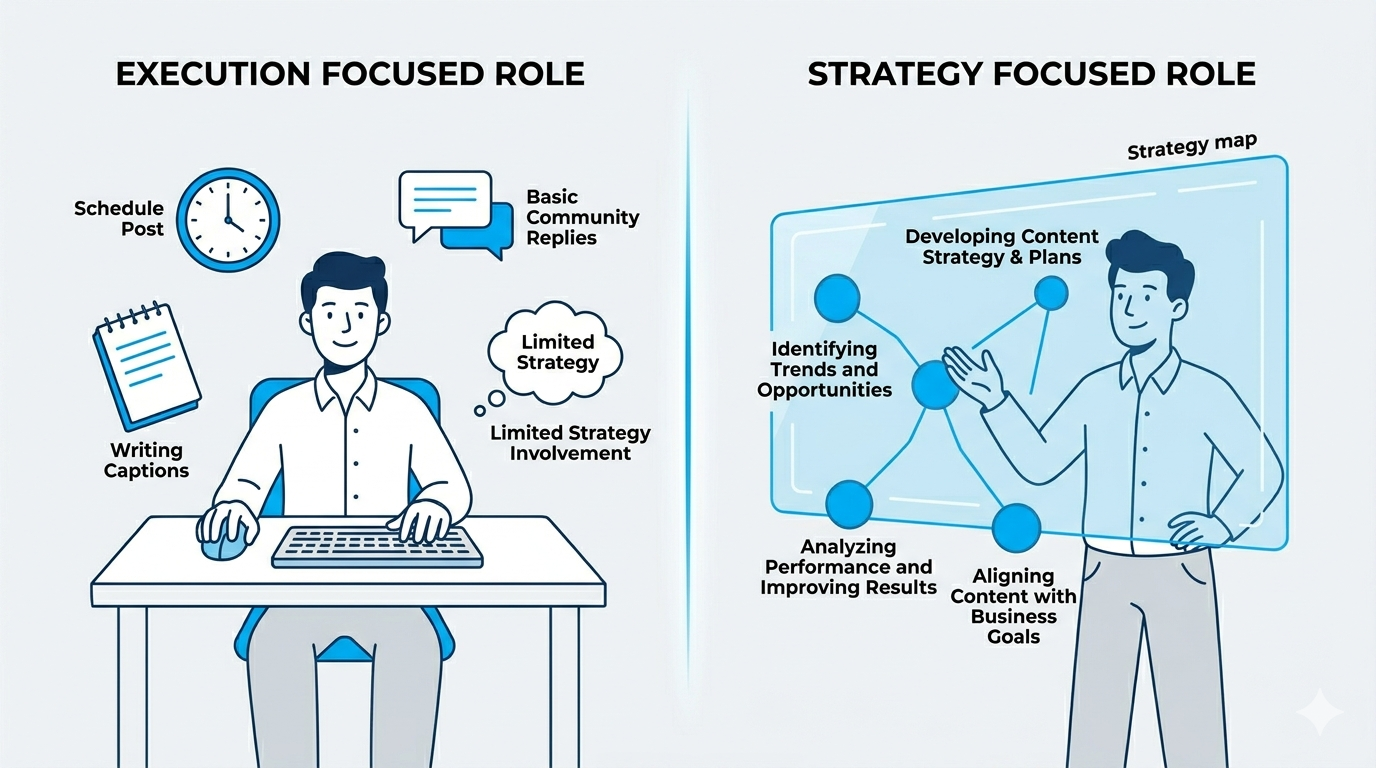
One of the biggest hiring mistakes SMEs make is confusing execution with strategy.
Execution focused role
- Posting content
- Scheduling uploads
- Basic caption writing
- Community replies
- Following instructions from marketing team
Best for:
- Small businesses with existing strategy
- Companies that only need content handling support
Strategy focused role
- Planning content direction
- Developing monthly content calendars
- Identifying trends and opportunities
- Aligning content with business goals
- Analysing performance and improving results
Best for:
- SMEs without a marketing team
- Startups building brand presence
- Businesses scaling digital marketing efforts
Most growing companies actually need a hybrid role that combines both strategy and execution.
3. Platform Management Skills

A strong social media manager should understand how different platforms behave.
TikTok
- Trend driven content
- Short form video strategy
- Hook based storytelling
- High virality potential
- Visual branding and consistency
- Reels and carousel content
- Community engagement
- Lifestyle and storytelling focus
- Community groups and local reach
- Event promotion
- Older demographic targeting
- Professional content
- B2B positioning
- Thought leadership and brand authority
A good candidate does not treat all platforms the same.
4. Key Skills to Look For
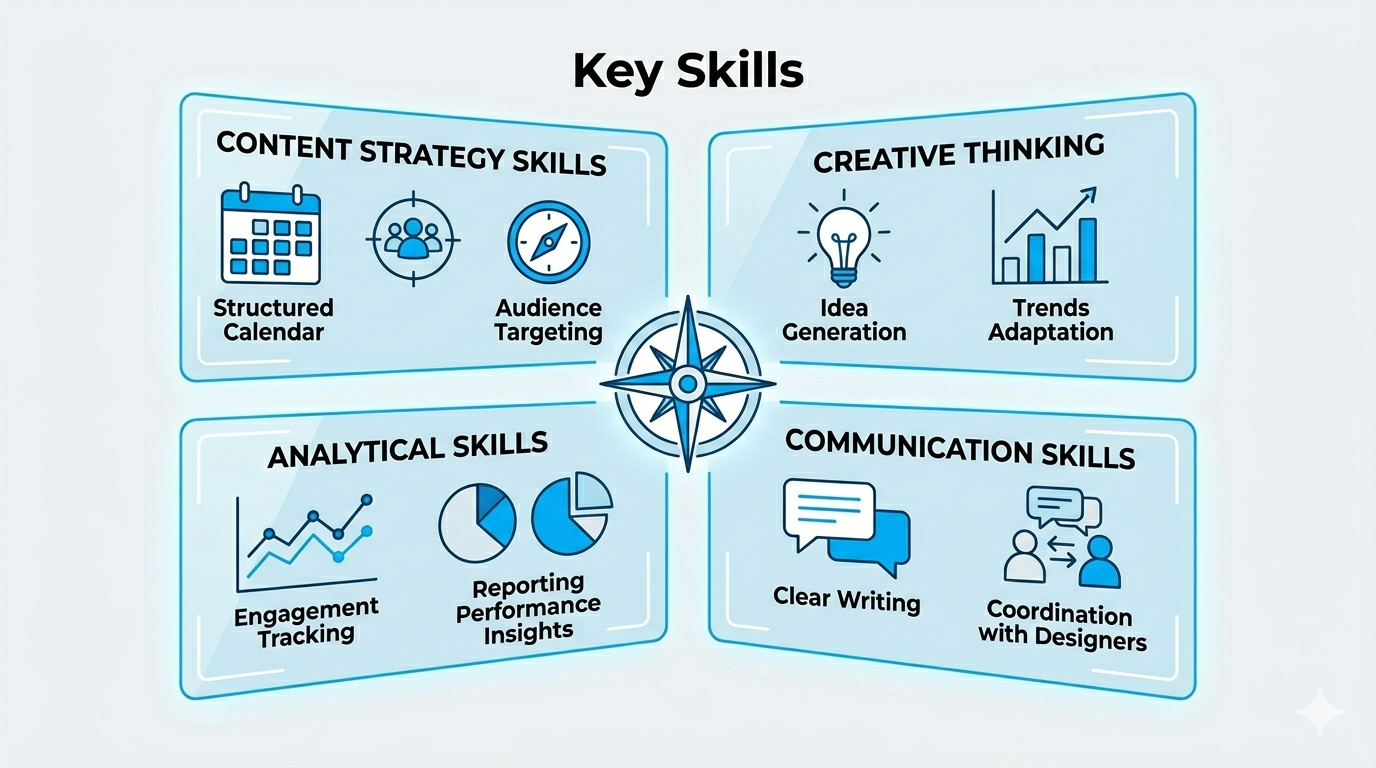
When hiring a social media manager, focus on practical skills rather than job titles.
Content strategy skills
- Ability to plan monthly content calendars
- Understanding of audience behaviour
- Ability to align content with business goals
Creative thinking
- Idea generation for campaigns
- Trend adaptation
- Hook writing for short form content
Analytical skills
- Understanding engagement metrics
- Reporting performance insights
- Adjusting strategy based on data
Communication skills
- Clear writing for captions
- Community engagement tone
- Coordination with designers and creators
5. How to Evaluate Candidates

Step 1: Review their portfolio
Look for:
- Real content they have managed
- Consistency across platforms
- Variety of content types
- Evidence of engagement performance
Do not rely on aesthetics alone.
Step 2: Check their understanding of strategy
Ask:
- How do you plan a monthly content calendar?
- How do you decide what content to post?
- How do you measure success?
Strong candidates will focus on audience and business goals, not just posting frequency.
Step 3: Evaluate platform experience
Check whether they understand:
- TikTok trends and virality mechanics
- Instagram engagement strategies
- LinkedIn or Facebook positioning if relevant
Platform depth matters more than general experience.
6. Common Hiring Mistakes SMEs Make
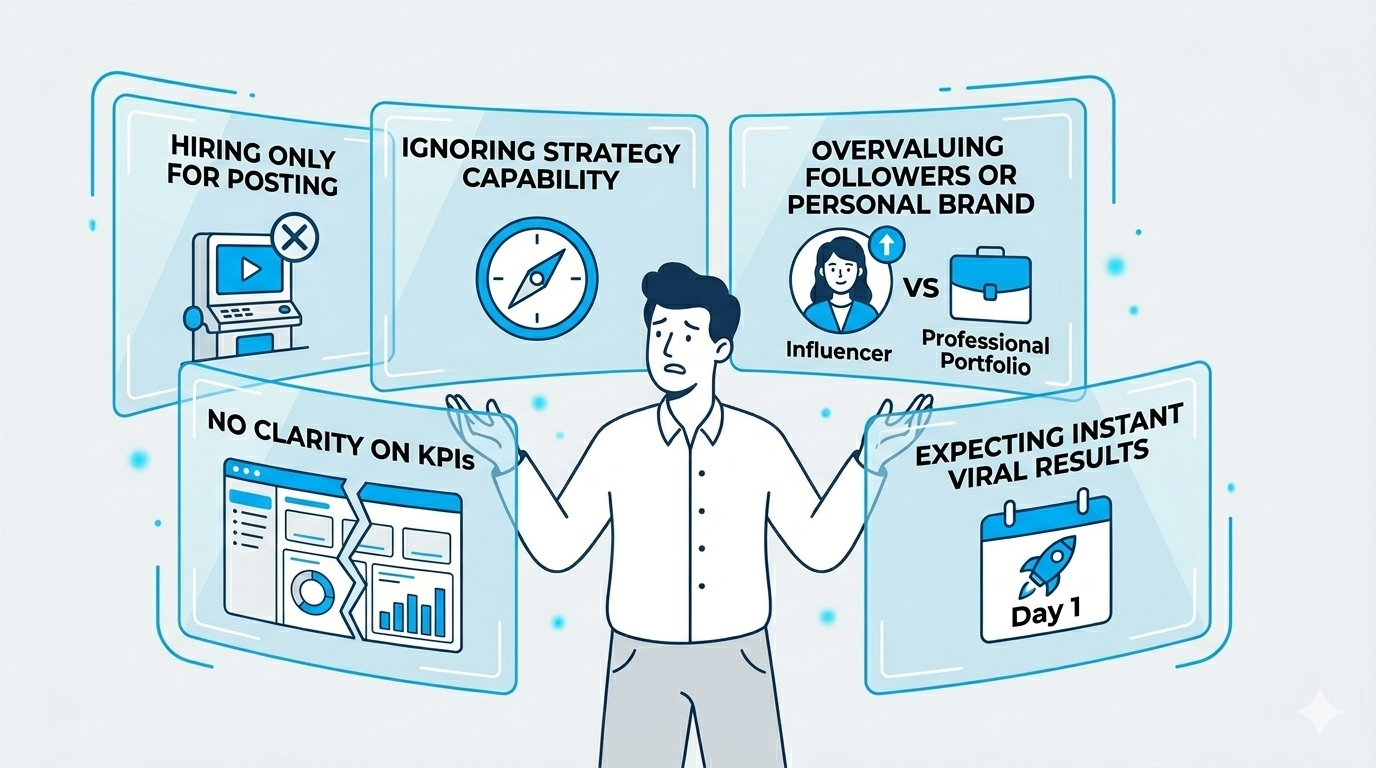
Hiring only for posting
Posting alone does not grow a brand.
Ignoring strategy capability
Without strategy, content becomes repetitive and ineffective.
Overvaluing followers or personal brand
A social media manager is not the same as a content influencer.
No clarity on KPIs
Without performance metrics, success cannot be measured.
Expecting instant viral results
Growth requires testing, consistency, and iteration.
7. What a Good Social Media Manager Should Deliver
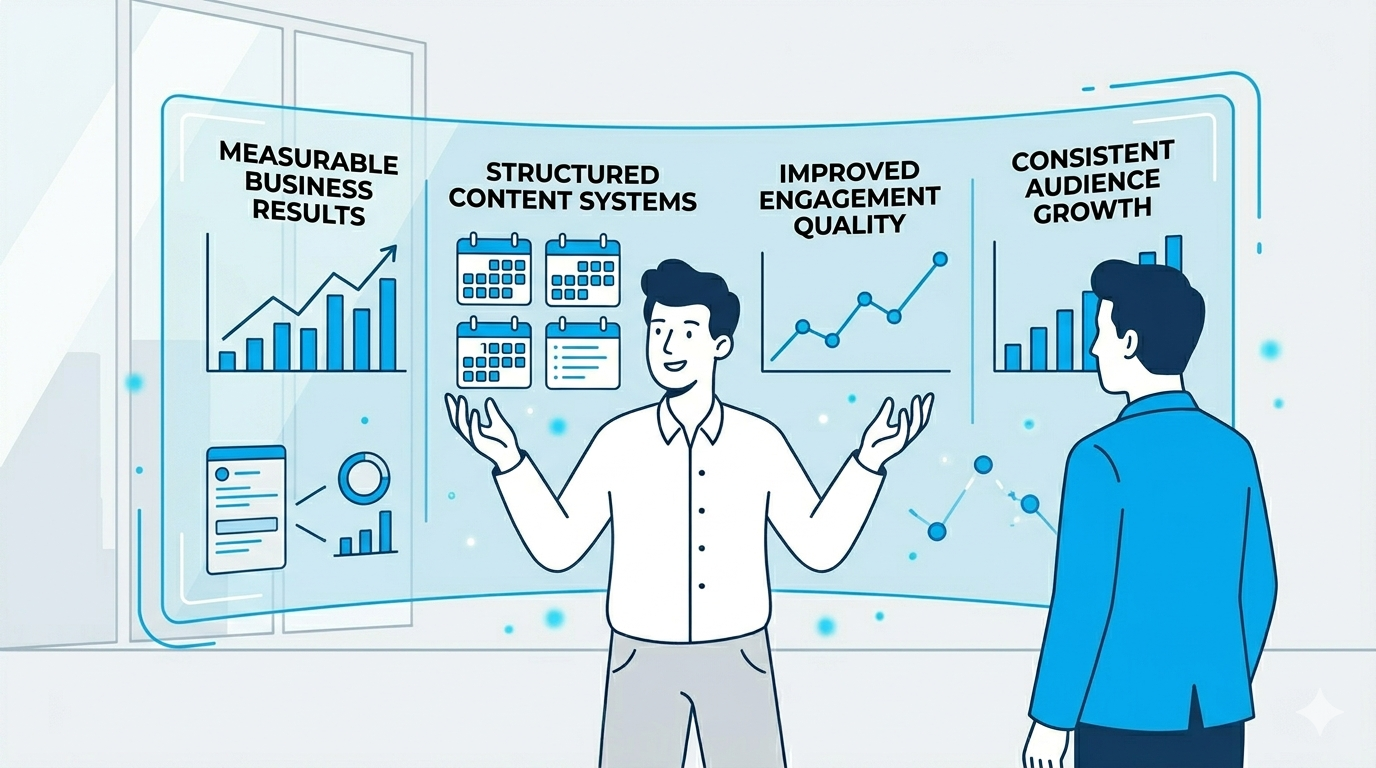
A strong social media manager should:
- Understand your business goals
- Create structured content plans
- Produce consistent and relevant content
- Improve engagement over time
- Adapt to platform changes
- Report performance clearly
The best candidates think like marketers, not just content posters.
8. Freelance vs Full-Time Social Media Manager
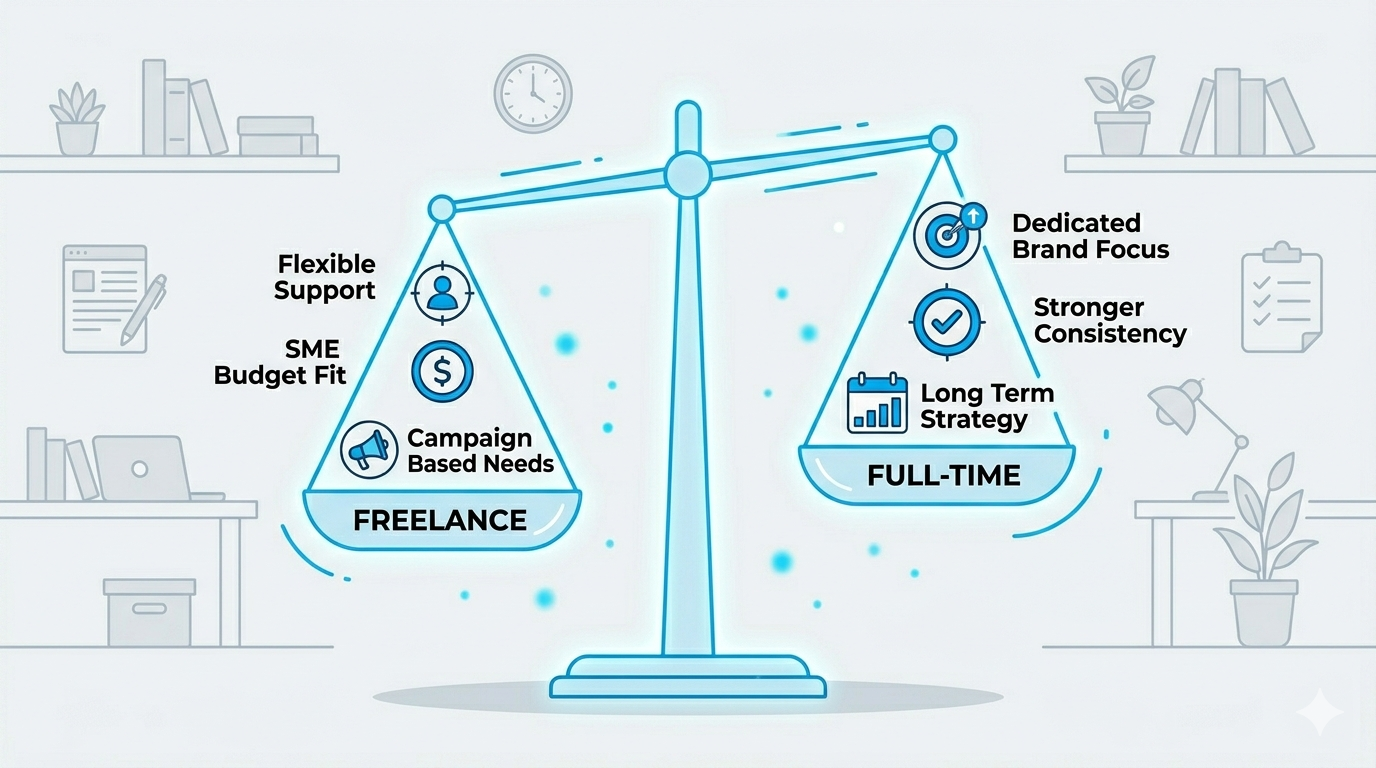
Freelance
- Flexible support
- Suitable for SMEs with limited budgets
- Good for campaign based needs
- May manage multiple clients
Full-time
- Dedicated brand focus
- Stronger consistency
- Better long term strategy development
- Higher cost but more control
9. Where to Hire Social Media Managers in Malaysia
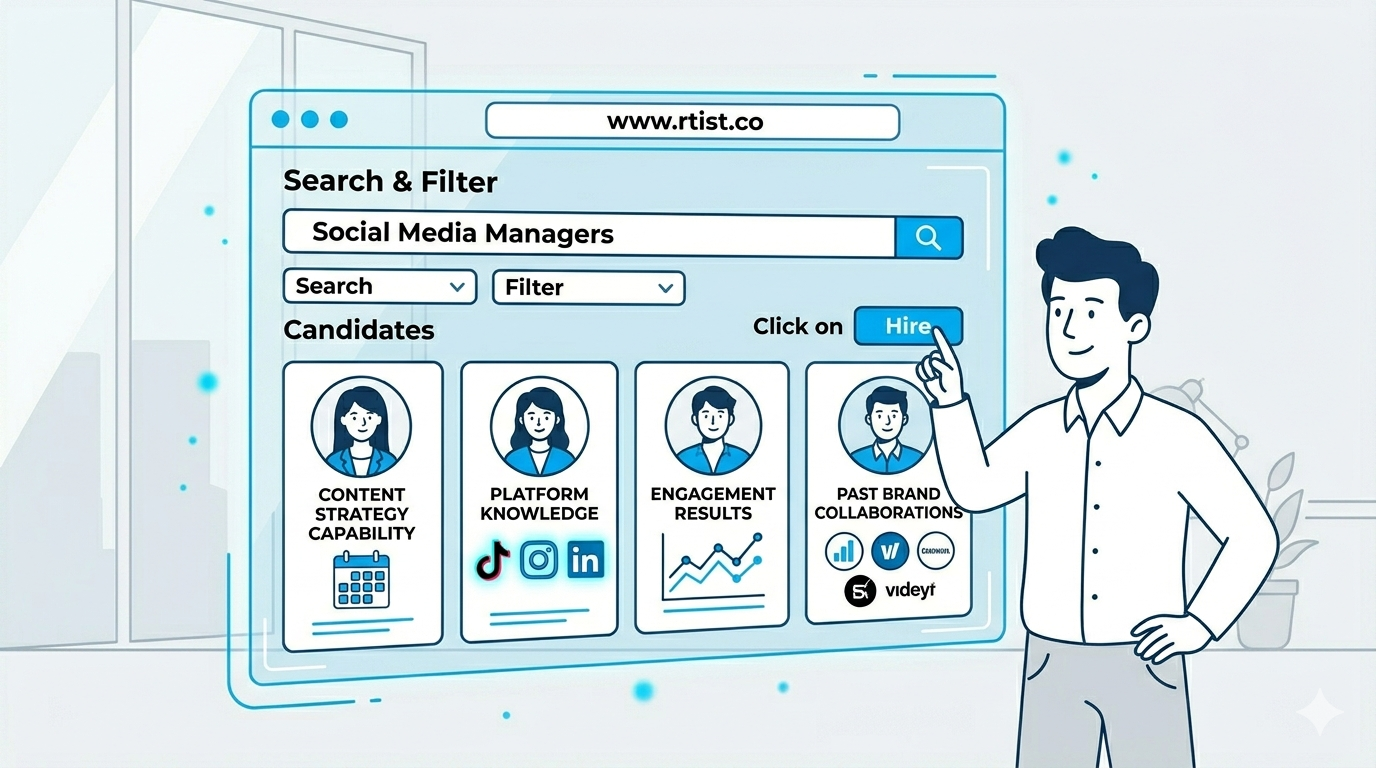
Instead of relying on scattered job boards or informal referrals, SMEs can find qualified social media managers through structured platforms like www.rtist.co , where professionals showcase real portfolios, campaign experience, and platform expertise.
This allows businesses to evaluate:
- Content strategy capability
- Platform knowledge
- Engagement results
- Past brand collaborations
before making hiring decisions.
Final Thoughts
Hiring a social media manager is not about finding someone who can post content. It is about finding someone who can build a structured content system that grows your brand.
The right hire will:
- Strengthen brand visibility
- Improve engagement quality
- Support marketing goals
- Create consistent audience growth
The wrong hire will simply post content without direction or measurable impact.
For SMEs in Malaysia, the key is to prioritise strategy, platform understanding, and performance thinking over surface level experience.
Hire with www.rtist.co